x
Se i fuld skalaSe i fuld skala AR-forhåndsvisningAR-forhåndsvisning Køb print Køb printKøb billede Køb billede DelDel
DetaljerDetaljer Tilføj til favoritter Tilføj til favoritter DownloadDownload Lignende værkerLignende værker RøntgenundersøgelseRøntgenundersøgelse DiasshowDiasshow

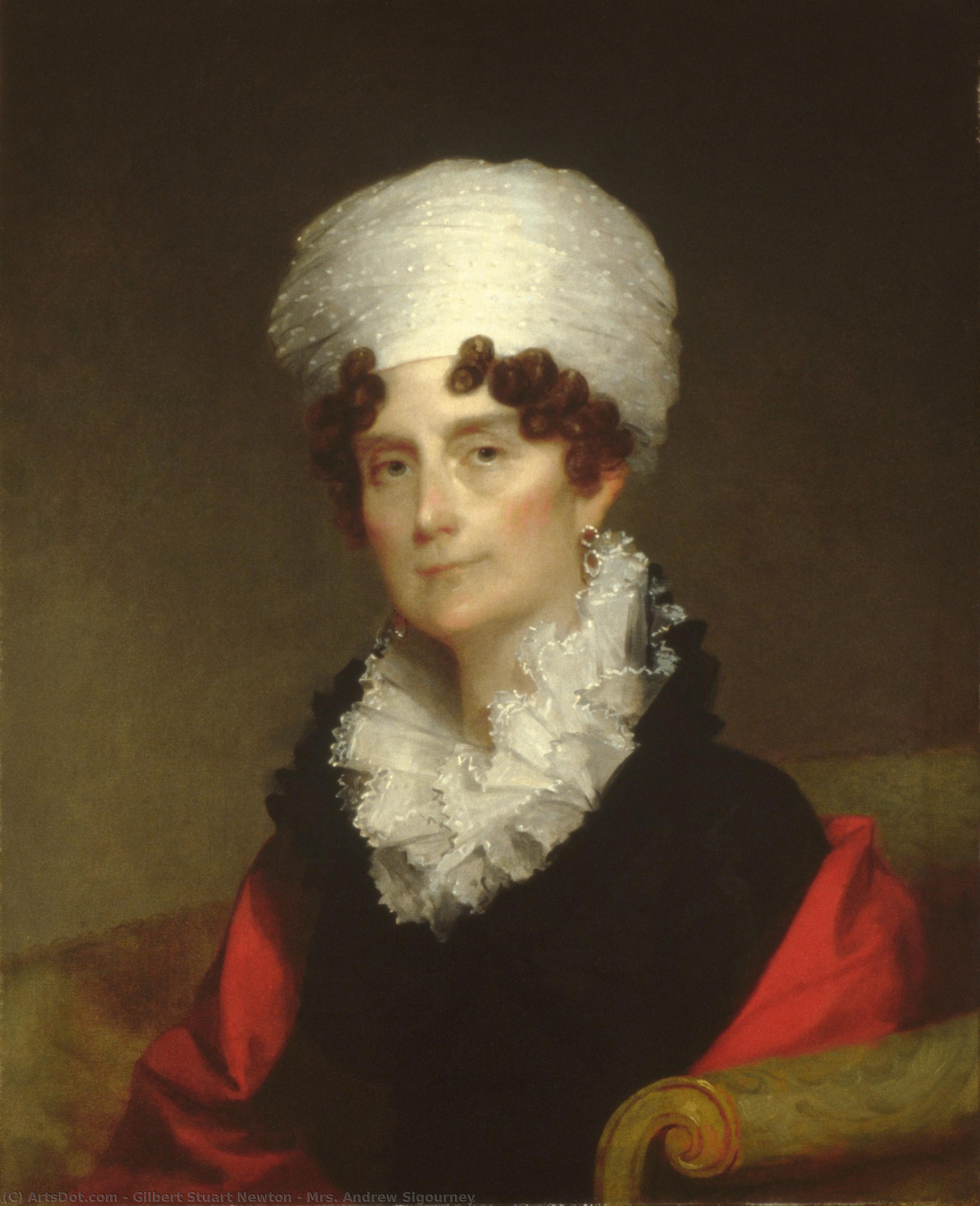
Mrs. Andrew Sigourney

Explore Gilbert Stuart Newton's masterpiece, "Mrs. Andrew Sigourney," a poignant portrait capturing Elizabeth Williams’s intelligence and prosperity during the Romantic era. Admire its serene beauty and masterful technique.

Gilbert Stuart Newton (1795-1835): British Romantic artist famed for portraits of Washington Irving & literary scenes inspired by Shakespeare, poetry & romance. RA academician.

Håndlavet oliereproduktion

Håndmalet olie på lærred i din valgte størrelse og ramme, udført efter bestilling af vores kunstnere. (Køb print Køb printKøb billede Køb billede)

P118B $10
P118H $10
P118W $10
P438Z $10
P508JH $12
P508YH $12
P805H $10
P805Z $10
P919BZ $10
P919G $10
P919XJ $10
P959ZH $10
P968JZ $12
W106C $8
W218G $10
W218JH $8
W218Y $10
W307PJ $10
W316G $10
W316PJ $8
W316Y $10
W398PJ $8
W4111J $10
W500HY $15
W500JH $15
W692G $12
W849H $8
W940BG $15
W953PJ $8

Standardstørrelse
speciallavet
CM
INCH

Vælg mellem vores forudindstillede størrelser, der matcher kunstværkets originale proportioner.

bredde
højde

Du kan indtaste dine egne mål for at passe til en bestemt ramme eller plads. Hvis den valgte størrelse ikke stemmer overens med det originale billedes proportioner, vil vi enten beskære kunstværket eller udvide maleriet med yderligere håndmalede elementer. En digital skitse sendes til din godkendelse, før produktionen påbegyndes.
Bemærk venligst, at forhåndsvisningen på skærmen ikke afspejler den faktiske beskæring eller udvidelse. Kun skitsen vil nøjagtigt vise den endelige komposition.
Selvom specialmål er mulige, anbefaler vi at vælge en dimension fra den foruddefinerede liste for at bevare de originale proportioner.

Eksempler på hvad der kan ændres: Udskift ansigt med kundens eget foto; Tilføj kæledyr (f.eks. udskift kat med hund); Inkluder en skjult besked i baggrunden; Ændr baggrundslandskab eller elementer.
Efter bestilling vil WahooArt.com team sende en e-mail til kunden for at få instruktioner og levere et udkast til en skitse.

Levering i hele verden () på 3/4 uger i stedet for de standard 5 uger. (27 august). Ingen kompromiser med kvaliteten.

why_choose_icon
Gratis ekspresforsendelse til hele verden
why_choose_icon
Lærred af linned i høj kvalitet
why_choose_icon
Fuld transportforsikring
why_choose_icon
Garanti for refusion af told og importafgifter
why_choose_icon
Garanti for præcis farvegengivelse
why_choose_icon
60 dages returret (kun ved fabrikationsfejl)
why_choose_icon
100% Tilfredshedsgaranti
why_choose_icon
Mængderabat tilgængelig

Samlet pris

$ 272

reproduction

Mrs. Andrew Sigourney

Reproduktionsmetode

Størrelse på reproduktion

-

Samlet pris

$ 272

Hurtige fakta

  • Artist: Gilbert Stuart Newton
  • Dimensions: 69 x 56 cm
  • Subject or theme: Portrait of Mrs. Andrew Sigourney
  • Title: Mrs. Andrew Sigourney
  • Year: 1820

Kunstquiz

Der er kun ét korrekt svar på hvert spørgsmål.

Spørgsmål 1:
Who is the primary subject depicted in the painting titled "Mrs. Andrew Sigourney"?
Spørgsmål 2:
What characteristic did Gilbert Stuart Newton emphasize in Mrs. Sigourney's portrayal?
Spørgsmål 3:
Approximately what year was the painting "Mrs. Andrew Sigourney" created?
Spørgsmål 4:
In addition to the main sitter, how many other people are visible in the painting?
Spørgsmål 5:
The artist of "Mrs. Andrew Sigourney" is:

Beskrivelse af kunstværket

A Glimpse into Early American Elegance

To stand before Gilbert Stuart Newton's portrait of Mrs. Andrew Sigourney is to step directly into the refined drawing rooms of early nineteenth-century Boston. This painting, executed around 1820, transcends a mere likeness; it is a carefully composed tableau vivant that speaks volumes about social standing, intellectual grace, and the quiet prosperity of its sitter. Elizabeth Williams, as she was known, is presented not just as a beautiful woman, but as a figure of considerable intelligence and established means. The composition itself suggests a moment paused in time—a gathering where conversation and status mingle effortlessly.

Mastery of Portraiture and Technique

Newton’s handling of paint here demonstrates the technical prowess inherited from his celebrated lineage. While the subject is seated, allowing for a sense of repose, the artist has imbued the scene with vibrant life through meticulous detail. Observe the texture captured in the white, ruffled edge of her hat, contrasting sharply with the deep, sober tones of her black attire. This contrast is not accidental; it serves to draw the eye immediately to her face and hands. The technique employed allows for both an almost photographic realism in rendering fabric and skin, while simultaneously maintaining the romantic idealization characteristic of the era. It is a balance that speaks to Newton's sophisticated understanding of light and shadow.

The Symbolism of Status and Intellect

What truly elevates this portrait beyond simple representation is the subtle narrative woven into its details. The description notes that Stuart toned down any overly sensual quality, choosing instead to emphasize Mrs. Sigourney’s "knowing intelligence." This focus suggests a cultural shift in portraiture, moving away from pure glamour toward celebrating the sitter's inner life and accomplishments. Her direct gaze meets the viewer’s eye with an assurance that speaks of her family connections and her husband’s prominent civic roles. The inclusion of other figures subtly grounds her within a social context—a circle of peers whose presence validates her own elevated position in Boston society.

Creating an Atmosphere for Your Space

For the collector or designer, this piece offers more than just decoration; it offers atmosphere. Reproducing such a work allows one to infuse a room with the gravitas and refined elegance of the Federal and early Victorian periods. Imagine this painting gracing a formal study or a drawing-room corner. The deep blacks and crisp whites provide an immediate anchor of sophisticated contrast, while the historical narrative adds layers of intellectual depth. It is a piece that invites conversation, prompting admirers to inquire about the life and times it so beautifully captures.


Kunstnerens biografi

Gilbert Stuart Newton: Life & Legacy

Early Life and Family Background

  • Birth and Origins: Gilbert Stuart Newton was born on September 2, 1795, in Halifax, Nova Scotia. He was the youngest of twelve children.
  • Family Connections: His father, Henry Newton, was a customs official, and his mother, Ann, held a significant artistic lineage – she was the daughter of Gilbert Stuart, the renowned American portrait painter.
  • Early Years & Return to America: The family initially resided in Boston but returned to Charlestown near Boston in 1803 following his father’s death.

Artistic Training and Influences

  • Initial Path & Uncle's Guidance: Though initially intended for a commercial career, Newton was apprenticed to his uncle, Gilbert Stuart, marking the beginning of his artistic journey.
  • European Studies: He traveled to Europe with an elder brother and studied painting in Florence. Later visits to Paris (1817) introduced him to artists like Charles Robert Leslie, Washington Allston, and David Wilkie.
  • Royal Academy & Formal Training: Newton continued his education at the Royal Academy in London after a period spent in the Netherlands.

Artistic Style and Major Themes

  • Romantic Sensibilities: Newton’s work is generally categorized within the Romantic movement, characterized by emotional intensity and dramatic narratives.
  • Literary & Poetic Inspirations: He became particularly known for paintings inspired by literature and poetry. Subjects drawn from works like *Don Quixote* and Shakespeare were prominent in his oeuvre.
  • Portraiture & Genre Scenes: While he painted portraits, including those of notable figures such as Washington Irving, Newton also excelled in genre scenes depicting moments from literary narratives.

Key Achievements and Recognition

  • Royal Academy Affiliation: Newton was elected an Honorary Academician of the National Academy of Design (1827), an Associate of the Royal Academy (1829), and a full Academician in 1832.
  • Exhibitions & Patronage: He regularly exhibited at the Royal Academy from 1818 onwards, gaining recognition and attracting patrons like the Marquis of Lansdowne.
  • Public Collections: His works found their way into prominent public collections, including the National Gallery and the South Kensington Museum (now V&A).

Later Life and Legacy

  • Mental Health & Final Years: Shortly after his election to the Royal Academy, Newton began to suffer from mental illness. He was admitted to an asylum at Chelsea where he continued to paint until his death on August 5, 1835.
  • Burial Site: He is buried in St Mary’s Church Wimbledon, London.
  • Historical Significance: Though overshadowed by his uncle Gilbert Stuart, Newton carved a niche for himself as a skilled and imaginative artist of the Romantic period. His literary-inspired paintings offer insights into the cultural tastes and artistic trends of 19th-century Britain.

Kort om kunstneren

  • Birth_Date: 1795
  • Birth_Place: Halifax, Nova Scotia
  • Death_Date: 1835
  • Influenced_By: Gilbert Stuart (uncle)
  • Movement: Romanticism
  • Name: Gilbert Stuart Newton
  • Nationality: British
  • Notable_Works:
    • Don Quixote in his Study
    • Captain Macheath upbraided by Polly and Lucy
    • Yorick and the Grisette
    • The Window or the Dutch Girl
    • Portia and Bassanio