Om kunstneren
A Life Shaped by Division: The Early Years and Artistic Formation of Gerhard Richter
Gerhard Richters livn er uadskilligt forbundet med Tysklands splitted historie i det 20. århundrede. Han blev født i Dresden i 1932, og hans barndom udspillede sig i skyggen af en stigende nazistisk regime. Denne formative periode, præget af forflyttelser – hans familie flyttede flere gange under krigen – indgydte ham en dyb følelse af usikkerhed og et spørgende sind, der ville gennemsyre hans kunstneriske praksis i årtier fremover. De idylliske landskaber fra hans tidlige barndom i Reichenau og Waltersdorf blev snart forstyrret af konflikt, hvilket efterlod et varigt præg på hans psyke. Hans far, der ikke var en ivrig fortaler for nazipartiet, navigerede de komplekse forhold i livet under autoritær styre som lærer, mens hans mor fremmede en kærlighed til litteratur og musik i familien. Denne dualitet – en pragmatisk accept af omstændighederne sammen med et længsel efter kulturel udtrykskraft – blev en definerende karakteristika ved Richters egen kunstneriske tilgang. Han begyndte sin formelle uddannelse på Dresden Kunstakademi i 1951, hvor han oprindeligt var dybt fordybet i den socialistisk realistiske tradition, der blev krævet af det Østtyske stat. Men selv inden for dette begrænsede miljø brændte et ønske om kunstnerisk frihed under overfladen, drevet af en stigende utilfredshed med ideologiske begrænsninger og en længsel efter mere ekspansive kreative muligheder.
Escaping Constraints: Düsseldorf and the Exploration of Style
1961 viste sig at være et skelsættende år. Richter, sammen med sin kone Marianne Eufinger, tog den dristige beslutning om at flygte fra Østtyskland og søge tilflugt i det blomstrende kunstmiljø i Düsseldorf. Denne bevægelse markerede en radikal forandring i hans kunstneriske bane. Det Vesttyske landskab udgjorde et befrierende miljø, hvor eksperimentering og innovation ikke kun blev tilladt, men aktivt tilskyndet. I Düsseldorf mødte han et levende fællesskab af kunstnere, der kæmpede med spørgsmål om identitet, repræsentation og den historiske arv. Han begyndte hurtigt at nedbryde de stive stilistiske konventioner fra socialistisk realisme og begyndte en intensiv periode med udforskning, der ville definere hans tidlige modne værk. Denne æra så ham svinge mellem tilsyneladende modsætninger – fra fotorealismen, hvor han minutiøst gengav fotografiske billeder med næsten klinisk præcision, til abstrakte kompositioner karakteriseret af dristige farver og gestikulerede spor. Hans samarbejde med Sigmar Polke førte til opfindelsen af udtrykket ‘Kapitalist Realisme’, et bevidst tvetydigt label, der afspejlede deres fælles skepsis over for etablerede kunstneriske normer og deres appropriation af billeder fra reklame og massemedier. Denne periode handlede ikke om at finde *en* stil, men om at stille spørgsmål ved selve begrebet stilistisk kohærens, omfavne modstrid som et fundamentalt princip.
Blurring Boundaries: Photorealism, Abstraction, and the Power of Chance
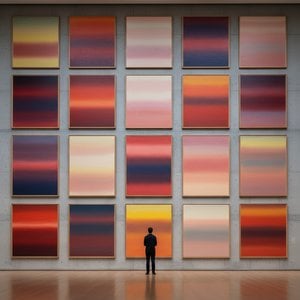
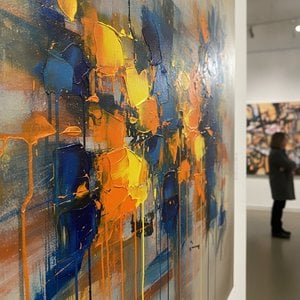
Richters kunstneriske vokabular udvidede sig gennem 1960'erne og fremad, omfattende en bemærkelsesværdig række teknikker og temaer. Hans fotorealistiske malerier, ofte baseret på familiebilleder eller avisbilleder, er ikke blot kopier af virkeligheden, men snarere undersøgelser af naturen for perception og repræsentation. Ved minutiøst at gengive disse billeder med næsten klinisk præcision, tvinger han betragterne til at konfrontere den iboende tvetydighed i fotografisk sandhed. Samtidig dykkede Richter dybere ned i abstraktion, hvor han skabte lærredsbilleder lagdelt med livlige farver og gestikulerede spor. Disse abstrakte værker blev ofte skabt ved hjælp af en unik teknik, der involverer skeletter – værktøjer typisk brugt til at rengøre vinduer – som han trak hen over overfladen af lærredet, manipulerende malingen på uforudsigelige måder. Denne omfavnelse af chance og spontanitet er central for hans kunstneriske filosofi, hvilket giver ham mulighed for at give slip på kontrol og invitere til uventede resultater. Hans ‘Farvekort’, systematiske arrangementer af farvede firkanter, udfordrer yderligere traditionelle opfattelser af kunstnerisk udtryk, idet de stiller spørgsmål ved selve definitionen af maleri. Disse værker handler ikke om individuelle æstetiske præferencer, men snarere om at udforske de iboende egenskaber ved farven og dens organisatoriske muligheder.
Legacy and Influence: A Master of Contemporary Art
Gerhard Richters indflydelse på nutidskonkunst er uomtvistelig. Hans villighed til at udfordre konventioner, hans utrættelige eksperimentering med teknik og hans dybe engagement i historiske og politiske temaer har etableret ham som en af de vigtigste kunstnere i vores tid. Han har konsekvent modstået enhver form for kategorisering, hvilket underminerer forsøg på at placere hans arbejde i en enkelt stilistisk ramme. Denne mangel på definition, kombineret med hans tekniske virtuositet og intellektuelle rigor, har tjent ham bred kritisk anerkendelse og kommerciel succes – hans malerier regner ofte med rekordpriser på auktion. Ud over markedsværdien ligger der en dybere betydning. Richters kunst taler om kompleksiteten af moderne eksistens, idet den kæmper med spørgsmål om hukommelse, identitet og søgen efter mening i en fragmenteret verden. Han giver ikke svar, men stiller spørgsmål, hvilket får betragterne til at konfrontere deres egne forudfattelser og engagere sig i kritisk dialog. *Hans indflydelse kan ses i arbejdet hos utallige kunstnere, der har fulgt hans fodspor*, trukket af hans innovative teknikker og hans urokkelige engagement i kunstnerisk udforskning. Richters arv handler ikke kun om at skabe smukke objekter; det er om at udvide mulighederne for maleri selv. Han forbliver en vital kraft i nutidskonkunst, der fortsat inspirerer og provokerer publikum med sit udfordrende og dybt resonerende værk.



 Se i rummet
 Bestil håndmalet reproduktion
 Send
Send Del
Del
 Detaljer
 Studieguide til kunstværker

 Download
 Lignende værker
 Røntgenundersøgelse
 Se diasshow
 Statistik

 Læs mere






































 Glasmulighed er kun tilgængelig i størrelser under 110 cm