Om kunstneren
En pioner for lysets præcision: Georges Seurats liv og kunst
Georges Pierre Seurat, født i Paris den 2. december 1859, trådte frem som en afgørende figur i overgangen fra impressionismen til moderne kunst. Hans korte, men intense karriere revolutionerede maleriet gennem udviklingen af pointillisme – en teknik forankret i videnskabelige principper og en ubønhør søgen efter optisk sandhed. Seurats historie er fortællingen om omhyggelig observation, intellektuel stringens og en dyb følsomhed over for lysets og farvens nuancer – kvaliteter der adskilte ham fra hans samtidige og fortsat fanger publikum den dag i dag. Hans tidlige liv, selvom tilsyneladende konventionelt, lagde grundlaget for hans fremtidige kunstneriske udforskninger. Familien flyttede til Boulevard de Magenta kort efter hans fødsel, og hans far, Antoine Chrysostome Seurat, en tidligere juridisk embedsmand blevet ejendomsspekulant, sørgede for en komfortabel opvækst, der gav den unge Georges adgang til kunstnerisk uddannelse. Han begyndte formel træning på École Municipale de Sculpture et Dessin under billedhuggeren Justin Lequien, efterfulgt af indskrivning på det prestigefyldte École des Beaux-Arts i 1878, hvor han studerede under Henri Lehmann. Disse formative år gav ham et solidt fundament i traditionelle teknikker, men selv dengang var en unik kunstnerisk personlighed begyndt at tage form – en blanding af delikat følsomhed og en spirende fascination for systematisk analyse.
Fra akademiske rødder til kromoluminarisme
Seurats kunstneriske udvikling var ikke et pludseligt spring ind i innovation, men snarere en gradvis evolution drevet af intellektuel nysgerrighed og streng eksperimentering. I begyndelsen afspejlede hans arbejde tidens akademiske standarder, der demonstrerede dygtighed i tegning og respekt for veletablerede kompositionelle principper. Han begyndte dog snart at stille spørgsmålstegn ved disse konventioner og søgte en mere videnskabelig tilgang til maleri. Han kastede sig over det spirende farvelæreområde, studerede skrifterne fra videnskabsmænd som Michel Eugène Chevreul og Ogden Rood, der udforskede de optiske effekter af sammenstillede farver. Denne forskning blev hjørnestenen i hans revolutionerende teknik, kromoluminarisme – farvens videnskab – og dens praktiske anvendelse, pointillisme. Den grundlæggende idé var bedårende enkel: at påføre små, distinkte prikker af ren farve på et lærred, idet man stolede på beskuerens øje til optisk at blande dem og skabe en levende, lysende effekt. Det handlede ikke kun om at opnå lysere farver; det handlede om at forstå, hvordan det menneskelige visuelle system opfattede lys og farve, og udnytte denne viden til at skabe en mere dynamisk og engagerende malerisk oplevelse. Han forberedte omhyggeligt sine store kompositioner med Conté-blyantstegninger på ru papir og kortlagde omhyggeligt placeringen af hver prik, hvilket demonstrerede næsten matematisk præcision i sin kunstneriske proces.
Landemærker af innovation: Væsentlige værker og kunstnerisk vision
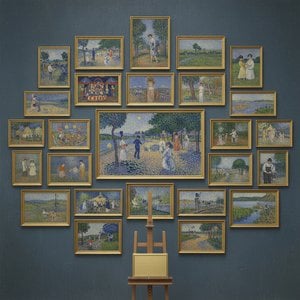
Kulminationen på Seurats forskning og eksperimenter kommer måske bedst til udtryk i A Sunday Afternoon on the Island of La Grande Jatte (1884-1886), et monumentalt værk, der markerede begyndelsen på neoimpressionismen. Dette ikoniske maleri, der skildrer parisere, der nyder en afslappet eftermiddag ved Seinen, viser hans pointillistiske teknik i sin fulde udstrækning. Figurerne, gengivet som omhyggeligt placerede farveprikker, synes at skimre og vibrere med lys, hvilket skaber en atmosfære af rolig stilhed. Alfalfa, Saint-Denis (1886-1887) demonstrerer hans anvendelse af farvelæren i et landskab, mens tidligere værker som Landscape at Saint-Ouen (1882-1883) afslører hans udviklende stil og voksende interesse for at fange lysets og atmosfærens effekter. Selv skildringer af moderne pariserliv, såsom The Eiffel Tower (1889), blev transformeret gennem sin unikke teknik og viste en harmonisk blanding af industriel modernitet og kunstnerisk innovation. Bathers at Asnières (1884), et andet betydningsfuldt værk, udforskede temaer om fritid og moderne liv med sin karakteristiske stil og varslede den mere raffinerede tilgang, der ses i *La Grande Jatte*. Disse malerier var ikke blot gengivelser af scener; de var omhyggeligt konstruerede visuelle eksperimenter designet til at udforske mulighederne for farve og perception.
En varig arv: Indflydelse og historisk betydning
På trods af et tragisk kort liv – Seurat døde i en alder af blot 31 år i 1891 – var hans indvirkning på kunstverdenen dybtgående og vidtrækkende. Hans arbejde udfordrede traditionelle kunstneriske konventioner og banede vejen for adskillige efterfølgende bevægelser. Vægten på subjektivt udtryk og udforskningen af nye teknikker genlydede hos kunstnere, der søgte at bryde fri fra akademiske begrænsninger. Seurats indflydelse kan ses i værkerne fra fauvister, som omfavnede dristige farver og udtryksfulde penselstrøg; kubister, der dekonstruerede former til geometriske figurer; og abstract expressionister, der prioriterede følelsesmæssig intensitet og spontan gestus. Seurats videnskabelige tilgang til maleri, selvom den oprindeligt var kontroversiel, udvidede i sidste ende definitionen af kunstnerisk mulighed. Han demonstrerede, at kunsten kunne være både intellektuelt streng og følelsesmæssigt bevægende – en syntese, der fortsat inspirerer kunstnere den dag i dag. Seurats arv rækker ud over hans tekniske innovationer; han efterlod sig et værk, der fanger essensen af moderne liv med uovertruffen præcision og skønhed og cementerede sin plads som en sand pioner inden for moderne kunst. Hans malerier forbliver vidnesbyrd om kraften i observation, eksperimentering og den udholdende menneskelige trang til at forstå verden omkring os gennem linsen af kunstnerisk udtryk.



 Se i rummet
 Bestil håndmalet reproduktion
 Send
Send Del
Del
 Detaljer
 Guide
Guide

 Download
 Lignende værker
 Røntgenundersøgelse
 Se diasshow
 Statistik


 Læs mere






































 Glasmulighed er kun tilgængelig i størrelser under 110 cm