

Kunstværket vist på denne side er beskyttet af ophavsretsloven, hvilket betyder, at vi ikke lovligt kan skabe eller sælge en identisk reproduktion. Denne beskyttelse håndhæves i henhold til internationale aftaler som f.eks. den Bernerkonventionen og af nationale love, herunder de bestemmelser, der er fastlagt i Amerikansk ophavsretslov - Titel 17.
Denne metode overholder fuldt ud ophavsretsreglerne, da den ikke indebærer kopiering eller duplikering af det beskyttede kunstværk. I stedet er der tale om en kreativ nytolkning – et nyt maleri, som er inspireret af det oprindelige, men ikke identisk med det.
Giclée- eller lærredstryk i museumskvalitet med hurtig produktion og fleksible muligheder for finish. ( Køb håndmalet maleri Skift til digitalt billede)





























Vælg mellem vores forudindstillede størrelser, der matcher kunstværkets originale proportioner.

Indtast den bredde og højde, du har brug for, så det passer til din ramme eller din væg. Et print kan kun beskæres, aldrig gøres større end selve billedet, så en størrelse med et andet format vil medføre, at dele af motivet går tabt. Vi sender dig en digital mockup til godkendelse, før vi printer noget. Billedet vist på denne side viser ikke den faktiske beskæring — det er kun mockuppen, der gør.
Verdensomspændende levering () på 2 uger i stedet for de sædvanlige 4/5 uger. (8 november)
Tea and Grape
Størrelse på reproduktion
Georges Braque's "Tea and Grape," painted around 1950, isn’t merely a depiction of fruit; it’s a carefully constructed meditation on form, color, and the subtle beauty of everyday objects. This work, rendered in an exquisite color etching and aquatint by Lacourières in Paris, exemplifies Braque's shift towards a more organic and less fractured approach to Cubism during his later years. It represents a departure from the geometric deconstruction that defined his early collaborations with Pablo Picasso, embracing instead a richer, more sensual palette and a heightened sense of spatial depth.
The composition is deceptively simple: a bowl overflowing with grapes, two apples nestled amongst them, a table draped in a subtly textured surface, and a chair providing a grounding element. Yet, within this apparent stillness lies a dynamic interplay of shapes and planes. Braque masterfully employs the techniques of etching and aquatint to create a remarkable range of tonal values – from deep blacks that suggest the shadows cast by the bowl and table to luminous whites that highlight the glistening grapes. The paper itself, Arches wove, contributes to the work’s luxurious quality, its fine texture enhancing the delicate details of the fruit and the subtle variations in color.
While rooted in the principles of Cubism – the fragmentation of objects into geometric forms and their subsequent reassembly from multiple viewpoints – “Tea and Grape” moves beyond the purely analytical. Braque’s approach here is less about dissecting reality and more about capturing its essence. The bowl, table, and chair are not rendered as sharply defined entities but rather as overlapping planes that subtly suggest their three-dimensional presence. This creates a sense of ambiguity, inviting the viewer to actively participate in constructing the image.
The influence of Paul Cézanne is palpable in Braque’s use of perspective and his emphasis on the underlying structure of objects. Like Cézanne before him, Braque seeks to represent not just what an object *looks* like but also how it *exists* in space. The careful arrangement of the fruit within the bowl, the way light falls across the table surface – all contribute to a feeling of quiet observation and contemplative beauty.
The choice of subject matter itself is significant. A still life—a commonplace scene—becomes imbued with a profound sense of stillness and serenity. The grapes, symbols of abundance and fertility, are presented in their full ripeness, inviting the viewer to savor their beauty. The apples, often associated with knowledge and temptation, add a layer of complexity to the composition. The overall effect is one of understated elegance and quiet contemplation.
“Tea and Grape” isn’t a vibrant or overtly dramatic work; its power lies in its restraint and subtlety. It's an invitation to slow down, to appreciate the simple pleasures of life, and to find beauty in the ordinary. Braque’s masterful control of line, tone, and texture creates a deeply affecting image that speaks to our shared human experience.
Reproductions of “Tea and Grape” offer an exceptional opportunity to bring this iconic work into your home or office. WahooArt's hand-painted reproductions meticulously capture the nuances of Braque’s original technique, ensuring that you receive a faithful representation of this remarkable piece. The rich colors, delicate textures, and subtle tonal variations are faithfully reproduced, allowing you to experience the full emotional impact of the artwork. Whether as a statement piece in a modern interior or a charming addition to a traditional setting, “Tea and Grape” is sure to be a treasured possession for years to come.
Inden for Georges Braques karriere tilhører "Tea and Grape" perioden Mature Period, hvilket gør det muligt at sammenligne værket med kunstnerens øvrige værker.
I forhold til den oplevede lysstyrke er "Tea and Grape" af Georges Braque shadow.
"Tea and Grape" er tilgængelig som et fine art-print på bomuldscanvas eller arkivbestandigt lærredspapir. Du kan bestille den i den ønskede størrelse på dens Kunstprint i høj kvalitet-side.

Georges Braque, født i Argenteuil nær Paris i 1882, begyndte sin rejse ind i kunstens verden med en baggrund, der var tæt forbundet med håndværkets praktiske side. Hans opvækst i en familie af malere og dekorationsmalere gav ham ikke blot en dyb forståelse for materialer og teknikker – han lærte at male direkte fra sin far – men også en tidlig værdsættelse af form og struktur. Selvom han oprindeligt fulgte i farens fodspor som bygningsmaler, viste Braques indre kunstneriske længsler sig hurtigt frem, hvilket førte til en formel uddannelse på École des Beaux-Arts i Le Havre. Dette fundament – en blanding af praktisk håndværk og akademisk studium – skulle senere vise sig at være afgørende, da han ville dekonstruere og genfortolke traditionelle kunstneriske konventioner.
I 1902 flyttede Braque til Paris og fortsatte sine studier ved Académie Humbert, hvor han blev opslugt af byens pulserende kunstmiljø. Her mødte han kunstnere som Marie Laurencin og Francis Picabia, hvilket skabte forbindelser, der ville forme hans tidlige udvikling. Hans tidlige værker reflekterede de dominerende indflydelser fra Impressionisme og Post-Impressionisme, men en afgørende møde med Fauvismens dristige farver og udtryksfrihed i 1905 satte en ny retning for hans kunstneriske udforskning.
Braques overtagelse af Fauvistiske principper – karakteriseret ved intense, ikke-naturalistiske farver og følelsesmæssigt udtryk – illustreres tydeligt i værker som The Patience. Denne periode var præget af samarbejde med kunstnere som Henri Matisse og André Derain, hvor de eksperimenterede med levende paletter og forenklede former. Dog var Braques engagement med Fauvismen ikke blot en imitation; han infunderede bevægelsen med sin egen unikke sans for detalje, temperer dens ukontrollerede udbrud med en mere afbalanceret og analytisk tilgang.
Et vendepunkt kom i 1907 med hans eksponering for Cézannes retrospektive udstilling. Cézannes fokus på geometriske former og multiple perspektiver havde en dybtgående indflydelse på Braque, hvilket lagde grundlaget for hans banebrydende samarbejde med Pablo Picasso. Fra 1908 begyndte disse to kunstgenier at arbejde sammen om at skabe Cubisme – en revolutionerende bevægelse, der udfordrede traditionelle forestillinger om repræsentation.
Sammen udviklede Braque og Picasso Analytisk Cubisme, hvor de dekonstruerede objekter i fragmenterede geometriske former og præsenterede dem fra flere synsvinkler samtidigt. Værker som Houses at L'Estaque demonstrerer denne tidlige fase, der viser en radikal afvigelse fra konventionel perspektiv og et fokus på de underliggende strukturer af formene.
Partnerskabet mellem Braque og Picasso fortsatte med at presse kunstens grænser, hvilket førte til udviklingen af Syntetisk Cubisme omkring 1912. Denne fase introducerede collage – inkorporeringen af virkelige materialer som avispapir, tapet og stof i malerier. Denne innovation udfordrede den traditionelle hierarkie mellem maleri og skulptur, udvisker grænserne mellem kunst og liv.
Braques banebrydende brug af papier collé (pasted paper) markerede et væsentligt vendepunkt i hans kunstneriske udvikling. Ved at integrere fragmenter af hverdagsgenstande i sine kompositioner, forstyrrede han det illusionistiske rum i traditionelt maleri og introducerede et nyt niveau af materialitet og tekstur.
Krigen i 1914 brød samarbejdet sammen, da Braque blev kaldt i militæret. Hans krigserfaringer havde en dybtgående indflydelse på hans kunstneriske vision, hvilket førte til at han udforskede mere personlige og lyriske temaer i sit post-krigsarbejde.
Efter krigen udviklede Braques stil sig ud over de strenge rammer af tidlig Cubisme, og omfavnede elementer fra klassisk komposition og en ny interesse for landskabsmaleri. Selvom han bevarede de geometriske indflydelser, der havde defineret hans tidligere arbejde, udviklede han en mere nuanceret og kontemplativ tilgang til malingen. Hans senere landskaber og interiører er karakteriseret ved deres rolige atmosfære og subtile harmonier af farver.
Gennem hele sin karriere forblev Braque dedikeret til at udforske de grundlæggende principper for form, rum og repræsentation. Han fortsatte med at eksperimentere med forskellige materialer og teknikker, der pressede kunstens grænser, indtil hans død i 1963. Hans indflydelse på efterfølgende generationer af kunstnere er ubestemt, og han har formet kunsthistorien og inspireret utallige malere og skulptører.

1882 - 1963 , Frankrig

Explore the profound beauty of fruit arrangement masterpieces. From Dutch Golden Age opulence to Baroque chiaroscuro, discover the art history, symbolism, and timeless elegance of classical still life paintings for the discerning collector.
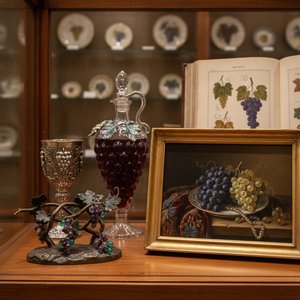
Embark on a visual journey through the world's most exquisite grape-themed masterpieces. Discover the technical brilliance of Baroque masters and learn how to curate timeless, hand-painted oil reproductions for your luxury collection with WahooArt.com.

Discover the profound legacy of Georges Braque. Our expert guide explores the evolution of Cubism, from Analytic deconstruction to Synthetic innovation, offering deep insights for discerning art collectors and connoisseurs of modern masterpieces.

Explore the profound evolution of Cubist still life, from Cézanne's structural foundations to the fragmented brilliance of Braque and Léger. Discover how geometric abstraction redefined reality through a sophisticated lens of form, color, and modern artistic mastery.
 Se i rummet
 Del som kort
 Del
Del
 Detaljer
 Guide
Guide

 Download
 Lignende værker
 Røntgenundersøgelse
 Diasshow
 Spørgsmål og svar
 Statistikker
 Vis mere









 Glasmulighed er kun tilgængelig i størrelser under 110 cm


