**et liv i kunstnerisk udforskning**
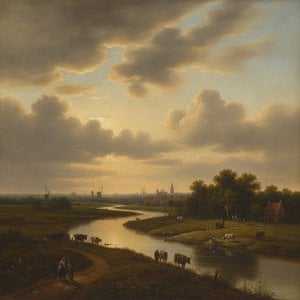
gabriël metsu, en hollandsk maler fra nederlandene, levede et liv præget af kunstnerisk udforskning og innovation. født i 1629, legemliggjorde metsus værk ånden fra den hollandske guldalder, en periode berømt for sin enorme kunstneriske produktion. denne biografi dykker ned i livet og værkerne hos denne gådefulde skikkelse, hvis bidrag til kunstverdenen fortsat fascinerende os.
**tidligt liv og indflydelser**
metsu blev født i 1629 som søn af jacques metsu, en gobelinvæver og maler oprindeligt fra hainault. denne eklektiske baggrund havde sandsynligvis stor indflydelse på gabriels tidlige interesse for forskellige kunstneriske teknikker. familiens flytning til leiden, hvor metsu voksede op, udsatte ham for mange forskellige kulturelle impulser.
**kunstnerisk karriere**
metsus karriere var kendetegnet ved ikke at binde sig til en enkelt stil eller teknik, hvilket gav ham titlen "en yderst eklektisk kunstner." hans arbejde spændte over historiemalerier, stilleben, portrætter og genrebilleder. bemærkelsesværdigt nok er kun 14 af hans 133 værker dateret, hvilket efterlader meget at opdage om hans kreative proces.
- rembrandt van rijn's indflydelse på metsus tidlige arbejde er tydelig, især i hans brug af lys og farve.
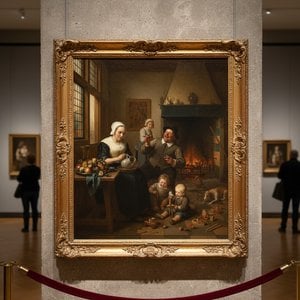
- metsus flytning til amsterdam i 1655 markerede et betydeligt skift i hans stil, med mere fokus på hjemlige interiører og genrebilleder.
- hans oplæring af michiel van musscher og joost van geel afspejler hans engagement i det kunstneriske samfund.
**bemærkelsesværdige værker og eftermæle**
metsus malerier portrætterede ofte unge kvinder, markedsscener og ældre mennesker, inspireret af populære emblemer. et fremragende eksempel er
the poultry seller, som udviser hans brug af symbolik.
vigtige værker: **museer og samlinger**
metsus værker kan findes på forskellige museer, herunder rijksmuseum i amsterdam. for mere information om hans kunst og for at udforske andre malere fra den hollandske guldalder, besøg /en/art/lag/art-d3c627-en/ for en omfattende oversigt.
**konklusion:** gabriel metsus liv og kunst er et vidnesbyrd om den innovative ånd i den hollandske guldalder. hans eklektiske stil, selvom den til tider er gådefuld, har efterladt et uudsletteligt mærke på kunstverdenen. mens vi fortsætter med at afdække mere om hans liv og værker, bliver vi mindet om den dybe indvirkning, han havde på udviklingen af den vestlige kunst.
- for en dybere forståelse af den hollandske guldalder, henvis til [https://en.wikipedia.org/wiki/dutch_golden_age_painting](https://en.wikipedia.org/wiki/dutch_golden_age_painting).
- udforsk flere af metsus værker og hans samtidiges ved [https://WahooArt.com/@/gabriel-metsu](https://WahooArt.com/@/gabriel-metsu).
**referencer:**



 Se i rummet
 Bestil håndmalet reproduktion
 Send
Send Del
Del
 Detaljer
 Studieguide til kunstværker

 Download
 Lignende værker
 Røntgenundersøgelse
 Se diasshow
 Statistik

 Læs mere






































 Glasmulighed er kun tilgængelig i størrelser under 110 cm