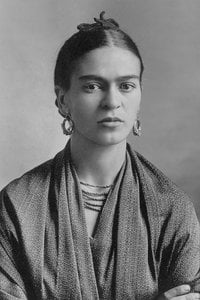
Om kunstneren
Frida Kahlo: Et Liv Vævet af Smerte og Passion
Magdalena Carmen Frida Kahlo y Calderón, blot kendt som Frida Kahlo, var mere end blot en kunstner; hun var et naturfænomen, en trodsig sjæl hvis liv blev uadskilleligt forbundet med hendes kunst. Født den 6. juli 1907 i Coyoacán, Mexico City, var hendes eksistens præget af fysisk lidelse og følelsesmæssig uro – oplevelser der ville nære det intense personlige og symbolske billedsprog, hun er berømt for. Hendes far, Guillermo Kahlo, en tysk-mexicansk fotograf, fremmede hendes intellektuelle nysgerrighed og kunstneriske tilbøjeligheder fra tidlig alder. Men Frida’s barndom var skygget af sygdom; som seksårig fik hun polio, hvilket efterlod hende med en permanent halthed og påvirkede hendes fysiske udvikling. Dette tidlige møde med sårbarhed og begrænsning ville blive et tilbagevendende tema i hendes arbejde, der formede hendes perspektiv på kroppen, smerte og modstandskraft. Selv før den ødelæggende ulykke, der definerede meget af hendes kunstneriske bane, havde Frida en skarp bevidsthed om sin egen kropslighed og dens iboende skrøbelighed.
Den Knuste Krop, Den Blomstrende Kunst
I 1925 ændrede Fridas liv uigenkaldeligt, da hun som attenårig var involveret i en forfærdelig busulykke. Hun pådrog sig katastrofale skader – brud på rygsøjlen, bækkenet og benet blandt andre. Indespærret i en langvarig periode med bedring, ofte sengeliggende og indsvøbt i gipsbandager, vendte hun sig indad og fandt trøst og udtryk gennem maleri. Hendes mor sørgede for et staffeli tilpasset brug under liggende stilling, hvilket transformerede begrænsningerne af hendes fysiske handicap til et rum for kunstnerisk udforskning. Det var i denne periode, at Frida begyndte at udforske selvportrætter med ubønhørlig intensitet. Udygtig til at begive sig ud i verden vendte hun sit blik indad og dokumenterede omhyggeligt sit eget billede som et middel til at forstå og konfrontere sin smerte, både fysisk og følelsesmæssig. Disse tidlige værker var ikke blot repræsentationer af hendes lighed; de var viscerale udforskninger af identitet, sårbarhed og den udholdende kraft i menneskelig ånd. Ulykken var ikke blot en tragedie; det var en katalysator, der frigjorde hendes kunstneriske potentiale og tvang hende til at konfrontere sin egen dødelighed og finde mening i lidelse.
Et Stormfuldt Forbund og Kunstnerisk Opblomstring
Fridas liv tog endnu et afgørende vendepunkt i 1929, da hun giftede sig med den berømte mexicanske muralist Diego Rivera. Deres forhold var en passioneret, men stormfuld affære, præget af intens kærlighed, utroskab, kunstnerisk rivalisering og perioder med adskillelse og forsoning. På trods af den følelsesmæssige uro viste Rivera sig at være en betydelig indflydelse på Fridas kunstneriske udvikling. Han opfordrede hendes unikke vision og gav konstruktiv kritik, mens han anerkendte kraften og originaliteten i hendes arbejde. Under hans vejledning, og gennem sin egen ubønhørige eksperimentering, begyndte Fridas stil at tage form, der blandede elementer af mexicansk folkekunst, realisme og surrealisme til et særpræget visuelt sprog. Hendes malerier blev i stigende grad symbolske og udforskede temaer som identitet, den menneskelige krop, smerte, død og kompleksiteten i kvindelig erfaring. Hun undgik ikke at skildre sin egen lidelse; tværtimod omfavnede hun det som et centralt tema i sit arbejde og transformerede personlig traume til universelle udsagn om den menneskelige tilstand.
Symboler for Lidelse, Modstandskraft og Identitet
Frida Kahlo er måske bedst kendt for sine selvportrætter, der er karakteriseret ved deres ubarmhjertige ærlighed og symbolske dybde. Værker som De To Fridaer (1939), et kraftfuldt billede af hendes dobbelte identitet efter skilsmissen fra Rivera, viser hendes evne til at eksternalisere intern konflikt gennem slående visuelle metaforer. Selvportræt med Torns Halskæde og Kolibri (1940) er fyldt med symbolik – tornene repræsenterer smerte, kolibrien symboliserer håb og modstandskraft, og den sorte kat er en varsler om uheld. Den Knuste Søjle (1944), et hjerteskærende billede af hendes fysiske lidelse, skildrer Frida’s torso åben for at afsløre en smuldrende ionisk søjle i stedet for hendes rygsøjle, holdt sammen af stropper og gennemboret med søm. Selv Henry Ford Hospital (1932), et råt og dybt personligt billede af hendes abort, demonstrerer hendes villighed til at konfrontere tabubelagte emner med ubarmhjertig ærlighed. Disse malerier er ikke blot repræsentationer af smerte; de er handlinger af trods, påstande om selvstændighed i mødet med modgang.
En Varig Arv
Frida Kahlos indflydelse strækker sig langt ud over kunstens verden. Hun var et kulturelt ikon, der udfordrede traditionelle kønsroller og samfundsmæssige forventninger gennem sit liv og sit arbejde. Hendes omfavnelse af mexicansk kultur og identitet hjalp med at øge dens profil på den internationale scene, og hendes ubarmhjertige skildring af smerte genlød hos publikum over hele verden og gjorde hende til et symbol på modstandskraft og styrke. Hun blev en vigtig figur for Chicanos i USA, der repræsenterede deres kulturelle arv og kampe. Selvom hun modsatte sig at blive kategoriseret som surrealist, deler hendes arbejde ligheder med bevægelsens udforskning af det ubevidste og drømmende billedsprog. I dag fejres Frida Kahlo som en af de vigtigste kunstnere i det 20. århundrede, hvis arv fortsætter med at inspirere generationer til at omfavne deres identiteter, konfrontere modgang og udtrykke sig autentisk. Hendes kunst forbliver et vidnesbyrd om den udholdende kraft i menneskelig ånd til at finde skønhed og mening selv i de mørkeste tider.



 Se i rummet
 Bestil håndmalet reproduktion
 Send
Send Del
Del
 Detaljer
 Studieguide til kunstværker

 Download
 Lignende værker
 Røntgenundersøgelse
 Se diasshow
 Statistik

 Læs mere






































 Glasmulighed er kun tilgængelig i størrelser under 110 cm