Se i rummet Se i AR Skift til printversion Skift til digitalt billede Send
Detaljer Studieguide til kunstværker Tilføj til favoritter Download Lignende værker Røntgenundersøgelse Se diasshow Statistik

Circe

  • Oprettelsesdato1910
  • Dimensioner81.0 x 137.0 cm

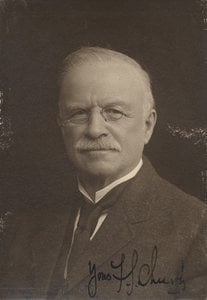
Frederick Stuart Church (1842-1923) was an American illustrator renowned for allegorical animal depictions. Explore his charming works featured in Harper's, Century Magazine & more. Discover the art of a master of empathy and whimsical storytelling.

Håndlavet oliereproduktion

Håndmalet olie på lærred i din valgte størrelse og ramme, udført efter bestilling af vores kunstnere. ( Skift til printversion Skift til digitalt billede)

Standardstørrelse
speciallavet
CM
INCH

Vælg mellem vores forudindstillede størrelser, der matcher kunstværkets originale proportioner.

bredde
højde

Indtast den bredde og højde, du har brug for, så det passer til din ramme eller din væg. Da dette er håndmalet, kan kunstneren ved en anden form på størrelsen male lidt mere rundt om billedet eller skære lidt væk — det er op til dig. Vi sender dig et digitalt mockup til godkendelse, før maleriet påbegyndes. Billedet, der vises på denne side, viser ikke det endelige resultat — det er kun mockuppet, der gør.

Eksempler på tilpasningsmuligheder: Udskift ansigt med kundens eget foto; Tilføj kæledyr (f.eks. udskift kat med hund); Inkluder en skjult besked i baggrunden; Ændr baggrundslandskab eller elementer.
Efter bestilling vil WahooArt.com team sende en e-mail til kunden for at indhente instruktioner og fremsende et udkast til gennemgang.

Levering i hele verden () på 3-4 uger i stedet for de standard 5 uger. (24 oktober). Ingen kompromiser med kvaliteten.

Gratis ekspresforsendelse til hele verden
Lærred af linned i høj kvalitet
Komplet transportforsikring
Garanti for refusion af told og importafgifter
Garanti for autentisk farvegengivelse
100 dages returret ved fabrikationsfejl
100% fuld returret
Mængderabat ved flere køb

Samlet pris

Dkr 1784

Circe

Reproduktionsmateriale

Reproduktionsstørrelse

-

Samlet pris

Dkr 1784

The Circe painting, created by the renowned American artist Frederick Stuart Church in 1910, is a mesmerizing oil on canvas artwork that showcases the artist's skill in capturing the essence of his subject. Measuring 81 x 137 cm, this piece is a testament to the artist's ability to blend elements of mythology and nature.

Artist Background

Frederick Stuart Church was an American artist known for his oil on canvas paintings, including Circe. His work can be found in various museums, including the Smithsonian American Art Museum in Washington, D.C. As a professional expert in Art and salesman at https://WahooArt.com, I can appreciate the beauty and significance of this painting. Key Features of the Painting:
  • The painting depicts a woman standing on the edge of a cliff overlooking the ocean.
  • The woman is wearing a dress and has her hair in a ponytail, adding to the elegance of the scene.
  • Two dogs can be seen near the right side of the image, possibly accompanying the woman or simply enjoying the view.

Museum and Collection

The Circe painting is part of the collection at the Smithsonian American Art Museum, which is home to over 30,000 artworks. The museum's collection includes paintings, sculptures, and other artworks from various cultures and time periods. You can learn more about the Smithsonian American Art Museum and its collection on https://WahooArt.com. Reproductions of the Painting: If you're interested in owning a reproduction of the Circe painting, you can find handmade oil paintings reproductions on https://WahooArt.com. Our team of skilled artists uses high-quality materials to create accurate and beautiful reproductions of famous artworks.
The Circe painting by Frederick Stuart Church is a stunning example of American art from the early 20th century. Its unique blend of mythology and nature makes it a fascinating piece to study and appreciate. Whether you're an art historian, a collector, or simply someone who appreciates beautiful artwork, the Circe painting is definitely worth exploring further on https://WahooArt.com.

Spørgsmål & svar

Kan jeg se et røntgenbillede af "Circe" af Frederick Stuart Church?

Røntgenvisningen af "Circe" af Frederick Stuart Church findes på værkets Røntgenundersøgelse-side: en interaktiv undersøgelse af billedet gennem elleve optiske lag.

Findes der et faktablad om "Circe" af Frederick Stuart Church til studerende?

Guide-siden for "Circe" af Frederick Stuart Church tilbyder et printbart faktablad på to sider: kunstværket med dets identitetstabel, en tidslinje der placerer det i kunstnerens levetid, andre værker af kunstneren, den målte farvepalette og citater klar til kopiering i fire forskellige stilarter.

Hvilken farve træder mest frem i "Circe"?

Den dominerende farve i "Circe" af Frederick Stuart Church er Olive (#886c2e).


Om kunstneren

The Visionary Soul of an American Master

In the vibrant tapestry of late nineteenth-century American art, few threads are as intricately woven or as whimsically colored as those spun by Frederick Stuart Church. Born in Grand Rapids, Michigan, on December 1, 1842, Church was a man whose life trajectory defied the conventional paths laid out by his prominent lineage. The son of a distinguished lawyer and politician, his early years were marked by a departure from the structured world of commerce. At just thirteen, he abandoned formal schooling to join the American Express Company in Chicago—a move intended by his parents to steer him toward a stable business career. Yet, the call of destiny was far more profound than the lure of ledger books. The onset of the Civil War provided a transformative crucible; serving in the Union Army, Church experienced a depth of human experience that would later infuse his work with a unique sense of empathy and moral weight.

Upon his discharge, the artist’s true vocation emerged with undeniable clarity. Returning to Chicago, he sought the mentorship of Walter Shirlaw at the Academy of Design, beginning a rigorous journey into the heart of visual storytelling. By 1870, Church had migrated to New York City, a metropolis that would serve as his lifelong sanctuary and creative laboratory. Unlike many of his contemporaries who sought validation through European ateliers, Church maintained a fiercely independent spirit. He famously rejected the necessity of studying abroad, asserting a bold, nativist conviction that American art possessed its own inherent strength and did not need to mimic "foreign" styles. This commitment to an authentic American aesthetic allowed him to develop a voice that was uniquely his own—a blend of Romanticism and Symbolism that felt both modern and timeless.

A Symphony of Allegory and Animal Grace

Church’s artistic legacy is most profoundly felt in his mastery of the allegorical depiction. He possessed a rare, almost supernatural ability to imbue the animal kingdom with human emotion and moral complexity. His illustrations, which graced the pages of prestigious publications such as Harper's and Century Magazine, were never merely decorative; they were narratives of the soul. Through his delicate use of line and color, a tiger was rarely just a predator, and a bird was never just a creature of flight. Instead, they became vessels for exploring themes of innocence, power, and the delicate balance of nature. In works like Maiden with Flamingos or his evocative etchings such as A Symphony, one finds a serene yet tension-filled world where every tilt of a head or outstretched paw tells a story of profound significance.

His technique often danced between the realms of Impressionism and fine line illustration, creating a dreamlike atmosphere that captivated the Gilded Age audience. His fascination with certain motifs—such as the majestic tiger or the delicate songbird—allowed him to explore the duality of existence: the predator and the prey, the powerful and the vulnerable. This era of his work reflected the broader cultural shifts of the time, capturing a sense of lightness and whimsy while simultaneously touching upon deeper, often more somber, social allegories. To look upon a Church original is to enter a realm where the boundaries between the natural world and the human psyche dissolve into a beautiful, symbolic haze.

Legacy of an American Illustrator

The historical significance of Frederick Stuart Church lies in his ability to bridge the gap between commercial illustration and fine art. He elevated the medium of the periodical illustration to a level of high symbolism, proving that even within the constraints of mass media, an artist could achieve profound depth. His life, spanning from the mid-nineteenth century through the dawn of the twentieth, mirrored the evolution of the American identity itself—moving from the ruggedness of the Civil War era to the sophisticated, ornamental elegance of the Gilded Age.

Today, his work remains a testament to the power of empathy in art. His ability to find the "human" within the animal and the "divine" within the mundane continues to resonate with collectors and historians alike. As we revisit his catalog, we see more than just beautiful images; we encounter the enduring spirit of an artist who believed that through the lens of nature, we might most clearly see ourselves.

  • Key Artistic Milestones:
  • Enrolled at the National Academy of Design under Lemuel Wilmarth.
  • Became a prominent contributor to Harper's Weekly and Century Magazine.
  • Developed a signature style blending Romanticism with animal allegory.
  • Championed an independent, American-centric approach to artistic training.

Hurtige fakta

  • Full Name: Frederick Stuart Church
  • Nationality: American
  • Date Of Birth: 1842
  • Date Of Death: 1924
  • Place Of Birth: Grand Rapids, Michigan
  • Notable Artworks:
    • Supremacy
    • Dreamers
    • Two Birds
  • Artistic Movement Or Style: Illustrator; Victorian Animal Art
  • Artists Who Influenced This Artist: Walter Shirlaw
  • Artists Or Movements Influenced By This Artist: Aesops Fables
Udforsk kunstværker organiseret efter temaer, stilarter og karakteristika.