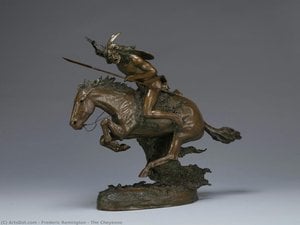
A Chronicler of the Vanishing West: The Life and Art of Frederic Remington
Frederic Sackrider Remington, født i Canton, New York, den 4. oktober 1861, var langt fra produktet af det Vesten han så levende portrætterede; snarere var han en Østling, der forgrenede sin kunstneriske identitet gennem fascination og dedikeret studium. Hans slægtskab antydede et liv radikalt forskelligt fra støvede stier og kavalerikampagner – fransk-basisk arv blandet med stærkt republikansk New England rødder, en far der var civilkrigskolonel og avisudgiver, og forbindelser til det berømte Remington Arms-dynasti gennem fjerne slægtsforhold. Alligevel var det en tidlig eksponering for militære temaer, kombineret med en rastløs ånd og et skarpt blik for fortælling, der førte ham på vejen mod at blive måske den mest genkendelige kunstner af Amerika’s Vest. Hans barndom flyttede til Bloomington, Illinois, derefter tilbage til Canton og endelig til Ogdensburg, New York, men hans fantasi blev fastholdt af historier om frontliv. Selvom han i første omgang blev styret mod militær uddannelse på Vermont Episcopal Institute, lå Remingtons sande kald ikke i at følge ordrer, men i at observere og fortolke verden omkring ham gennem kunst. Et kort ophold ved Yale Universitet bekræftede dette; fodbold og skitsering havde langt mere appel end formel akademisk beskæftigelse.
Fra Illustrator til Maler: Skabelsen af en Kunstnerisk Vision
Remingtons kunstneriske rejse begyndte ikke med store lærred, men med blæk og papir. Hans første udgivelsesarbejde, en tegning for *Yale Courant*, signalerede tidligt en evne til at fange handling og fortælling. En afgørende tur til Montana i 1881 tændte hans livslange besættelse af Vesten. Dette var ikke blot et turisters blik; Remington søgte at fordybe sig i kulturen, observere cowboys, indianere og landskabet selv. I første omgang forsøgte han ranching og minedrift, men disse viste sig mislykket, hvilket fritlagde ham til fuldt ud at dedikere sig til kunst. Tilbage i Øst etablerede han hurtigt sig selv som en illustrator for magasiner som *Harper’s Weekly* og *Collier’s*, hans dynamiske billeder af vestlige scener fangede et nationalt publikum, der hungrede efter historier om fronten. Disse illustrationer var ikke blot rapportering; de var infuseret med drama, energi og en romantiseret vision af Vesten, der resonerede dybt hos den offentlige fantasi. Det var gennem dette arbejde at Remington finpudsede sine færdigheder i komposition, fangede bevægelse og formidlede følelser – kvaliteter, der senere ville definere hans malerier. Han modtog minimal formel uddannelse ud over nogle tegnekurser ved Yale og et kort ophold på Art Students League, udviklede i stedet en distinkt stil karakteriseret af energisk penselføring, dristige farver og fokus på realisme blandet med dramatisk flair.
At Fange en Forsvindende Verden: Temaer og Stil
Remingtons kunst er uadskillelig fra et bestemt øjeblik i amerikansk historie – Vestens afslutningstid. Hans lærred er befolket af ikoniske figurer: robuste cowboys, der kører kvæg, stoiske indianere, der står over for displacement, og U.S. Cavalry-soldater engageret i både heroiske kampe og tragiske konflikter. Han tøvede ikke med at portrættere de barske realiteter af frontlivet, men hans kunst har ofte en romantiseret fremstilling, der understreger mod, eventyr og kultkollisionen.
Hans malerier er ikke blot historiske dokumenter; de er evokende fortællinger, der udforsker temaer om heltemod, tab og den uundgåelige march af fremskridt. Remingtons stil udviklede sig over tid, fra tættere, mere akademiske gengivelser til løsere, mere udtryksfuld penselføring. Han var en mester i at fange bevægelse – heste, der galoperer på sletterne, cowboys, der kæmper med kvæg, soldater, der stormer ind i kampen.
Han brugte ofte hurtige skitser og fotografier som reference materiale, men hans kunst overgik altid simpel imitation, infuseret med sin egen unikke vision og følelsesmæssige intensitet. Bemærkelsesværdige værker som *My Ranch*, *Waiting in the Moonlight*, *Ridden Down* (1905) og *The Long-Horn Cattle Sign* (1908) eksemplificerer hans evne til at fange både den storehed og sårbarheden af Amerika’s Vest.
Arv og Vedvarende Indflydelse
Frederic Remington døde uventet i 1909 i en alder af 48 år, efterladende sig et enormt værk, der fortsat fanger publikums opmærksomhed i dag. Hans indflydelse på vestlig kunst er uomtvisteligt; han portrætterede ikke kun Vesten, men hjalp *til at definere* den for generationer af amerikanere. Han etablerede et visuelt sprog for fronten – en ikonografi af cowboys, indianere og kavalerisoldater, der blev dybt indgraveret i den populære fantasi.
- Hans arbejde inspirerede mange andre kunstnere, herunder N.C. Wyeth og Zane Grey.
- Frederic Remington Art Museum i Ogdensburg, New York, står som et vidnesbyrd om hans vedvarende arv, der bevarer en omfattende samling af hans malerier, skulpturer og arkivmateriale.
- Hans kunst udstilles fortsat på store museer i hele landet, herunder Metropolitan Museum of Art og Amon Carter Museum of American Art.
Remingtons fremstillinger, selvom de nogle gange kritiseres for deres romantiseret fremstilling af Vesten, giver et værdifuldt indblik i en afgørende æra i amerikansk historie. Han fangede ikke kun hvad *var*, men også hvad folk *troede* om Vesten – dets myter, dets legender og dets vedvarende appel. Han er et stærkt symbol på den amerikanske ånd - en kronikør af en forsvindende verden, der omdannede den til en varig kunstnerisk arv.



 Skift til print
 Del
Del Del
Del
 Detaljer

 Download
 Lignende værker
 Diasshow
 Statistik


 Se mere