Få en printklar fil, der rækker langt ud over web-forhåndsvisningen. Hvert digitalt billede, vi sælger, stammer fra en højopløst master i vores database — typisk mellem 5.000 og 15.000 pixels i bredden — så du med selvtillid kan printe stort, beskære tæt eller gengive fine detaljer.
Ingen fil forlader vores studie uden at være blevet behandlet. En digital ekspert kontrollerer farverne i forhold til det originale maleri og korrigerer dem efter behov, hvorefter klarhed og detaljer forbedres med professionelle retoucheringsværktøjer — altid med fuld respekt for kunstnerens penselstrøg og stil. Resultatet er et billede, der ligner selve maleriet, og ikke blot et scannet billede med et filter.
Du godkender først, når du er tilfreds: Vores ekspert sender billedet til din gennemgang via e-mail inden for 72 timer. Ikke tilfreds? Bed om rettelser eller forbedringer, eller anmod om en refundering, hvis kvaliteten ikke lever op til forventningerne.
Dette er den kvalitet, som forlag, designstudier, gallerier og trykkerier stoler på.
Download en højopløselig fil til personlig fremvisning, print og kreative projekter. ( Skift til printsalg Køb håndmalet maleri)
Når du vælger WahooArt.com, får du ikke blot et billede – du modtager et professionelt optimeret digitalt kunstværk, skabt med præcision og sikret med en tilfredshedsgaranti. Her er alt, hvad din ordre automatisk indeholder:
Din højtopløselige digitale billedfil sendes til din e-mail inden for 72 timer efter bestilling – klar til øjeblikkelig brug.
Dit kunstværk optimeres professionelt ved hjælp af avancerede AI-værktøjer og manuel redigering, hvilket sikrer maksimal detaljegrad, klarhed og farvenøjagtighed.
Har du ved en fejl slettet eller mistet din fil? Ingen bekymring – vi sender den igen til enhver tid, helt gratis.
Nyd dit kunstværk med det samme uden told, afgifter eller leveringsgebyrer – digitale downloads er altid skattefrie.
Vi sikrer, at dit digitale billede gengiver de originale farver så præcist som muligt ved hjælp af professionelle værktøjer og farvestyring.
Hvis du ikke er tilfreds med dit digitale billede, vil vi revidere det eller refundere 100% inden for 100 dage – uden spørgsmål.
Ik tilfreds? Få fuld refusion inden for 100 dage efter modtagelse af din digitale fil – uden spørgsmål.
Køb 3 billeder, spar 10% - Køb 5, spar 15% - Køb 10+, spar 20%. Ideelt til kreative projekter, gallerier og bureauer.
Frederic Remington’s “An Indian Trapper,” painted in 1889, isn't merely a portrait; it’s a carefully constructed narrative of the fading frontier and the complex relationship between European settlers and Native Americans. Born in Canton, New York, in 1861 – a place far removed from the landscapes he would immortalize – Remington initially sought a military career but found his true calling in capturing the spirit of the American West through art. This particular painting, created after his travels to Alberta, Canada, reflects a period of profound change and increasing tension as the vast territories were rapidly being claimed by white settlers.
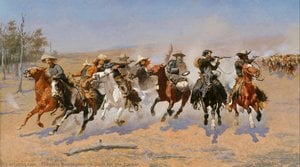
The scene unfolds with remarkable detail against a backdrop of rugged, snow-dusted mountains – a quintessential vista of the Canadian Rockies. At the center stands a Native American man, identified often as a Cree or Blackfoot warrior, mounted on horseback and expertly maneuvering his mount through the challenging terrain. His attire—a traditional headdress, buckskin clothing, and a rifle slung across his back—immediately anchors him within this specific cultural context. Remington’s meticulous rendering of the horse, its powerful muscles straining with effort, underscores the vital role of animals in Native American life and their mastery of the wilderness.
Remington was a master of realism, meticulously documenting the details of his subjects – from the weathered texture of the man’s clothing to the intricate patterns of the headdress. However, “An Indian Trapper” transcends simple representation; it’s imbued with a romantic sensibility characteristic of Remington's work. The dramatic lighting—a strong contrast between light and shadow—heightens the sense of adventure and emphasizes the rugged beauty of the landscape. Notice how the artist uses loose brushstrokes to convey movement and energy, particularly in the horse’s stride and the man’s determined posture.
The painting's composition is carefully balanced, drawing the viewer’s eye across the scene. The figure dominates the foreground, while the distant mountains create a sense of scale and emphasize the vastness of the territory. Remington employed oil paints on canvas, utilizing layering techniques to achieve depth and texture. His use of color—earth tones punctuated by flashes of white snow—further enhances the painting’s realism and evokes the harsh beauty of the Western landscape.
“An Indian Trapper” is more than just a depiction of an individual; it's a visual statement about the era. The title itself suggests a figure caught between two worlds – a skilled hunter and tracker, yet also a participant in a rapidly changing society. The painting was initially conceived during Remington’s sketching expedition to Alberta, where he sought to document the lives of Native Americans before they were largely displaced by settlers. It's important to note that Remington’s portrayal, while detailed, has been subject to criticism for potentially perpetuating stereotypes about Native American culture.
However, considering the context of the late 19th century, when westward expansion was accelerating and Native American tribes were facing increasing pressure, “An Indian Trapper” offers a valuable glimpse into a vanishing way of life. The painting’s inclusion in *Harper's Monthly Magazine* in 1891 further cemented its place as a significant representation of the West during that period, sparking debate and discussion about the future of Native American communities.
Looking at “An Indian Trapper” today, one is struck by its powerful sense of adventure and resilience. The figure’s determined gaze and confident posture convey a spirit of independence and mastery over his environment. The painting evokes a feeling of both admiration for the Native American warrior and a poignant awareness of the impending loss of their traditional way of life. It remains a compelling testament to Frederic Remington's skill as an artist and his enduring fascination with the American West – a landscape forever shaped by conflict, exploration, and transformation.
Der er en Elevguide-side tilgængelig for "An Indian Trapper" af Frederik Remington: et printbart faktablad om kunstværket, designet til elever og undervisningsbrug.
"An Indian Trapper" af Frederik Remington blev skabt i 1889.
"An Indian Trapper" af Frederik Remington kan downloades fra værkets Download-side som et højopløseligt digitalt billeddownload.


1861 - 1909 , USA
 Se i rummet
 Del som kort
 Del
Del
 Detaljer
 Guide
Guide

 Download
 Lignende værker
 Røntgenundersøgelse
 Diasshow
 Spørgsmål og svar
 Statistikker


 Vis mere