Kunstværket vist på denne side er beskyttet af ophavsretsloven, hvilket betyder, at vi ikke lovligt kan skabe eller sælge en identisk reproduktion. Denne beskyttelse håndhæves i henhold til internationale aftaler som f.eks. den Bernerkonventionen og af nationale love, herunder de bestemmelser, der er fastlagt i Amerikansk ophavsretslov - Titel 17.
Denne metode overholder fuldt ud ophavsretsreglerne, da den ikke indebærer kopiering eller duplikering af det beskyttede kunstværk. I stedet er der tale om en kreativ nytolkning – et nyt maleri, som er inspireret af det oprindelige, men ikke identisk med det.
Giclée- eller lærredstryk i museumskvalitet med hurtig produktion og fleksible muligheder for finish. ( Køb håndmalet maleri Skift til digitalt billede)





























Vælg mellem vores forudindstillede størrelser, der matcher kunstværkets originale proportioner.

Indtast den bredde og højde, du har brug for, så det passer til din ramme eller din væg. Et print kan kun beskæres, aldrig gøres større end selve billedet, så en størrelse med et andet format vil medføre, at dele af motivet går tabt. Vi sender dig en digital mockup til godkendelse, før vi printer noget. Billedet vist på denne side viser ikke den faktiske beskæring — det er kun mockuppen, der gør.
Verdensomspændende levering () på 2 uger i stedet for de sædvanlige 4/5 uger. (16 november)
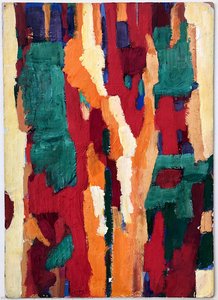
Ms. Kupka between vertical
Størrelse på reproduktion
In the vast landscape of early twentieth-century modernism, few works capture the electric transition from representation to pure abstraction as poignantly as František Kupka’s “Ms. Kupka Between Vertical.” This masterpiece serves not merely as a portrait, but as a profound manifesto of the Orphic Cubist movement—a style that sought to infuse the structural rigor of Cubism with the lyrical, light-filled energy of Orphism. At first glance, the viewer is met with a striking central figure, likely a depiction of Kupka herself, draped in a vibrant red dress and anchored by a cool blue headband. Yet, this recognizable human element is quickly swept into a cosmic dance of geometric shapes and swirling hues. The painting acts as a window into a world where the boundaries between the physical subject and the spiritual atmosphere dissolve, inviting the observer to experience art as a pure, sensory phenomenon.
The technique employed by Kupka is nothing short of revolutionary for its era. Moving away from the heavy, earth-toned palettes of traditional Cubism, he utilizes a masterful manipulation of color temperature to create depth and movement. The juxtaposition of warm reds against deep, rhythmic blues creates a visual tension that mimics the pulse of life itself. His brushstrokes are expressive and spontaneous, eschewing meticulous detail in favor of capturing an underlying energy. This approach allows the background—a kaleidoscope of abstract, interlocking forms—to breathe alongside the subject, creating a sense of dynamism that was heavily influenced by the Futurist fascination with speed and motion. For the discerning collector or interior designer, this piece offers a sophisticated focal point that brings both intellectual depth and a vibrant, modern vitality to any curated space.
To truly appreciate “Ms. Kupka Between Vertical,” one must understand the philosophical currents that flowed through Kupka’s studio. Deeply influenced by Theosophy and the search for universal truths, the artist viewed color and line as tools to access a higher, primordial reality. The verticality suggested in the title and the composition serves as a symbolic bridge between the terrestrial and the divine. The swirling geometric patterns are not merely decorative; they represent the unseen forces of nature—the vibrations and rhythms that connect all living things. This spiritual dimension imbues the artwork with an emotional weight that transcends its abstract form, offering a sense of transcendence and peace to those who linger before it.
For those seeking to integrate fine art into contemporary interiors, this work provides an unparalleled opportunity to introduce a sense of historical significance and avant-garde elegance. A high-quality reproduction of this piece does more than decorate a wall; it establishes a dialogue between the history of the Czech avant-garde and the modern aesthetic. The painting’s ability to balance bold, energetic movement with a structured, rhythmic composition makes it an ideal centerpiece for spaces that value both drama and harmony. It remains a timeless testament to the moment when art broke free from the constraints of reality to explore the infinite possibilities of the human imagination.
"Ms. Kupka between vertical" forbinder Abstract Expressionism-bevægelsen med Tjekkiet gennem skaberens fødested.
Farveidentiteten i "Ms. Kupka between vertical" af František Kupka: en Dark palet, domineret af Rosy Brown (#cba679).
Røntgenvisningen af "Ms. Kupka between vertical" af František Kupka findes på værkets Røntgenoptagelse-side: en interaktiv undersøgelse af billedet gennem elleve optiske lag.

František Kupka blev født den 23. september 1871 i Opočno, i det østligeమem, inden for grænserne af Østrig-Ungarn. Hans tidlige år blev formet af dette regions landskaber, et miljø der varslede hans senere bevægelse mod mere komplekse, ikke-repræsentative former. Mellem 1889 og 1892 tilbragte han sin tid ved Kunstakademiet i Prag. I disse studierår var hans pensel rettet mod historiske og patriotiske temaer, hvor han mestrede de tekniske krav i den akademiske uddannelse, mens han udforskede fortællingerne fra sit hjemland.
Hans uddannelse fortsatte, da han blev indskrevet på Kunstakademiet i Wien. Det var i denne periode med formel undervisning, at hans interesser begyndte at skifte mod det usynlige. Han blev opslugt af teosofien og østlig filosofi og søgte efter en mening, der rakte ud over lærredets fysiske overflade. Disse studier tilførte en spirituel dimension til hans tankegang og førte ham væk fra de bogstavelige skildringer fra hans tidligere uddannelse og mod en søgen efter dybere, skjulte realiteter.
Flytningen til Paris i 1894 ændrede retningen for hans arbejde fundamentalt. Han tilbragte tid på Académie Julian, før han fortsatte sin uddannelse hos Jean-Pierre Laurens på École des Beaux-Arts. Disse år i storbyen blev brugt på at opsuge fin de siècle-atmosfæren; han var ikke blot i gang med at absorbere tekniske færdigheder, men søgte snarere en måde at udtrykke det, der ikke umiddelbart er synligt for det blotte øje. Hans fokus begyndte at bevæge sig væk fra de historiske og patriotiske motiver fra hans tidligere uddannelse og mod noget langt mere indre og sjæleligt.
Omkring 1906 havde han bosat sig i Puteaux, en forstad til Paris. Denne periode markerede et betydeligt skifte i, hvordan han præsenterede sit værk for offentligheden. Samme år udstillede han for første gang på Salon d'Automne. Malerierne fra denne æra vidner om et brud med den repræsentative stil, han havde praktiseret i Prag og Wien. Han begyndte at bevæge sig mod et mere personligt visuelt sprog – et sprog, der prioriterede, hvordan farve og form kunne kommunikere mening uden behov for at afbilde genkendelige objekter.
Omkring 1910–1911 begyndte de genkendelige former fra hans tidligere værker at vige pladsen. Han bevægede sig væk fra at skildre objekter, som de fremstod for øjet, og valgte i stedet at bruge linjer og former til at udtrykke indre idéer. Dette skift var ikke en afvisning af struktur, men snarere en søgen efter en anden form for sandhed. Han betragtede farvens essens med et intenst blik og studerede, hvordan forskellige nuancer interagerer og påvirker hinanden på lærredets overflade. Han bar på en overbevisning om, at den specifikke påføring af maling kunne hjælpe beskueren med at træde ind i en oprindelig tilstand af væren.
Hans håndtering af materialet blev stadig mere bevidst og målrettet. I sit maleri fra 1910, Nocturne, påførte han oliemaling i lag for at opbygge en følelse af luminans og teksturel dybde. Denne metode fik lyset til at virke som om, det udgik fra selve pigmentet. Han fokuserede på, hvordan farven kunne fungere som en uafhængig kraft, der bevægede sig ud over den rene beskrivelse for at skabe et visuelt sprog af ren sensation.
Omkring 1912 skete der et afgørende skift i hans kunstneriske fokus, hvor blikket vendte sig mod en helt ny måde at se verden på. Under den kubistiske udstilling om det gyldne snit ved Salon des Indépendants begyndte malerierne at løsrive sig fra de genkendelige former, som vi kender fra den fysiske verden. Det var i denne brydningstid, at orphismen spirede frem – en bevægelse, hvor samspillet mellem farve og lys fik forrang over den traditionelle afbildning af objekter. Hans værker blev centrale eksempler på denne nye stil, der stræbte efter at bryde ud over de konventionelle grænser for repræsentation.
Denne bevægelse mod ren abstraktion blev særligt tydelig i den måde, farven blev manipuleret på. I værket fra 1912, Amorpha, Fugue en deux couleurs, er motivet ikke længere et menneske eller et landskab, men selve farvens indbyrdes interaktion. Dette værk fremhæves ofte som et af de første eksempler på fuldstændig ikke-repræsentativt maleri. Lagene af pigment beskriver ikke en scene; de skaber i stedet en rytme af lys og bevægelse, der eksisterer uafhængigt af enhver fysisk forlæg.
Skiftet mod et nyt visuelt sprog bliver tydeligt i den måde, hans kompositioner begyndte at kaste genkendelige motiver af sig på. I 1907 skabte han The Yellow Scale, et værk der ofte fremhæves som en central bedrift i hans udvikling. Ved 1909 signalerede maleriet Piano Keyboard/Lake et brud med hans tidligere repræsentative stil og bevægede sig mod en mere rytmisk organisering af farver. Disse tidlige skridt mod abstraktionen gav ham mulighed for at udforske, hvordan lys og form kunne eksistere uden behovet for et bogstaveligt motiv.
Efterhånden som hans eksperimenter med bevægelse og farve blev dybere, blev hans lærreder mere strukturerede og komplekse. Hans værk fra 1911, Disks of Newton, Study for Fugue in Two Colors, udviser en interesse for krydsfeltet mellem videnskabelig observation og musikalsk rytme. Denne periode med intens undersøgelse fortsatte ind i 1913, hvor han skabte The Cathedral og Vertical and Diagonal Planes. Sidstnævnte indgår i samlingen på Metropolitan Museum of Art i New York. Disse værker demonstrerer et fokus på, hvordan linjer og planer kan organisere et rum gennem ren energi snarere end gennem afbildningen af fysiske objekter.
Indflydelsen fra František Kupkas værker blev en integreret del af modernismens fundament gennem hans aktive engagement i det kunstneriske miljø. I 1931 blev han medstifter af Abstraction-Création, en international organisation dedikeret til at fremme den abstrakte kunst. Dette engagement var med til at skabe et struktureret rum for kunstnere, der arbejdede uden for repræsentationens vante rammer. Hans betydning i bevægelsen blev anerkendt af store institutioner, herunder Museum of Modern Art i New York, som inkluderede hans malerier i en historisk gennemgang af abstraktion og kubisme.
Hans tilgang til lærredet placerede ham side om side med andre skelsættende skikkelser, der redefinerede maleriets grænser. Måden, hvorpå han benyttede linjer og former til at udtrykke idéer, fremfor at læne sig op ad genkendelige motiver, cementerede hans status som en pioner inden for abstrakt kunst i den fine kunsts historie. Hans kreative produktion betragtes ofte i sammenhæng med værkerne fra Piet Mondrian og Wassily Kandinsky, hvilket markerer et skifte mod et visuelt sprog, der prioriterede samspillet mellem farve og form over afbildningen af den fysiske verden.
For at opleve hans lærreder i deres fulde storhed med egne øjne, kan man rejse til New York City. Solomon R. Guggenheim Museum rummer flere af hans værker, herunder The Colored One og Planes by Colors, Large Nude. Metropolitan Museum of Art i New York besidder ligeledes et værk fra hans abstraktionsperiode, nærmere bestemt Vertical and Diagonal Planes.
I Europa mærkes hans eftermæle tydeligt i både Paris og Prag. Centre Pompidou i Frankrig huser hans malerier, hvor man kan studere de komplekse lag af farve og lys helt tæt på. I Prag, Tjekkiet, findes Museum Kampa, som besidder en samling, der inkluderer hans banebrydende værker, såsom The Cathedral.

1871 - 1957 , Tjekkiet

Explore the profound spiritual depth of geometric abstraction. From Malevich's Suprematism to modern masters, our expert guide reveals how pure form and color command presence in fine art collections.

Explore the profound transition from Cézanne’s structural Post-Impressionism to the revolutionary fractured forms of Cubism. A sophisticated journey through the evolution of modern art for the discerning collector and connoisseur of fine art history.

Discover the profound beauty of abstract art. Our expert guide explores geometric abstraction, Op Art, and Expressionism, offering connoisseurs deep insights into collecting and curating powerful, non-representational masterpieces for sophisticated interiors.
 Se i rummet
 Del som kort
 Del
Del
 Detaljer
 Guide
Guide

 Download
 Lignende værker
 Røntgenundersøgelse
 Diasshow
 Spørgsmål og svar
 Statistikker

 Vis mere









 Glasmulighed er kun tilgængelig i størrelser under 110 cm