Giclée- eller lærredstryk i museumskvalitet med hurtig produktion og fleksible muligheder for finish. ( Køb håndmalet maleri Skift til digitalt billede)





























Vælg mellem vores forudindstillede størrelser, der matcher kunstværkets originale proportioner.

Indtast den bredde og højde, du har brug for, så det passer til din ramme eller din væg. Et print kan kun beskæres, aldrig gøres større end selve billedet, så en størrelse med et andet format vil medføre, at dele af motivet går tabt. Vi sender dig en digital mockup til godkendelse, før vi printer noget. Billedet vist på denne side viser ikke den faktiske beskæring — det er kun mockuppen, der gør.
Verdensomspændende levering () på 2 uger i stedet for de sædvanlige 4/5 uger. (8 november)
Venus at Vulcan's Forge
Størrelse på reproduktion
A heavy hammer strikes metal. In this large panel from 1560, the goddess of love waits amidst the smoke and sweat of Vulcan's workshop. Men and women move through the scene in various positions, their bodies caught in the rhythm of labor. One man grips a hammer; another holds an axe. Two swords catch the light near the center of the composition. The air feels thick with the scent of iron and coal.
The figures possess a muscularity that speaks to the influence of Italian masters like Michelangelo. This Romanist style brings a heavy, anatomical weight to every limb. Flesh meets shadow in a way that suggests the physical strain of the forge. A broken-winged, serpent-entwined lance rests on the ground, a quiet nod to the caduceus of Mercury.
The scene captures a moment of anticipation. While Vulcan forges the armor intended for Achilles's Trojan conquest, Venus remains in wait. The composition is dense, filled with the movement of limbs and the tools of war. A chair sits near the center, a solitary piece of furniture amidst the activity of the smithy.
The brushwork carries a certain freedom, a painterly breadth that anticipates the energy of later eras. Every muscle and sinew is rendered with a precision born from the Flemish tradition of craftsmanship. The light falls upon skin and steel alike, binding the divine and the industrial together in a single, heavy moment.
The hammer falls again.
Et print af "Venus at Vulcan's Forge" af Frans Floris kan bestilles direkte på siden for Kunstprint i høj kvalitet: et fine art-print på bomuldscanvas eller arkivbestandigt lærredspapir.
Frans Floris er også kendt som Frans Floris the Elder, Frans Floris de Vriendt.
Med sin Landscape form foreslås en reproduktion af "Venus at Vulcan's Forge" til et Hotel Lobby.

In the vibrant, intellectual landscape of the 16th-century Low Countries, few figures loomed as large or as influential as Frans Floris. Known to history as Frans Floris the Elder, this Flemish Renaissance pioneer acted as a vital bridge between the Northern traditions of his homeland and the monumental grandeur of the Italian High Renaissance. Born in Antwerp around 1519 into a lineage of skilled craftsmen, Floris carried the weight of a family tradition rooted in stonemasonry and artistry. This heritage of precision and structural understanding would later manifest in his ability to compose massive, complex scenes that commanded the attention of both royalty and the burgeoning merchant class of Antwerp.
The trajectory of Floris’s career was irrevocably altered by his immersion in Romanism, a stylistic movement that saw Northern artists traveling to Italy to absorb the lessons of masters like Michelangelo and Raphael. Under the guidance of mentors such as Lambert Lombard, Floris developed an acute sensitivity to anatomical accuracy and the dramatic use of light and shadow. His work became a profound dialogue between Flemish meticulousness and Italian muscularity. This synthesis allowed him to move beyond mere representation, creating works that embodied the humanist ideals of his era—where classical mythology and biblical narratives were reimagable through a lens of epic scale and emotional depth.
The breadth of Floris’s oeuvre is nothing short of extraordinary, spanning monumental history paintings, intimate portraits, and intricate designs for tapestries. His mastery lay in his ability to breathe life into the ancient myths, transforming static legends into dynamic, breathing dramas. In works such as The Judgment of Paris, one can witness the opulent textures and complex compositions that defined his mature style, utilizing classical mythology to explore themes of beauty, desire, and fate. Similarly, his Pomona serves as a stunning testament to his ability to depict mythological abundance, blending the grotesque with the sublime in a way that foreshadowed the dramatic energy of the Baroque era.
Beyond the grand scale of his mythological epics, Floris possessed a remarkable gift for capturing the human essence in portraiture and allegorical studies. His paintings often functioned as intellectual puzzles, rich with symbolic detail intended for a sophisticated audience:
Frans Floris was more than just a painter; he was an architect of a new Northern aesthetic. By integrating the anatomical rigor of the Italian Renaissance with the narrative richness of Flemish tradition, he helped establish Antwerp as a premier center for European art. His influence extended far beyond the canvas, as his designs for tapestries and prints disseminated his Romanist ideals across the continent, shaping the visual language of generations of Northern artists.
Though his life was cut short in 1570, the impact of his work remained a cornerstone of the Northern Renaissance. He successfully navigated the transition from the late Gothic sensibilities to the sophisticated humanism of the 16th century, leaving behind a legacy of monumental history paintings that continue to captivate viewers with their dramatic compositions and profound intellectual depth. To study the works of Frans Floris is to witness the very moment when the North truly embraced the light of the Renaissance.

1519 - 1570

Explore the dramatic brilliance of the Flemish Baroque movement. Discover how masters like Peter Paul Rubens utilized chiaroscuro and dynamic composition to redefine art history through light, shadow, and unparalleled emotion.

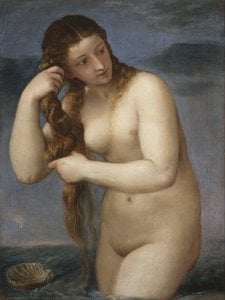
Embark on a sophisticated visual journey through art history's most iconic Venus masterpieces. Explore the divine beauty of Botticelli and the evolution of classical mythology through expert curation for the discerning art enthusiast.
Explore the profound beauty of Roman architecture through art history. From Piranesi's evocative engravings to classical masterpieces, discover how the grandeur of ancient Rome continues to inspire collectors and art enthusiasts worldwide.

Explore the exquisite precision of Flemish painting. From Jan van Eyck to Robert Campin, discover the revolutionary oil techniques and rich symbolism that defined the Northern Renaissance and continue to inspire fine art collectors today.

Embark on a journey through the exquisite precision of Flemish Art. Discover the pioneering oil techniques, profound symbolism, and luminous realism that define the Northern Renaissance masters in this expert guide for art enthusiasts.
 Se i rummet
 Del som kort
 Del
Del
 Detaljer
 Guide
Guide

 Download
 Lignende værker
 Røntgenundersøgelse
 Diasshow
 Spørgsmål og svar
 Statistikker


 Vis mere









 Glasmulighed er kun tilgængelig i størrelser under 110 cm