Se i rummet Se i AR Køb håndmalet maleri Skift til digitalt billede Del som kort
Detaljer Guide Tilføj til favoritter Download Lignende værker Røntgenundersøgelse Diasshow Q&A Statistikker

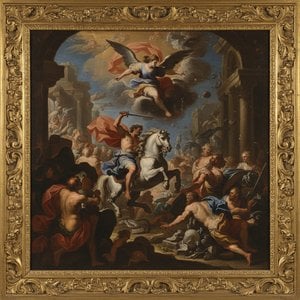
Hercules and Omphale

François Lemoyne’s "Hercules & Omphale" (1724) – a stunning Baroque oil painting of mythological love. Explore its dynamic composition, rich textures & classical beauty.

François Lemoyne (1688-1737) var en dansk Rokoko maler kendt for sine overdådige vægemalerier, især fra Versailles, samt hans evne til at blande klassisk elegance med Rubens' farverige stil.

Giclée / Kunsttryk

Giclée- eller lærredstryk i museumskvalitet med hurtig produktion og fleksible muligheder for finish. ( Køb håndmalet maleri Skift til digitalt billede)

Corner sample of the P118B picture frame: støbt polystyren, 5 cm wide and 3 cm thick
P118B Dkr10
Corner sample of the P118H picture frame: støbt polystyren, 5 cm wide and 3 cm thick
P118H Dkr10
Corner sample of the P118W picture frame: støbt polystyren, 5 cm wide and 3 cm thick
P118W Dkr10
Corner sample of the P438Z picture frame: støbt polystyren, 5.5 cm wide and 3.5 cm thick
P438Z Dkr10
Corner sample of the P508JH picture frame: støbt polystyren, 7 cm wide and 3.5 cm thick
P508JH Dkr12
Corner sample of the P508YH picture frame: støbt polystyren, 7 cm wide and 3.5 cm thick
P508YH Dkr12
Corner sample of the P805H picture frame: støbt polystyren, 5 cm wide and 3.5 cm thick
P805H Dkr10
Corner sample of the P805Z picture frame: støbt polystyren, 5 cm wide and 3.5 cm thick
P805Z Dkr10
Corner sample of the P919BZ picture frame: støbt polystyren, 7 cm wide and 3.5 cm thick
P919BZ Dkr10
Corner sample of the P919G picture frame: støbt polystyren, 7 cm wide and 3.5 cm thick
P919G Dkr10
Corner sample of the P919XJ picture frame: støbt polystyren, 7 cm wide and 3.5 cm thick
P919XJ Dkr10
Corner sample of the P959ZH picture frame: støbt polystyren, 5 cm wide and 3 cm thick
P959ZH Dkr10
Corner sample of the P968JZ picture frame: støbt polystyren, 6 cm wide and 4 cm thick
P968JZ Dkr12
Corner sample of the W106C picture frame: massivt træ, 5 cm wide and 3 cm thick
W106C Dkr8
Corner sample of the W218G picture frame: massivt træ, 5 cm wide and 3 cm thick
W218G Dkr10
Corner sample of the W218JH picture frame: massivt træ, 5 cm wide and 3 cm thick
W218JH Dkr8
Corner sample of the W218Y picture frame: massivt træ, 5 cm wide and 3 cm thick
W218Y Dkr10
Corner sample of the W307PJ picture frame: massivt træ, 6 cm wide and 3 cm thick
W307PJ Dkr10
Corner sample of the W316G picture frame: massivt træ, 6 cm wide and 3 cm thick
W316G Dkr10
Corner sample of the W316PJ picture frame: massivt træ, 6 cm wide and 3 cm thick
W316PJ Dkr8
Corner sample of the W316Y picture frame: massivt træ, 6 cm wide and 3 cm thick
W316Y Dkr10
Corner sample of the W398PJ picture frame: massivt træ, 5 cm wide and 3 cm thick
W398PJ Dkr8
Corner sample of the W4111J picture frame: massivt træ, 6.5 cm wide and 3.5 cm thick
W4111J Dkr10
Corner sample of the W500HY picture frame: massivt træ, 7 cm wide and 5 cm thick
W500HY Dkr15
Corner sample of the W500JH picture frame: massivt træ, 7 cm wide and 5 cm thick
W500JH Dkr15
Corner sample of the W692G picture frame: massivt træ, 8 cm wide and 4 cm thick
W692G Dkr12
Corner sample of the W849H picture frame: massivt træ, 5 cm wide and 3 cm thick
W849H Dkr8
Corner sample of the W940BG picture frame: massivt træ, 7.5 cm wide and 4.5 cm thick
W940BG Dkr15
Corner sample of the W953PJ picture frame: massivt træ, 6 cm wide and 3.5 cm thick
W953PJ Dkr8

Standardstørrelse
speciallavet
CM
INCH

Vælg mellem vores forudindstillede størrelser, der matcher kunstværkets originale proportioner.

bredde
højde

Indtast den bredde og højde, du har brug for, så det passer til din ramme eller din væg. Et print kan kun beskæres, aldrig gøres større end selve billedet, så en størrelse med et andet format vil medføre, at dele af motivet går tabt. Vi sender dig en digital mockup til godkendelse, før vi printer noget. Billedet vist på denne side viser ikke den faktiske beskæring — det er kun mockuppen, der gør.

Verdensomspændende levering () på 2 uger i stedet for de sædvanlige 4/5 uger. (30 oktober)

Gratis ekspresforsendelse til hele verden
Lærred af linned i høj kvalitet
Fuld transportforsikring
Garanti for refusion af told og importafgifter
Garanti for præcis farvegengivelse
100 dages returret ved fabrikationsfejl
100% fuld returret
Mængderabat ved flere køb

Samlet pris

Dkr 457

Hercules and Omphale

Giclée / Kunsttryk

Størrelse på reproduktion

-

Samlet pris

Dkr 457

Hurtige fakta

  • Influences: Rubens
  • Notable elements: Mythological scene
  • Medium: Oil on canvas
  • Location: Louvre Museum, Paris
  • Dimensions: 184 x 149 cm
  • Artist: François Lemoyne

Kunstquiz

Der er kun ét korrekt svar på hvert spørgsmål.

Spørgsmål 1:
What mythological scene is depicted in François Lemoyne’s ‘Hercules and Omphale’?
Spørgsmål 2:
In ‘Hercules and Omphale’, what symbolic element does Omphale hold that represents Hercules's former strength?
Spørgsmål 3:
The painting ‘Hercules and Omphale’ is primarily associated with which artistic movement?
Spørgsmål 4:
What technique did François Lemoyne employ to create the rich textures and detailed figures in ‘Hercules and Omphale’?

A Dance of Desire: François Lemoyne’s “Hercules and Omphale”

François Lemoyne's "Hercules and Omphale," painted in 1724, isn’t merely a depiction of a mythological tale; it’s an exquisitely rendered exploration of desire, power, and the blurring lines between masculine and feminine. This captivating work, housed within the opulent confines of the Louvre Museum in Paris, offers a glimpse into the heart of the Rococo era – a period defined by its embrace of sensuality, playful extravagance, and a deliberate rejection of the rigid formality of preceding artistic movements. Lemoyne, a master painter deeply influenced by the grandeur of Rubens, skillfully translates this spirit into a scene brimming with dynamic energy and subtle emotional complexity.

The narrative itself is rooted in Greek mythology – Hercules, famed for his strength and twelve labors, finds himself unexpectedly bound to Omphale, the alluring queen of Lydia. Initially a consequence of servitude, their relationship swiftly evolves into an intense, almost unsettling, exchange of roles. The painting captures this pivotal moment: Hercules, rendered with a youthful vitality that belies his legendary status, leans towards Omphale, his gaze fixed upon her with unmistakable admiration. She, in turn, holds him gently, her expression a captivating blend of amusement and desire. The scene unfolds within a lavishly decorated boudoir – a testament to the queen’s wealth and influence – where crimson velvet drapes cascade from the bed, scattering decorative objects across the floor, creating an atmosphere of delightful chaos.

A Baroque Embrace: Technique and Composition

Lemoyne's technical prowess is immediately evident in the painting’s rich textures and masterful use of chiaroscuro. The artist employs a layering technique – a hallmark of Baroque painting – to build up color and create an astonishingly tactile surface. The folds of fabric ripple with life, each thread seemingly rendered with meticulous detail; the musculature of Hercules is both powerful and subtly idealized, while Omphale’s form is presented with a delicate grace. Notice how light dramatically sculpts their bodies, highlighting key features and casting intriguing shadows that deepen the sense of intimacy. The composition itself is carefully orchestrated – a diagonal arrangement of figures creates a dynamic flow, drawing the viewer's eye through the scene and emphasizing the central interaction.

The use of color is particularly noteworthy. Lemoyne employs a palette dominated by warm ochres, earthy browns, and vibrant reds, creating a visual feast that’s both luxurious and emotionally resonant. The bold red of the velvet canopy serves as a dramatic backdrop, further intensifying the scene's sensual atmosphere. Furthermore, the artist subtly incorporates symbolic elements – the lion’s pelt draped over Omphale’s shoulder represents Hercules’ former status as a slave, while her possession of his club signifies a temporary reversal of power dynamics. The presence of Cupid, a small but significant detail, underscores the theme of passionate love and transformation.

Symbolism and the Shifting Power Dynamic

“Hercules and Omphale” is far more than a simple retelling of a mythological story; it’s a complex meditation on themes of gender roles, desire, and the fluidity of power. The painting deliberately subverts traditional depictions of Hercules – typically portrayed as an imposing figure of strength and authority – by presenting him in a vulnerable, almost effeminate pose. His embrace of Omphale's breast is not one of dominance but of surrender, suggesting a willingness to relinquish control and indulge in the pleasures of the moment.

Omphale’s role is equally significant. She isn’t merely a passive recipient of Hercules’ affections; she actively participates in the exchange, holding his club and wearing his lion's skin – symbols of his former status. This act of appropriation challenges conventional notions of masculinity and femininity, suggesting that power can be fluid and subject to change. The painting invites us to question established hierarchies and consider the possibility of a more reciprocal relationship between men and women.

A Legacy of Rococo Grandeur

François Lemoyne’s “Hercules and Omphale” stands as a quintessential example of Rococo art – a style characterized by its elegance, sensuality, and playful exuberance. Influenced by the works of Rubens, Lemoyne masterfully blends classical subject matter with contemporary French tastes, creating a work that is both visually stunning and intellectually stimulating. The painting’s enduring appeal lies in its ability to capture the complexities of human desire and the shifting dynamics of power – themes that continue to resonate with audiences today. Reproductions of this masterpiece offer a chance to bring this captivating scene into your own home, adding a touch of Rococo grandeur and timeless allure to any space.

Spørgsmål og svar

Hvor og til hvilket formål anbefales "Hercules and Omphale"?

"Hercules and Omphale" af François Le Moine anbefales til Statement, ideelt set i et Living Room. Anvendelse og rum skaber sammen rammen om, hvor en reproduktion passer ind.

Hvem har skabt "Hercules and Omphale", og hvilken stilart er det?

Bag "Hercules and Omphale" står François Le Moine og Baroque-bevægelsen.

Hvilken størrelse og orientering anbefales til et print af "Hercules and Omphale" af François Le Moine?

Til "Hercules and Omphale" er den anbefalede printopsætning en størrelse på Large og en Portrait orientering.


Kunstnerbiografi

François Lemoyne: En Parisisk Arv i Rokokoens Pragt

François Lemoyne, et navn måske ikke umiddelbart så kendt som hans samtidige Boucher eller Watteau, indtager alligevel en betydelig plads i det franske 1700-tals kunstneriske landskab. Født i Paris i 1688 dedikerede Lemoyne sit liv til at genoplive den storhed, der kendetegnede de store allegoriske malerier – en tradition, der havde lidt et fald siden Charles Le Bruns æra, som Lemoyne dybt beundrede og søgte at efterligne. Hans ambition var ikke blot at dekorere, men at skabe værker gennemsyret af intellektuel tyngde og følelsesmæssig resonans, der spejlede Rokokoens komplekse ånd, samtidig med at de hentede inspiration fra et mere klassisk ideal. Fra sin tidlige træning under sin steddads Robert le Vrac og senere i den strenge atmosfære på Académie Royale de peinture et de sculpture demonstrerede Lemoyne en dedikation til at mestre både tekniske færdigheder og kunstnerisk udtryk. Hans formelle uddannelse hos Louis Galloche og Pierre-Jacques Cazes viste sig afgørende, især i udviklingen af hans nuancerede forståelse for farver – et kendetegn, der ville blive stadig mere fremtrædende gennem hele hans karriere. Den eftertragtede Prix de Rome i 1711 markerede et vendepunkt, selvom økonomiske begrænsninger oprindeligt udsatte hans rejse til Italien; en rejse han endelig foretog i 1723 sammen med François Berger.


Italienske Ekkoer og Rokokoens Blomstring

Opholdet i Italien viste sig forvandlende for Lemoyne. Ved at fordybe sig i værkerne af renæssancemestre som Raphael, Correggio og Titian absorberede han deres teknikker og æstetiske principper, hvilket berigede hans kunstneriske ordforråd. Det var dog Peter Paul Rubens' dynamiske energi, der satte det dybeste præg på hans stil – tydeligt i hans levende farvepaletter og dramatiske kompositioner. Eksponeringen for venetiansk maleri i Pierre Crozats ansete samling finpudsede yderligere hans sanser, hvilket fremmede en kærlighed til rige teksturer og atmosfæriske effekter. Disse indflydelser smeltede sammen til en distinkt Rokoko-æstetik kendetegnet ved elegance, udsmykning og et fokus på dekorativ skønhed. Ikke desto mindre forlod Lemoyne aldrig ambitionen om den store fortælling, der definerede tidligere fransk akademisk maleri; han søgte at syntetisere disse tilsyneladende forskellige elementer – Rokokoens lethed og ynde med den klassiske traditions intellektuelle stringens. Denne unikke blanding er det, der adskiller hans arbejde og bidrager til dets varige appel.

Versailles og Kongelig Anerkendelse

Lemoynes kunstneriske dygtighed fandt sit mest spektakulære udtryk i hans monumentale loftsfresker, især L'Apothéose d'Hercule (Herkules’ Apoteose) i Salon d’Hercule på Versailles-slottet. Dette mesterværk – en blændende fremvisning af illusionistisk teknik og dynamisk komposition – vandt straks stor anerkendelse. Samtidige som Voltaire og Cardinal Fleury roste dets genialitet, idet de anerkendte Lemoyne som en mester i sit fag. Ud over Versailles tog han også imod betydelige religiøse bestillinger, såsom The Transfiguration (Forvandlingen) i koret af Jacobin-kirken (nu Parish Church of St. Thomas d’Aquin) i Paris, hvilket demonstrerede hans alsidighed og evne til at tilpasse sin stil til forskellige emner. I 1736 nåede Lemoyne klimaks i sin karriere med sin udnævnelse som Premier peintre du roi (Kongens Første Maler) under Louis XV – et vidnesbyrd om hans kunstneriske præstationer og status ved det franske hof.

En Tragisk Afslutning og Varig Indflydelse

På trods af at have opnået så stor succes, blev Lemoynes liv tragisk forkortet af selvmord i 1737. Hans tidlige død markerede ikke blot et personligt tab, men signaliserede også en ændring i kunstneriske smag; den faldt sammen med en nedgang i populariteten for de store allegoriske loftsmalerier, som han så passioneret kæmpede for. Ikke desto mindre levede hans arv videre gennem sine elever, herunder fremtrædende kunstnere som Charles-Joseph Natoire og François Boucher, som han gav sin viden og færdigheder videre til. Selvom han måske ikke er lige så universelt fejret i dag som nogle af hans samtidige, værdsættes Lemoynes bidrag til fransk Rokoko-kunst i stigende grad for deres tekniske beherskelse, kunstneriske ambitioner og den unikke syntese af klassiske idealer med de herskende æstetiske sansninger i sin tid. Hans værker er et vidnesbyrd om en dedikeret kunstner, der søgte at hæve maleriet til dets højeste form – en arv, der fortsat inspirerer og fængsler publikum århundreder senere.

Nøgle Værker & Kunstneriske Bidrag

  • Loftsfresker: Lemoynes mest fejrede præstationer, som eksemplificeres af L'Apothéose d'Hercule, viser hans beherskelse af illusionistiske teknikker og dynamisk komposition.
  • Mythologiske Scener: Værker som Hercules and Omphale demonstrerer hans evne til at skildre klassiske fortællinger med både dramatisk intensitet og sensuel ynde.
  • Religiøse Malerier: The Transfiguration eksemplificerer hans færdigheder i at gengive religiøse emner med følelsesmæssig dybde og teknisk præcision.
  • Portrætter: Hans portræt af Head of King Louis XV, afslører en subtil forståelse for karakter og en beherskelse af kridt- og pastelteknikker.
François Le Moine

François Le Moine

1688 - 1737 , Frankrig

Kort om kunstneren

  • Dødsdato: 1737
  • Fødested: Paris, Frankrig
  • Fødselsdato: 1688
  • Nationalitet: Fransk