Fra Angelico’s Perugia Altarpiece: A Window into Early Renaissance Devotion
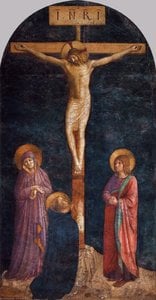
The Perugia Altarpiece (left panel), created by the profoundly spiritual and remarkably gifted Fra Angelico between 1447 and 1448, stands as a cornerstone of Early Renaissance art. Housed within the Galleria Nazionale dell’Umbria in Perugia, Italy, this tempera-on-panel painting is more than just a depiction of biblical figures; it's an immersive experience of faith, geometry, and the burgeoning humanist ideals of the era. Examining its composition, symbolism, and technical mastery reveals a profound understanding of both religious belief and artistic innovation.
At first glance, the panel presents two solemn men engaged in quiet contemplation. Dressed in the somber robes of Dominican friars, they are positioned against a backdrop that subtly yet powerfully directs the viewer’s eye. One figure is absorbed in reading from a book – a gesture laden with significance, representing knowledge, divine guidance, and the pursuit of spiritual understanding. His posture, coupled with the delicate white lily he holds, speaks to purity and grace. The second man, holding a cross, embodies sacrifice and faith, his hand resting gently on the open book, suggesting an active engagement with scripture and a harmonious blend of intellect and devotion. These figures are not merely static representations; they invite us into their moment of reflection, prompting introspection about our own relationship to faith and knowledge.
Beyond these central figures lies a carefully constructed scene brimming with symbolic detail. A small dog at the lower left corner is often interpreted as representing loyalty and fidelity – virtues highly valued within the monastic order. The presence of a throne upon which the Virgin Mary sits immediately establishes a hierarchical structure, emphasizing her divine status and role as the heart of Christian belief. The pavement beneath is adorned with intricate marble tarsia, a technique borrowed from Fra Angelico’s earlier work on the San Pietro Martire Triptych, demonstrating his continuous refinement and experimentation. This deliberate use of geometric perspective – a hallmark of Renaissance art – creates a sense of depth and spatial awareness, drawing the viewer into the scene and reinforcing its monumental quality.
The Geometry of Faith: Composition and Technique
Fra Angelico’s genius lies not only in his ability to capture religious subjects but also in his masterful command of artistic technique. The painting is executed in tempera on panel, a medium known for its luminosity and rich colors – qualities that contribute significantly to the work's ethereal quality. Notice the subtle gradations of color, the delicate rendering of fabrics, and the meticulous detail lavished upon each figure’s expression. The throne itself is a testament to his skill, constructed with an almost mathematical precision, reflecting the Renaissance fascination with proportion and harmony.
Furthermore, the composition subtly echoes the principles of geometric perspective, evident in the carefully arranged elements and the use of converging lines that lead the eye towards the central figures. This deliberate structuring aligns with the broader intellectual currents of the time, where artists sought to understand and represent the world through rational systems of measurement and proportion. The influence of Masaccio, a pioneer of linear perspective, is palpable, though Fra Angelico retains his own distinctive style – one characterized by an intense spiritual focus rather than purely scientific observation.
A Fragmented Legacy: Historical Context
The Perugia Altarpiece was originally conceived as part of a larger triptych intended for the St. Nicholas Chapel in the Basilica of San Domenico, Perugia. However, over time, the work was fragmented and dispersed, with some panels finding their way into private collections and eventually to the Pinacoteca Vaticana. Interestingly, copies of these panels were later created in Perugia and housed within a neo-Gothic frame, preserving a tangible connection to its original context. This history underscores the painting’s journey through time and highlights the enduring appeal of its artistic merit.
The altarpiece's creation coincided with a period of significant religious and intellectual ferment in Italy. The rise of humanism was challenging traditional modes of thought, while simultaneously fostering a renewed appreciation for classical art and philosophy. Fra Angelico’s work reflects this complex interplay of influences – blending deeply rooted Christian beliefs with the emerging principles of Renaissance aesthetics.
Bringing the Altarpiece Home: Reproductions at WahooArt.com
For art enthusiasts and collectors seeking to experience the profound beauty and spiritual depth of the Perugia Altarpiece, WahooArt.com offers meticulously crafted oil painting reproductions that faithfully capture every nuance and detail of Fra Angelico’s original masterpiece. Our skilled artists employ traditional techniques and premium materials to ensure that each reproduction is a testament to the enduring legacy of this iconic work.
Whether you're drawn to its serene beauty, its intricate symbolism, or its historical significance, the Perugia Altarpiece (left panel) remains a powerful reminder of the transformative potential of art. Explore our high-quality reproductions today and bring a piece of Renaissance history into your home or office.
Size: 95 x 73 cm
Date: 1447



 Se i rummet
 Bestil håndmalet reproduktion
 Send
Send Del
Del
 Detaljer
 Guide
Guide

 Download
 Lignende værker
 Røntgenundersøgelse
 Se diasshow
 Statistik


 Læs mere






































 Glasmulighed er kun tilgængelig i størrelser under 110 cm