

Giclée- eller lærredstryk i museumskvalitet med hurtig produktion og fleksible muligheder for finish. ( Køb håndmalet maleri Skift til digitalt billede)





























Vælg mellem vores forudindstillede størrelser, der matcher kunstværkets originale proportioner.

Indtast den bredde og højde, du har brug for, så det passer til din ramme eller din væg. Et print kan kun beskæres, aldrig gøres større end selve billedet, så en størrelse med et andet format vil medføre, at dele af motivet går tabt. Vi sender dig en digital mockup til godkendelse, før vi printer noget. Billedet vist på denne side viser ikke den faktiske beskæring — det er kun mockuppen, der gør.
Verdensomspændende levering () på 2 uger i stedet for de sædvanlige 4/5 uger. (8 november)
Annunciation
Størrelse på reproduktion
Filippino Lippi’s “Annunciation,” painted in 1489 for the Medici family’s villa near Florence, is more than just a depiction of a pivotal biblical moment; it's a masterful orchestration of light, color, and human emotion. This fresco, now residing within the serene walls of Santa Maria sopra Minerva, offers a glimpse into the burgeoning artistic spirit of the High Renaissance – a period defined by its renewed interest in classical ideals and a profound exploration of human experience.
The scene itself is instantly recognizable: the angel Gabriel, rendered with an almost startlingly youthful energy, delivers the momentous news to Mary. Lippi’s genius lies not merely in his accurate portrayal of the figures but in his manipulation of space and atmosphere. The interior setting, though somewhat simplified, feels remarkably real – a modest chamber furnished with a chair, books, and a table, suggesting a domestic tranquility disrupted by this divine visitation. Note the careful attention to detail: the folds of Mary’s garments, the delicate rendering of Gabriel's wings, and the subtle play of light on the objects within the room all contribute to an immersive experience for the viewer.
Lippi was a master of tempera paint, a medium known for its luminous quality and ability to achieve rich, vibrant colors. He employed a technique called *sfumato*, blurring lines and softening edges to create an ethereal effect – particularly evident in the hazy light that bathes the scene. The palette is dominated by warm hues: reds, golds, and ochres—reflecting the importance of Mary’s role as the Mother of God. The use of perspective, though not entirely rigorous by Renaissance standards, creates a sense of depth and spatial awareness, drawing the viewer into the heart of the narrative.
Furthermore, Lippi's brushwork is remarkably expressive. Observe how he captures the movement of Gabriel’s hand as he presents the message to Mary, or the gentle curve of her neck in response. These subtle gestures convey a profound sense of emotion and vulnerability – a testament to Lippi’s ability to imbue his figures with life.
The “Annunciation” is rich in symbolic meaning. Gabriel, often depicted as youthful and radiant, represents divine grace and the messenger of God's will. Mary, presented as a modest and contemplative figure, embodies humility and acceptance. The dove hovering above them symbolizes the Holy Spirit – the source of life and inspiration. The open book on the table is a subtle reference to scripture and the importance of faith.
Beyond these immediate symbols, the painting speaks to broader themes of communication, revelation, and the transformative power of divine grace. It’s a moment of profound significance—the beginning of a new era in Christian theology and art. The composition itself can be interpreted as a dialogue between heaven and earth, between the spiritual realm and the human world.
“Annunciation” by Filippino Lippi remains a powerful and moving work of art. Its beauty lies not only in its technical brilliance but also in its ability to evoke a sense of wonder and contemplation. Whether viewed as a historical document, a religious icon, or simply a stunning example of Renaissance artistry, this fresco continues to captivate audiences centuries after its creation. Reproductions offer an accessible way to experience the depth and nuance of Lippi’s vision, bringing this timeless dialogue of light and grace into any space.
Useful Links:
Additional Research:
Statistikker for "Annunciation" af Filippino Lippi findes på værkets Besøgsstatistik-side: månedlige besøg på værket, besøg på kunstnerens øvrige værker samt en opdeling af de seneste besøgende efter land og sprog.
Formatet Portrait af "Annunciation" af Filippino Lippi anbefales til en Living Room. Format og rumstørrelse er tilsammen vejledende for placeringen af en reproduktion.
En reproduktion af "Annunciation" vil passe smukt ind i et Living Room.


1457 - 1504 , Italien

Discover the timeless art of fresco painting. Explore the profound history, technical mastery of buon fresco, and the enduring legacy of Renaissance masters like Michelangelo in this expert guide to painting on wet plaster.

Explore the profound mastery of fresco painting, from the technical alchemy of buon fresco to the legendary narratives of Renaissance masters like Ghirlandaio. Discover how this timeless medium shaped art history and continues to inspire architectural grandeur today.

Explore the profound beauty of Angel Gabriel in art history. From Renaissance masterpieces to Baroque splendor, our expert guide delves into the sacred iconography and timeless techniques of these divine messengers for the discerning art enthusiast.
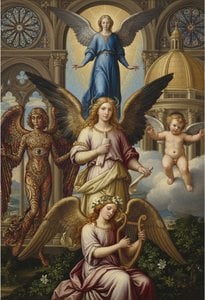
Explore the profound beauty of angelic figures in art history. From Renaissance masterpieces to celestial symbolism, our expert guide offers a sophisticated journey through the divine imagery of the Old Masters for discerning collectors and art enthusiasts.
 Se i rummet
 Del som kort
 Del
Del
 Detaljer
 Guide
Guide

 Download
 Lignende værker
 Røntgenundersøgelse
 Diasshow
 Spørgsmål og svar
 Statistikker


 Vis mere









 Glasmulighed er kun tilgængelig i størrelser under 110 cm


