Få en printklar fil, der rækker langt ud over web-forhåndsvisningen. Hvert digitalt billede, vi sælger, stammer fra en højopløst master i vores database — typisk mellem 5.000 og 15.000 pixels i bredden — så du med selvtillid kan printe stort, beskære tæt eller gengive fine detaljer.
Ingen fil forlader vores studie uden at være blevet behandlet. En digital ekspert kontrollerer farverne i forhold til det originale maleri og korrigerer dem efter behov, hvorefter klarhed og detaljer forbedres med professionelle retoucheringsværktøjer — altid med fuld respekt for kunstnerens penselstrøg og stil. Resultatet er et billede, der ligner selve maleriet, og ikke blot et scannet billede med et filter.
Du godkender først, når du er tilfreds: Vores ekspert sender billedet til din gennemgang via e-mail inden for 72 timer. Ikke tilfreds? Bed om rettelser eller forbedringer, eller anmod om en refundering, hvis kvaliteten ikke lever op til forventningerne.
Dette er den kvalitet, som forlag, designstudier, gallerier og trykkerier stoler på.
Download en højopløselig fil til personlig fremvisning, print og kreative projekter. ( Skift til printsalg Køb håndmalet maleri)
Når du vælger WahooArt.com, får du ikke blot et billede – du modtager et professionelt optimeret digitalt kunstværk, skabt med præcision og sikret med en tilfredshedsgaranti. Her er alt, hvad din ordre automatisk indeholder:
Din højtopløselige digitale billedfil sendes til din e-mail inden for 72 timer efter bestilling – klar til øjeblikkelig brug.
Dit kunstværk optimeres professionelt ved hjælp af avancerede AI-værktøjer og manuel redigering, hvilket sikrer maksimal detaljegrad, klarhed og farvenøjagtighed.
Har du ved en fejl slettet eller mistet din fil? Ingen bekymring – vi sender den igen til enhver tid, helt gratis.
Nyd dit kunstværk med det samme uden told, afgifter eller leveringsgebyrer – digitale downloads er altid skattefrie.
Vi sikrer, at dit digitale billede gengiver de originale farver så præcist som muligt ved hjælp af professionelle værktøjer og farvestyring.
Hvis du ikke er tilfreds med dit digitale billede, vil vi revidere det eller refundere 100% inden for 100 dage – uden spørgsmål.
Ik tilfreds? Få fuld refusion inden for 100 dage efter modtagelse af din digitale fil – uden spørgsmål.
Køb 3 billeder, spar 10% - Køb 5, spar 15% - Køb 10+, spar 20%. Ideelt til kreative projekter, gallerier og bureauer.
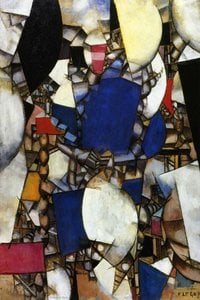
Fernand Léger’s “Self,” painted in 1930, isn't merely a portrait; it’s a distilled essence of the early 20th century – a visual embodiment of the machine age grappling with human identity. This striking pencil drawing, now housed within the Fernand Léger National Museum in Biot, France, offers a profound glimpse into the artist’s evolving style and his fascination with the intersection of form, technology, and the individual. Léger, born Joseph Fernand Henri Léger in 1881 in Argentan, Normandy, began his artistic journey as an architect before embracing painting, profoundly influenced by the radical innovations of Cézanne and the burgeoning currents of Cubism.
The composition immediately commands attention. The subject, a self-portrait, is rendered with a deliberate austerity – a simplification of features that borders on abstraction. Léger strips away extraneous detail, reducing the face to its fundamental geometric components: sharp triangles for the nose and eyes, rectangular planes for the mouth and chin, and a simplified outline of the head itself. This fragmentation isn’t chaotic; rather, it creates a sense of dynamic energy, as if the subject is simultaneously present and dissolving into pure form. The cropped composition, focusing tightly on the upper torso, intensifies this effect, drawing the viewer directly into the artist's gaze – an intense, direct stare that speaks to both confidence and introspection.
“Self” is a quintessential example of Léger’s “Tubism,” a style he developed in the early 1910s. Inspired by the cylindrical forms of industrial machinery, Tubism sought to represent objects – and indeed, human figures – as composed of interlocking cylinders, cones, and cubes. This approach wasn't simply an aesthetic choice; Léger saw it as a way to capture the essence of modern life, dominated by factories, trains, and the relentless march of technology. The angular lines and stark contrasts in tone reflect this mechanical sensibility, creating a visual rhythm that echoes the precision and efficiency of machines.
The use of pencil is crucial here. Léger’s meticulous application of line – often with varying pressure and thickness – imbues the drawing with a remarkable sense of texture and depth. The grainy quality of the graphite suggests a hand-drawn immediacy, contrasting sharply with the stylized forms. This combination of raw material and deliberate construction speaks to Léger's desire to bridge the gap between traditional artistic techniques and the new visual language of modernity.
Beyond its formal qualities, “Self” carries a potent symbolic weight. The direct gaze of the subject is particularly arresting – it’s not a passive portrait but an active engagement with the viewer. This confrontational quality suggests a questioning of identity in a rapidly changing world. Léger himself described his work as reflecting "the crude beauty" of everyday life, and “Self” embodies this sentiment perfectly. The simplification of features can be interpreted as a rejection of idealized representations, suggesting instead a focus on the essential, stripped-down reality of human existence.
Furthermore, the drawing’s monochromatic palette – primarily shades of gray – reinforces its sense of austerity and detachment. It evokes the starkness of industrial landscapes and the impersonal nature of modern life. The lack of color directs attention to the formal elements of the composition, highlighting Léger's mastery of line and form.
Fernand Léger’s “Self” stands as a pivotal work in his oeuvre and a significant contribution to the development of modern art. His exploration of Cubism, combined with his fascination with technology and his unique approach to portraiture, paved the way for subsequent generations of artists – including Pop Art pioneers like Andy Warhol – who sought to integrate the visual language of mass culture into their work. “Self” remains a powerful testament to Léger’s artistic vision and his enduring legacy as one of the most influential figures of the 20th century.
I Fernand Légers samlede værk placerer "Self" sig i Cubism-stilen, sammen med temaerne omkring cézanne influence, modernity, industrial forms, war experience, mechanical themes, critique, early cubism, geometric abstraction.
"Self" anbefales til Statement, og det ideelle rum er et Living Room.
"Self" af Fernand Léger skildrer portrait, self-portrait, cubism, geometric, modernity, figure, charcoal, léger i en Bold stemning. Motiv og atmosfære beskriver tilsammen værket.

Historien om Fernand Léger begynder i landsbyen Argentan, beliggende i Orne-regionen i Nedre Normandiet. Han trådte ind i denne verden den 4. februar 1881 som enebarn. Hans tidlige år blev formet af det franske landskabs stilhed og nærværet fra hans mor, Marie-Adèle Daunou. Hans far, en mand der tjente sit liv som kvæghandler, gik bort, mens Fernand stadig var en lille dreng, hvilket efterlod barnet til at blive opdraget af sin mor i et hjem præget af hendes fromhed og en vis selvudslettende natur.
Denne opvækst i Normandies landlige omgivelser udgjorde en jordnær kontrast til det liv, han senere skulle leve i de pulserende centre for fransk kultur. Mens hans rødder var knyttet til jorden og det fysiske arbejde i landbruget, blev hans ånd draget mod den moderne tidsalders kompleksiteter. Han ville med tiden udvide sin rækkevidde langt ud over Argentans grænser og blive en mand med mange discipliner. Han begrænsede sig ikke til lærredet, men søgte i stedet at udtrykke sin vision gennem skulptur og filmens levende billeder.
Hans liv var en konstant bevægelse mellem ungdommens organiske teksturer og storbyens strukturerede, mekaniske rytmer. Denne dualitet definerede selve hans eksistens, idet han navigerede gennem det skiftende århundredes forandringer. Hans vej var aldrig enkel, men var præget af spændingen mellem barndommens traditionelle verden og den hurtige, industrielle puls fra den fremtid, han i sidste ende ville være med til at definere gennem sin kunst.
Rødderne til hans vision blev plantet i det landlige landskab i Argentan, i Orne-regionen i Nedre Normandiet, Frankrig. Han blev født ind i en verden præget af kvægdrift, og hans tidlige år blev formet af jordens fysiske kræfter og det landbrugsmæssige livs jævne rytmer. Denne forankring i den håndgribelige, arbejdende verden ville forblive en stille tilstedeværelse under overfladen af hans senere, mere komplekse udforskninger. Som eneste søn blev han opdraget af en mor, der var både from og beskeden, og hans vej blev indledningsvis styret mod arkitekturens strukturerede disciplin. Fra 1897 til 1899 dedikerede han sig til dette tekniske håndværk, hvor han lærte rummets logik og nødvendigheden af præcis tegning at kende.
Omkring år 1900 blev tiltrækningskraften fra byen for stærk til at ignorere, og han flyttede til Paris. Han forsørgede sig selv ved at arbejde som arkitekttegner, en rolle der krævede et skarpt øje for linjer og proportioner. Selvom hans formelle uddannelse inden for arkitektur gav ham et fundament af strukturel forståelse, begyndte hans hjerte at vandre mod lærredet. Han søgte optagelse på det prestigefyldte École des Beaux-Arts, men institutionen tildelte ham ikke den officielle status som indskrevet studerende. Uforstyrret fortsatte han som uofficiel studerende, hvor han opsugede mestrenes lektioner, mens han navigerede i periferien af det akademiske etablissement. Denne studieperiode, som nogle gange beskrives som en søgende tid, var afgørende for at forfine de tekniske færdigheder, som han senere ville bruge til at skille verden ad og genopbygge den i sit eget billede.
Et dybtgående skifte indtraf i 1907, da kunstneren stødte på Cézannes retrospektive udstilling på Salon d'Automne. Dette møde fungerede som en katalysator, der trak ham væk fra ungdommens bløde impressioner og mod en mere strukturel måde at se verden på. Han begyndte at kigge bag tingenes overflade for i stedet at søge den underliggende geometri, der definerer vores verden. Ved 1909 var hans tilstedeværelse i de kreative kredse i Paris vokset, idet han mødte skikkelser som Alexander Archipenko, Jacques Lipchitz, Marc Chagall og Robert Delaunay. Disse møder var ikke blot sociale begivenheder; de var sammenstød af nye idéer, der var med til at forme retningen for hans spirende vision.
Som årene skred frem, fandt han sig selv i kredsløbet omkring Puteaux-gruppen, en kunstnerisk cirkel også kendt som Den Gyldne Sektion. Sammen med Jean Metzinger og Henri Le Fauconnier udforskede han de matematiske og strukturelle muligheder i dette nye sprog. Han lod sig ikke nøje med blot at følge de stier, som andre havde lagt; i stedet søgte han sin egen vej gennem de fragmenterede planer og overlappende former, der definerede denne æra. Denne periode med intens eksperimentering førte til hans første store udstilling på Salon des indépendants i 1911, hvor han præsenterede Nudes in the Forest.
Den Store Krigs kaos trak kunstneren væk fra Paris' atelierer og ind i frontens barske realiteter. Fra 1914 til 1917 tjente han i den franske hær og tilbragte to udmattende år i Argonne. Konflikten var ikke blot en kulisse i hans liv, men en transformativ kraft, der ændrede selve hans opfattelse af form. I 1916 var han tæt på at miste livet i et sennepsgasangreb, hvilket efterlod ham i genopretning, mens verden omkring ham blev omformet af den industrielle destruktions rå kraft. Selv under en kort orlov i samme år følte han sig tvunget til at male, hvilket resulterede i Soldier with a Pipe. Dette værk indfangede en følelse af den nye virkelighed, hvor den menneskelige figur begyndte at antage de maskiner, der dominerede slagmarken, egenskaber.
Ved 1917 havde et markant skift taget fat i hans kreative ånd, hvilket markerede begyndelsen på det, der senere ville blive kaldt hans mekaniske periode. Han fandt en sær, rytmisk skønhed i værktøjerne og teknologien fra den moderne krigsførelse og industri. De strømlinede, rørformede figurer og de mekaniske deles præcision blev hans nye visuelle sprog. Han betragtede ikke disse objekter som kolde eller upersonlige; tværtimod omfavnede han deres styrke og deres evne til at organisere den moderne eksistens' kaos. Krigen havde skrællede de bløde kanter af hans tidligere værker og erstattet dem med en skarp, strukturel klarhed, der spejlede en tidsalders stål og stempler.
Hans pensel bevægede sig med en rytmisk, næsten industriel præcision i stræben efter at indfange pulsen fra en tid i hastig forandring. Han vendte ryggen til fortidens bløde, udviskede skygger og valgte i stedet at opbygge sine kompositioner gennem et sprog af robust, geometrisk styrke. Dette førte til udviklingen af en personlig form for kubisme, som kritikere identificerede som "tubisme". I denne stil blev verden genopfundet gennem rørformede, kegleformede og terningformede figurer, hvilket skabte en følelse af volumen, der føltes både solid og dynamisk. Han malede ikke blot genstande; han søgte at afdække deres essentielle, strukturelle logik.
Farverne, han valgte, var lige så selvsikre som de former, de udfyldte. Han foretrak en palet domineret af primærfarver, ofte afbrudt af skarpt sort og hvidt, hvilket hjalp med at definere de skarpe grænser for hans motiver. I stedet for at læne sig op ad traditionel illusionisme, påførte han malingen i dristige, flade farveplaner. Han benyttede ofte en tyk impasto, en teknik der understregede mediets fysiske tilstedeværelse på lærredet. Denne teksturelle tilgang sikrede, at hans værker føltes jordbundne og materielle, som et spejlbillede af netop de maskiner og urbane strukturer, han beundrede så højt. Hans figurer antog ofte strømlinede, mekaniske former, der udviskede grænsen mellem den organiske menneskekrop og den moderne tidsalders tekniske præcision.
De skiftende strømninger i de globale konflikter trak til sidst kunstneren væk fra hans parisiske kredse og over Atlanten. Mellem 1940 og 1945 levede han i USA, en periode, der tilbød et nyt perspektiv på den moderne verden, som han så længe havde stræbt efter at oversætte til lærredet. Denne tid i udlandet fungerede som en pause i hans lange evolution, et øjebliks overgang, før hans endelige tilbagevenden til den franske muld.
Ved hjemkomsten til hans fødeland gennemgik hans personlige liv en betydelig forandring. I februar 1952 blev han gift med Nadia Khodasevich. Dette ægteskab markerede det sidste kapitel i hans liv, et kapitel levet midt i en vedvarende produktion af hans mangfoldige værker, fra storslåede vægmalerier til delikate glasmosaikker. Selv i takt med at han blev ældre, forblev hans anerkendelse på det internationale plan urokkelig. I 1955 modtog han Grand Prix ved Biennalen i São Paulo, en høj ære, der indtraf i samme år som hans bortgang. Han døde den 17. august 1955 i Gif-sur-Yvette, Frankrig.
Fernand Léger efterlod sig et aftryk, der rakte langt ud over sin egen tids avantgarde-kredse. Ved at bygge bro mellem abstrakt kunst og figurativ repræsentation tilbød han en vej for kunstnere til at engagere sig i den moderne verden uden helt at opgive det menneskelige motiv. Hans tilgang muliggjorde en dialog mellem geometriens strukturelle logik og den genkendelige tilstedeværelse af mennesker og objekter. Denne evne til at finde en mellemvej mellem det rent konceptuelle og det håndgribelige var med til at forme retningen for meget af den kunst, der fulgte i hans kølvand.
Hans dristige forenkling af formen og hans fascination af masseproduktionens æstetik fungerede som en forløber for popkunst-bevægelsen. Han så en særlig skønhed i maskinalderens repetitive og funktionelle natur – et perspektiv, der senere ville genlyde hos en ny generation af skabere. Kunstnere som Roy Lichtenstein og Andy Warhol trak en klar linje fra hans eksperimenter med dristige konturer og mekanisk billedsprog til deres egne udforskninger af populærkulturen. Han var med til at forberede det visuelle sprog til en æra, der i sidste ende ville fejre netop de industrielle og kommercielle elementer, som han engang havde søgt at oversætte til lærredet.
For at møde den fysiske tilstedeværelse af hans vision, kan man rejse til det sydlige Frankrig, nærmere bestemt til Biot i Alpes-Maritimes. Her finder man Musée national Fernand Léger, et sted der er dedikeret udelukkende til studiet og bevarelsen af hans kreative virke. Museet er indrettet i Mas Saint-André, en villa der engang tilhørte kunstneren selv. Inden for disse mure og i de omkringliggende haver finder hans polykrome keramiske skulpturer deres retmæssige hjem, hvilket giver beskueren mulighed for at se, hvordan hans former interagerer med lyset og rummet i det middelhavsinspirerede landskab.
Udover dette specialiserede fristed findes hans lærreder og skulpturer i en række betydningsfulde institutioner. Musée d'Art et d'Histoire i Frankrig opbevarer en samling af hans værker, hvilket sikrer hans plads i den bredere fortælling om fransk kunst. Disse samlinger muliggør en fortsat undersøgelse af, hvordan han oversatte maskinalderens energi til statiske, men dog pulserende, visuelle former. Rejsende, der søger hans specifikke æstetik, kan finde spor af ham i flere store samlinger, herunder:
Hans indflydelse lever også videre i andre kunstneres værker, men den primære måde at opleve hans direkte håndværk på er gennem disse etablerede samlinger. Uanset om man betragter de dristige, cylindriske former i en museumsramme eller ser hans skulpturer i en have i stilhed, mødes beskueren af den samme strukturelle klarhed, som definerede hans livsværk. Hans eftermæle er forankret i disse specifikke lokationer, hvor de tunge, mekaniske rytmer i hans malerier er bevaret for dem, der søger sandheden i hans geometri.

1881 - 1955 , Frankrig
 Se i rummet
 Del som kort
 Del
Del
 Detaljer
 Guide
Guide

 Download
 Lignende værker
 Røntgenundersøgelse
 Diasshow
 Spørgsmål og svar
 Statistikker

 Vis mere