Få en printklar fil, der rækker langt ud over web-forhåndsvisningen. Hvert digitalt billede, vi sælger, stammer fra en højopløst master i vores database — typisk mellem 5.000 og 15.000 pixels i bredden — så du med selvtillid kan printe stort, beskære tæt eller gengive fine detaljer.
Ingen fil forlader vores studie uden at være blevet behandlet. En digital ekspert kontrollerer farverne i forhold til det originale maleri og korrigerer dem efter behov, hvorefter klarhed og detaljer forbedres med professionelle retoucheringsværktøjer — altid med fuld respekt for kunstnerens penselstrøg og stil. Resultatet er et billede, der ligner selve maleriet, og ikke blot et scannet billede med et filter.
Du godkender først, når du er tilfreds: Vores ekspert sender billedet til din gennemgang via e-mail inden for 72 timer. Ikke tilfreds? Bed om rettelser eller forbedringer, eller anmod om en refundering, hvis kvaliteten ikke lever op til forventningerne.
Dette er den kvalitet, som forlag, designstudier, gallerier og trykkerier stoler på.
Download en højopløselig fil til personlig fremvisning, print og kreative projekter. ( Skift til printsalg Køb håndmalet maleri)
Når du vælger WahooArt.com, får du ikke blot et billede – du modtager et professionelt optimeret digitalt kunstværk, skabt med præcision og sikret med en tilfredshedsgaranti. Her er alt, hvad din ordre automatisk indeholder:
Din højtopløselige digitale billedfil sendes til din e-mail inden for 72 timer efter bestilling – klar til øjeblikkelig brug.
Dit kunstværk optimeres professionelt ved hjælp af avancerede AI-værktøjer og manuel redigering, hvilket sikrer maksimal detaljegrad, klarhed og farvenøjagtighed.
Har du ved en fejl slettet eller mistet din fil? Ingen bekymring – vi sender den igen til enhver tid, helt gratis.
Nyd dit kunstværk med det samme uden told, afgifter eller leveringsgebyrer – digitale downloads er altid skattefrie.
Vi sikrer, at dit digitale billede gengiver de originale farver så præcist som muligt ved hjælp af professionelle værktøjer og farvestyring.
Hvis du ikke er tilfreds med dit digitale billede, vil vi revidere det eller refundere 100% inden for 100 dage – uden spørgsmål.
Ik tilfreds? Få fuld refusion inden for 100 dage efter modtagelse af din digitale fil – uden spørgsmål.
Køb 3 billeder, spar 10% - Køb 5, spar 15% - Køb 10+, spar 20%. Ideelt til kreative projekter, gallerier og bureauer.
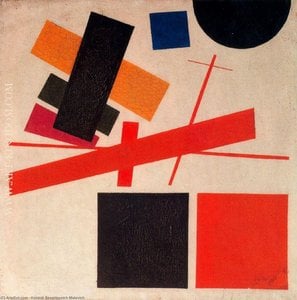
El Lissitzky’s “Wendingen,” created in 1921, stands as a cornerstone of early abstract art—a testament to the burgeoning Constructivist movement and its profound influence on visual culture. More than just a magazine cover, it embodies Lissitzky's conceptual framework of “Proun”—a daring ambition to synthesize architecture, engineering, and artistic expression into a unified visual language. This artwork isn’t merely decorative; it’s a deliberate provocation, challenging conventional notions of representation and embracing the radical potential of geometric abstraction.
The piece eschews recognizable imagery altogether, presenting instead a meticulously crafted composition dominated by geometric forms. Sharp angles intersect with flowing curves, creating palpable spatial tension—a characteristic hallmark of Constructivism’s pursuit of dynamism and structural integrity. Rectangles, circles, and diagonal lines engage in a complex interplay, guiding the viewer's gaze across the canvas and suggesting movement beyond mere static arrangement. Lissitzky consciously rejected traditional artistic conventions, prioritizing form over content to convey an intellectual engagement with the principles of modern design.
“Wendingen”’s aesthetic derives heavily from Constructivism—a reaction against Impressionism and Expressionism that championed functional design and geometric abstraction as tools for reshaping society. Simultaneously, it echoes the ethos of Suprematism, spearheaded by Kazimir Malevich, which sought to distill artistic feeling into its purest form through basic geometric shapes like squares and circles. Lissitzky’s unique contribution was to synthesize these influential movements, forging a distinctive style that is both rigorously structured and imbued with emotional resonance—a stylistic hallmark of the era.
Lithography proved ideal for reproducing Lissitzky's artwork, allowing for exceptional precision in line rendering and tonal gradation. The chosen color palette—primarily red, gray, black, and beige against a neutral background—amplifies the clarity of the geometric shapes, avoiding visual clutter and prioritizing compositional balance. The surface texture appears smooth and matte, reflecting the materiality of the printing process and contributing to the artwork’s understated elegance.
Created in 1921 following the devastation of World War I and amidst the fervor of the Russian Revolution, “Wendingen” embodies the era's yearning for transformative change—a desire to reimagine art, architecture, and societal organization. Lissitzky’s concept of Proun—derived from the Hebrew word "prōūn" meaning "stone"—represented a radical departure from traditional artistic paradigms, envisioning a harmonious fusion of disciplines as symbols of progress and rationality. The artwork's geometric forms serve as visual metaphors for these ideals—a testament to Lissitzky’s enduring legacy as an innovator in the realm of abstract art.
"Wendingen" transcends mere visual representation, evoking a profound sense of harmony and balance. The carefully orchestrated geometric forms captivate the eye while stimulating intellectual contemplation—a characteristic feature of Lissitzky’s oeuvre. His influence extends far beyond the immediate context of 1921, inspiring generations of artists and designers who embraced geometric abstraction as a means of conveying complex ideas and emotions. “Wendingen” remains an iconic exemplar of modernist aesthetics—a timeless masterpiece that continues to resonate with audiences today.
Originalen af "Wendingen" findes på MoMA - Museum of Modern Art, og værket er i det offentlige domæne – ophavsretten er udløbet.
"Wendingen" af El Lisitskij er gengivet med en Tydelig farveintensitet mætning og en Levende og mættet intensitet.
Formatet på "Wendingen" er Kvadratisk format. Dette er nyttigt, når du planlægger, hvor en reproduktion skal placeres.

Født som Lazar Markovich Lissitzky den 23. november 1890, trådte manden, der senere skulle blive kendt som El Lissitzky, ind i en verden præget af stille traditioner i Pochinok. Dette lille jødiske samfund lå omkring 50 kilometer sydøst for Smolensk i det russiske imperium. Hans far, Mordukh Zalmanovich Lissitzky, var en mand af både bøger og rejser, en veluddannet agent, der bevægede sig gennem verden med et beherskede kendskab til både engelsk og tysk. Denne sproglige bredde og familiens forbindelser til det bredere europæiske landskab skulle i sidste ende spejle den ekspansive og rastløse energi, som kunstneren selv besad. Uanset om han blev kaldt Elizar Lissitzky eller Lasar Markowitsch Lissitzky, var han en skikkelse af enorm mangfoldighed, der nægtede at lade sig begrænse til et enkelt medie eller et enkelt formål.
Hans kreative virke var en vidstrakt og rastløs størrelse. Han var maler og illustrator, men han arbejdede også som designer, grafikker og fotograf. Hans sind søgte mod det strukturelle, hvilket førte ham ind i arkitekturens riger og typografiens præcise krav. Han var en mand af den nye æra, en russisk og sovjetisk kunstner, der søgte at opbygge noget håndgribeligt ud fra sin tids abstrakte idéer. Hans liv var en konstant bevægelse mellem rollerne som den intellektuelle opdagelsesrejsende og den praktiske håndværker – en dualitet, der kom til at definere hans mange bidrag til det tyvende århundredes visuelle sprog.
Livets fundament blev lagt i den lille russiske by Pochinok, men hans tidlige år var præget af konstant bevægelse. Mellem 1891 og 1898 boede hans familie i Vitebsk, et sted der senere skulle få stor betydning for hans forståelse af kulturel identitet. Ved 1899 var han flyttet til Smolensk for at bo hos sin bedstefar, hvor han gik på City School 1. Det var i disse formative år, at hans medfødte talent for første gang mødte formel vejledning; som 13-årig begyndte han at modtage undervisning af Yury Pen, en lærer der tidligt så det enorme potentiale i den unge studerende.
Ambition møder ofte modstand fra rigide systemer. I 1909 søgte han ind på Sankt Petersborg Kunstakademi, men hans ansøgning blev afvist. Dette afslag var sandsynligvis et resultat af de restriktive jødiske kvoter, som det tsaristiske regime havde indført – en barriere, der afledte hans vej væk fra de traditionelle russiske akademier. I stedet for at give efter for dette tilbageslag, vendte han sit blik mod Tyskland. Han blev indskrevet på Darmstadt Polytekniske Institut for at studere bygningskonstruktion, en disciplin der for altid ville tilføre en strukturel logik til hans senere visuelle eksperimenter. Han tilbragte fem år der, hvor han arbejdede som murer for at forsørge sig selv, mens han i sine ferier besøgte lokale jødiske historiske steder for at studere deres former og dekorationer.
Hans tid i Tyskland var defineret af akademisk stringens og en dyb fordybelse i den fysiske verden. Han nøjedes ikke med at studere teori; han opslugte sig selv i konstruktionens og designets praktiske realiteter. Denne periode med intens træning kulminerede i 1914, da han dimitterede cum laude fra det Polytekniske Institut i Darmstadt. Han vendte tilbage til Rusland, ikke blot som kunststuderende, men som uddannet ingeniør, bærende på en præcis forståelse for rum og struktur, som i sidste ende skulle komme til at redefinere grænserne for moderne design.
Den kreative livsbane gennemgik en dybdegående forvandling, da han stødte på Kazimir Malevich. Dette møde trak ham ind i Suprematismens kredsløb, en bevægelse der søgte at befri kunsten fra alle repræsentative byrder. I 1919 modtog han en invitation fra Marc Chagall, som bad ham om at indtræde i fakultetet på Kunstskolen i Vitebsk. Det var i denne uddannelsesmæssige ramme, at han blev medlem af den suprematistiske gruppe UNovis, også kendt som "De Nye Kunsts Bekræfter". Han fulgte ikke blot sine kollegers etablerede stier; i stedet søgte han at udvide selve grænserne for, hvad disse geometriske former kunne opnå.
Han begyndte at udvikle en distinkt række værker, som han kaldte Proun – et begreb udledt af den russiske frase proyekt utverzhdenya novogo, hvilket betyder et projekt for bekræftelsen af det nye. Dette var ikke blot simple malerier, men snarere undersøgelser af, hvordan rum og form kunne interagere. Han udførte sit første Proun i 1919, hvilket markerede begyndelsen på en periode, hvor han forenede grafisk kunst med arkitektonisk tankegang. Hans arbejde i disse år bevægede sig væk fra den rene abstraktions flade planer mod en mere kompleks, tredimensionel forståelse af verden.
Omkring 1920 havde El Lissitzky bevæget sig væk fra de tidligere års rent spirituelle undersøgelser for i stedet at omfavne Konstruktivismens strukturerede og målrettede energi. Han stræbte efter at transformere kunstneren fra at være en ensom drømmer til at være en aktiv agent for forandring – et koncept han forstod som das zielbewußte Schaffen, eller målrettet skabelse. Denne overbevisning førte ham ind i hjertet af det sovjetiske uddannelsessystem, hvor han underviste på den tekniske skole Vkhutemas side om Vladimir Tatlin. Her skiftede fokus mod, hvordan kunsten kunne fungere i et moderne, industrielt samfund, idet den bevægede sig fra lærredet og ind i sfæren for praktisk, social nytteværdi.
Hans arbejde blev dybt sammenvævet med tidens politiske puls. Han dedikerede en stor del af sin energi til at designe udstillingsmontager og propagandaværker, der søgte at formidle den nye stats idealer. I et slående eksempel fra 1941 producerede han en plakat, der opfordrede folket til at konstruere flere kampvogne i kampen mod Nazityskland. Selv i hans tidligere, mere abstrakte kompositioner var den politiske undertone ofte tydelig. Hans værk fra 1920, Beat the Whites with the Red Wedge, benyttede skarpe geometriske former til at indgå i tidens spændinger, hvor han gennem et visuelt spil på et antisemitiskt slogan støttede den revolutionære sag.
El Lissitzkys hånd bevægede sig i et spændingsfelt mellem ingeniørens præcision og malerens intuition. Han stræbte efter at bygge bro over kløften mellem den fysiske verden og det abstrakte, og udforskede ofte, hvordan teknologi og den menneskelige erfaring kunne smelte sammen gennem visuelle former. Dette kom tydeligst til udtryk i hans Proun-værker, som fungerede som en kompleks fusion af grafisk kunst, arkitektoniske former, fotografi og maleri. Disse kompositioner var ikke blot statiske billeder, men snarere dybdegående undersøgelser af rum og struktur. Han benyttede ofte litografi til at opnå sine effekter, en teknik der muliggjorde holdbare tryk og et bredt spektrum af tonale variationer, som gav hans geometriske former en følelse af både dybde og tyngde.
Hans tilgang til design var præget af en rastløs eksperimenteren med produktionsteknikker og stilistiske virkemidler, som i sidste ende kom til at definere det 20. århundredes visuelle sprog. Han bragte et skarpt og innovativt blik til typografi, bogdesign og fotomontage, hvor han behandlede den trykte side som en arena for arkitektonisk konstruktion. Selv i sin omfavnelse af avantgardens radikale geometrier forblev hans arbejde diskret forbundet med hans rødder; han indarbejdede elementer fra traditionel jødisk typografi, kunst og arkitektur i sine moderne kompositioner. Denne sammensmeltning af det antikke og det industrielle gjorde det muligt for ham at navigere i spændingsfeltet mellem kulturel hukommelse og det hastige tempo i et samfund i forandring.
Den russiske avantgardes grænser kunne ikke inddæmme hans rastløse ånd. Mellem 1921 og 1925 bevægede han sig gennem hjertet af Europa, hvor han vandrede gennem Paris, Belgien, Italien og Schweiz. Under disse år i udlandet fungerede han som en kulturel ambassadør for Weimarrepublikken og bragte sin hjemlands radikale idéer med ind i Vesten. Han nøjedes ikke blot med at observere disse fremmede landskaber; han formede aktivt deres visuelle diskurs ved at bidrage til kunsttidsskrifter og udgive bøger, der udfordrede de traditionelle måder at se på. Hans tilstedeværelse i disse tankecentre sikrede, at revolutionens energi kunne mærkes langt ud over Sovjetunionens grænser.
Hans virke i Berlin var særligt betydningsfuldt. I 1922 designede han konstruktivisternes udstilling på Galerie van Diemen, et foretagende der bragte hans bevægelses strukturelle logik ud til et nyt publikum. Denne periode med intens udveksling var præget af samarbejder, der byggede bro mellem forskellige kunstneriske kredse. I 1924 arbejdede han sammen med Kurt Schwitters på tidsskriftet Merz, et partnerskab der forenede forskellige tilgange til grafisk design og komposition. Gennem disse forbindelser begyndte hans indflydelse at rejse endnu længere. Han mødte Lászlo Moholy-Nagy, et møde der viste sig at være livsvigtigt, da Moholy-Nagy hjalp med at føre hans koncepter på tværs af Vesteuropa og ind i USA, hvilket sikrede, at hans idéer kunne slå rødder i den spirende modernisme i Vesten.
De sidste år af El Lissitzkys liv var præget af de tunge skygger fra en global konflikt og personlig skrøbelighed. Mens verden sank ned i krigens kaos, forblev hans fokus uløseligt knyttet til sin tids sociale og politiske realiteter. Selv da hans helbred begyndte at svigte, fortsatte han med at skabe værker, der adresserede statens akutte behov. I 1941 producerede han en sovjetisk propagandaposter, der opfordrede til konstruktion af flere kampvogne for at bekæmpe den nazistiske invasion af Rusland. Denne sidste indsats afspejlede en dedikation til kunstens praktiske anvendelse, selv i en tid hvor selve de samfundsstrukturer, han havde søgt at redesigne, var truet af krigens ødelæggelser.
Kampen mod sygdommen tog til sidst sit offer. El Lissitzky døde af tuberkulose i Moskva den 30. december 1941. Han var 51 år gammel på tidspunktet for sin bortgang. Hans død indtraf kort efter invasionen af hans land, en periode med enorme omvæltninger, der faldt sammen med afslutningen på hans kreative virke. Han efterlod sig en arv af design og abstraktion, som allerede havde krydset mange grænser, men hans eget liv blev afbrudt i skæringspunktet mellem biologiske og historiske kræfter.
Ringene fra hans kreative energi rakte langt ud over Sovjetunionens grænser og berørte selve fundamentet for Bauhaus og de konstruktivistiske bevægelser. Han malede ikke blot; han genopfandt måden, hvorpå mennesker interagerer med det rum, de omgiver sig med, og de budskaber, de forbruger. Hans eksperimenter med typografi og reklame transformerede måden, information blev struktureret på, og forvandlede den trykte side til et dynamisk kraftfelt. Gennem sine udstillingsdesigns lærte han beskueren, at et miljø kan være en struktureret oplevelse snarere end blot et statisk rum fyldt med objekter.
Denne vision om kunsten som et redskab til social og visuel transformation fortsætter med at forme vores forståelse af kommunikation i dag. Hans evne til at bygge bro mellem det abstrakte og det funktionelle efterlod en blåtryk for generationer af designere. For at sikre, at denne historie forblev intakt, blev Lissitzky-fonden etableret i 2014 af kunstnerens arvinger, Van Abbemuseum og forskellige forskere. Denne indsats bevarer hans komplekse historie og sikrer, at hans undersøgelser af form og rum forbliver tilgængelige for dem, der studerer den moderne designudvikling.
De fysiske spor af hans vision er spredt over mange kontinenter og findes i institutioner, der har søgt at bevare den radikale energi fra det tidlige 20. århundrede. I Lissabon holder Museu Coleção Berardo en betydelig samling af hans produktion, som huser seks af hans værker. På den anden side af Atlanten tilbyder samlingerne i New York to forskellige måder at møde hans eftermæle på; Museum of Modern Art besidder to værker, mens The Jewish Museum rummer fem. Disse værker giver beskueren mulighed for at opleve udviklingen af hans grafiske og abstrakte sprog inden for rammerne af store internationale samlinger.
Hans indflydelse er også fortsat dybt forankret i Europa og Rusland. Museum Folkwang i Essen besidder et enkelt værk, som en stille påmindelse om hans rækkevidde i det tyske kunstlandskab. I Rusland mærkes hans tilstedeværelse i Taganrog Art Museum og Novokuznetsk Art Museum, hvor hans bidrag til avantgarden er bevaret. Disse forskellige arkiver sikrer, at hans eksperimenter med rum og form fortsat studeres af dem, der sporer den moderne designs historie.

1890 - 1941 , Rusland
 Se i rummet
 Del som kort
 Del
Del
 Detaljer
 Guide
Guide

 Download
 Lignende værker
 Røntgenundersøgelse
 Diasshow
 Spørgsmål og svar
 Statistikker


 Vis mere