


Giclée- eller lærredstryk i museumskvalitet med hurtig produktion og fleksible muligheder for finish. ( Køb håndmalet maleri Skift til digitalt billede)





























Vælg mellem vores forudindstillede størrelser, der matcher kunstværkets originale proportioner.

Indtast den bredde og højde, du har brug for, så det passer til din ramme eller din væg. Et print kan kun beskæres, aldrig gøres større end selve billedet, så en størrelse med et andet format vil medføre, at dele af motivet går tabt. Vi sender dig en digital mockup til godkendelse, før vi printer noget. Billedet vist på denne side viser ikke den faktiske beskæring — det er kun mockuppen, der gør.
Verdensomspændende levering () på 2 uger i stedet for de sædvanlige 4/5 uger. (10 november)
Saint Bernardino
Størrelse på reproduktion
El Greco's "Saint Bernardino," painted in 1603, is not merely a depiction of a religious figure; it’s an immersion into the profound spirituality and turbulent emotional landscape that defined the artist’s life. This intimate portrait captures a moment of quiet contemplation, revealing a man wrestling with faith, perhaps even suffering, beneath a cloak of monastic humility. The subject, Saint Bernardino of Siena – famed for his zealous preaching and miraculous healing – is rendered not as an idealized saint but as a deeply human individual, marked by the weight of experience etched onto his face and reflected in his gaze.
The painting’s power resides largely in El Greco's masterful manipulation of color and form. The rich browns of Bernardino’s robe contrast dramatically with the luminous white of the flower he holds – a potent symbol of purity, innocence, and divine grace. Notice how El Greco employs a technique known as *tenebrism*, utilizing strong contrasts between light and shadow to draw the viewer's eye directly to the figure, amplifying his solemnity. The background, deliberately muted and indistinct, serves not as a distraction but as a subtle reinforcement of the saint’s inner world, suggesting a landscape both earthly and spiritual.
Born Doménikos Theotokópoulos in Crete in 1541, El Greco's artistic development was shaped by a complex interplay of influences. His early training within the Byzantine tradition instilled a rigorous attention to detail and an understanding of religious iconography – hallmarks that would remain throughout his career. However, he quickly transcended these foundations, forging a style uniquely his own. His relocation to Venice and then Rome exposed him to the burgeoning Renaissance ideals, yet he resisted assimilation, retaining a distinctly personal vision. It was in Toledo, Spain, a city steeped in religious fervor and marked by a vibrant multiculturalism, that El Greco truly blossomed, creating works of unparalleled intensity and emotional resonance.
The year 1603, the date of “Saint Bernardino,” represents a pivotal moment in El Greco’s artistic trajectory. He was increasingly recognized as a master, yet he continued to push boundaries, experimenting with scale, color, and composition. This painting exemplifies his willingness to depart from conventional portraiture, prioritizing psychological depth and spiritual significance over realistic representation.
Beyond the obvious symbolism of the flower – representing divine grace and humility – several other elements contribute to the painting’s layered meaning. The hillside upon which Bernardino stands is often interpreted as a metaphor for the human condition, suggesting a precarious balance between earthly desires and spiritual aspirations. The building in the background, partially obscured, could represent the monastery where he spent his life, or perhaps even a symbolic representation of heaven.
Crucially, consider the expression on Bernardino’s face. It is not one of serene piety but rather a subtle blend of sorrow and contemplation. Many scholars believe that Saint Bernardino suffered from a debilitating illness throughout his life, which may have informed El Greco's portrayal – suggesting that faith and suffering are inextricably linked. The slight furrow in his brow, the downward tilt of his mouth, all speak to an inner struggle, making this portrait profoundly moving.
"Saint Bernardino" is a work that continues to resonate with viewers centuries after its creation. WahooArt offers meticulously crafted hand-painted reproductions that capture the essence of El Greco’s genius – the dramatic lighting, the expressive brushstrokes, and the profound emotional depth. Our reproductions are created using archival-quality materials and techniques, ensuring their longevity and authenticity. Whether you're a seasoned art collector, an interior designer seeking to infuse your space with spiritual resonance, or simply an admirer of El Greco’s extraordinary vision, a WahooArt reproduction of “Saint Bernardino” is a remarkable addition to any collection. Experience the power of this iconic painting in exquisite detail – a testament to the enduring legacy of one of art history's most singular figures.
Røntgenvisningen af "Saint Bernardino" af El Greco findes på værkets Røntgenoptagelse-side: en interaktiv undersøgelse af billedet gennem elleve optiske lag.
Luminansen registreret for "Saint Bernardino" af El Greco er Gentle Luminance.
Siden Lignende værker for "Saint Bernardino" af El Greco præsenterer relaterede kunstværker.

Doménikos Theotokópoulos, kendt i historien som El Greco, begyndte sit liv i 1541 på øen Kreta. På det tidspunkt var øen under venetiansk herredømme, en omstændighed der senere ville gøre det muligt for ham at bygge bro mellem østlige og vestlige traditioner. Han blev uddannet som ikonmaler inden for den byzantinske tradition, en disciplin der krævede en metodisk opmærksomhed på detaljen og et fokus på motivets åndelige essens frem for blot den fysiske lighed. Denne tidlige fordybelse i den kretensiske skole gav ham en følelse af symbolsk præcision, som forblev en konstant, selvom hans stil gennemgik radikale transformationer.
I en alder af tyve år flyttede han til Venedig for at udvide sin forståelse af den naturlige verden. I Den Venetianske Republik stødte han på værker af Tizian og Tintoretto og absorberede deres mesterskab i farvebrug og anvendelsen af lys til at definere form. Han lærte at bevæge sig væk fra ungdommens stive linjer og omfavnede i stedet et mere flydende penselstrøg og en følelse af dynamik. Denne periode var ikke en afvisning af hans rødder, men snarere en udvidelse af dem, da han begyndte at smelte den disciplinerede ikonografi fra sin græske arv sammen med den atmosfæriske sensualitet fra den italienske renæssance.
Efter en periode i Rom, hvor han stødte på manierismens forlængede former og sofistikerede kompositioner, slog El Greco sig ned i Toledo, Spanien, i 1577. Denne flytning viste sig at være afgørende. Toledo var et centrum for intens religiøs iver under modreformationen, hvilket skabte et landskab, der var perfekt egnet til hans voksende mystiske vision. Det var her, hans stil nåede sin mest karakteristiske fase, præget af figurer, der fremstod strakte og forvredne, som om de blev trukket af en usynlig åndelig kraft. Han brugte farver, ikke til at efterligne virkeligheden, men til at forstærke den følelsesmæssige slagkraft, ofte ved at anvende unaturlige nuancer til at skildre det guddommelige.
Hans virke i Spanien var præget af en spænding mellem det jordiske og det æteriske. I Begravelsen af greven af Orgaz (1586-1588) sammenstillede han den realistiske fremstilling af samtidige skikkelser med forlængede, himmelske former og skabte dermed en visuel bro mellem det dødelige og det guddommelige. Hans evne til at manipulere lys og skygge gjorde det muligt for ham at skabe et drama, der føltes både teatralsk og dybt personligt. Han malede ikke blot scener; han forsøgte at fremstille de følelsesmæssige og åndelige realiteter, der eksisterer ud over den fysiske verdens overflade.
De senere år af hans liv bevægede sig mod endnu større abstraktion og mystik. Hans kompositioner blev mere komplekse, og hans figurer mere forvridne, hvilket afspejlede en voksende løsrivelse fra konventionelle kunstneriske normer. Selvom han opnåede succes og modtog betydelige bestillinger fra kirker og klostre i Toledo, blev hans indflydelse ikke øjeblikkeligt mærket af den bredere kunstverden efter hans død i 1614. I en lang periode blev han betragtet som en ekscentriker, og hans værker blev i vid udstrækning overset af kunsthistoriens mainstream.
Det var først i det 20. århundrede, at hans betydning for alvor blev anerkendt. Modernisterne fandt i hans værker en forløber for fremtidens ekspressive og fragmenterede stilarter. Hans evne til at forvride proportioner og bruge dristige, følelsesladede farver resonerede hos dem, der søgte at formidle indre psykologiske tilstande. I dag betragtes hans malerier som vinduer ind til den menneskelige ånd, fejret for deres unikke evne til at indfange troens intensitet og kampen for transcendens.
Bemærkelsesværdige værker inkluderer:

1541 - 1614 , Grækenland

Embark on a profound journey through art history with our exploration of Saint Francis's most iconic works. Discover Giotto’s revolutionary frescoes and the spiritual depth of Proto-Renaissance masterpieces through an expert lens for the true classic art enthusiast.

Embark on a scholarly journey through the golden era of Byzantine art. Discover the profound symbolism, masterful mosaics, and imperial grandeur that defined an epoch of spiritual and aesthetic splendor in this expert-led guide for art enthusiasts.

Discover the profound beauty of Saint Artworks. Explore the history, symbolism, and luminous mastery of Renaissance religious masterpieces through an expert art-historical lens.

Explore the profound iconography of Saint Jerome through art history's most iconic masterpieces. From Renaissance serenity to Baroque drama, discover how legendary painters captured divine devotion in breathtaking oil paintings and fine art reproductions.
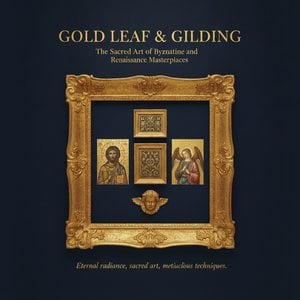
Explore the divine mastery of Byzantine gold leaf and gilding. Discover how ancient artisans used gold ground and mosaics to create celestial light, a timeless legacy of spiritual splendor and technical excellence in sacred art history.
 Se i rummet
 Del som kort
 Del
Del
 Detaljer
 Guide
Guide

 Download
 Lignende værker
 Røntgenundersøgelse
 Diasshow
 Spørgsmål og svar
 Statistikker


 Vis mere









 Glasmulighed er kun tilgængelig i størrelser under 110 cm


