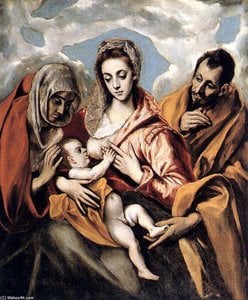
Kunstnerens biografi
Doménikos Theotokópoulos, called El Greco
Doménikos Theotokópoulos, bedre kendt som El Greco – “Den Græske” – var en maler hvis liv og kunst udfordrede nem kategorisering. Han blev født i Kreta omkring 1541, under veneziansk styre, og hans kunstneriske rejse førte ham gennem Venedig og Rom før han fandt sin ultimative udtryksform i Spanien: Toledo. El Greco var ikke blot et produkt af disse steder; han syntetiserede deres indflydelse til noget fuldstændigt unikt – en stil, der forudså den følelsesmæssige intensitet af Ekspressionisme og de fragmenterede former af Kubisme århundreder senere. Hans tidlige uddannelse inden for den byzantinske tradition sikrede ham en præcis opmærksomhed på detaljer og en dyb forståelse af religiøs ikonografi. Dette fundament begrænsede ham dog ikke. Han signeerede sine værker på græsk, ofte tilføjede “Krḗs” – Kreta – som en stolt erklæring om sin oprindelse, selvom han begav sig ud på nye kunstneriske territorier. Frøene af hans distinkte stil blev sået ikke kun i teknikken men også i den fervente religiøse atmosfære af hans hjemland og den rige vævning af veneziansk kunst.
Fra Venedig til Toledo: En Transformation
Flytningen til Venedig omkring 1567 markerede et præget øjeblik. Omgivet af det pulserende kunstneriske miljø studerede El Greco mesterne – Titian, Tintoretto, Veronese – og absorberede deres maestria inden for farve, komposition og dramatisk lyssætning. Han lærte at løsne sin penselstrøg, omfavne oliepigmentets sensualitet og male figurer med en nyfundet dynamik. Denne venezianske indflydelse ses tydelig i tidlige værker som *St. Sebastian* (1600), hvor anatomisk detalje smelter sømløst sammen med et næsten teateragtigt lyssætning. En efterfølgende ophold i Rom eksponerede ham for Mannerisme – en stil karakteriseret af udstrakte former, deformerede perspektiver og sofistikerede kompositioner. Selvom han viste betydelig talent, havde El Greco svært ved at opnå bred genkendelse i den konkurrenceprægede romanske kunstverden. Det var hans videreførelse til Toledo i 1577, der endelig tillod hans unikke vision blomstre – byen, dengang et centrum for religiøs fervor under Kontreformationen, gav både støtte og atmosfære egnet til hans dybt åndelige maleri.
En Stil Som Ingen Andre
El Greco’s kunstneriske stil er øjeblikkeligt genkendelig – og fuldstændig fascinerende. Hans figurer er ofte dramatisk udstrakte, deres kroppe strækkes og vrides i stillinger der udtrykker en følelse af åndelig ekstase eller dyb religiøs angst. Dette var ikke blot stilistisk flair; det var et forsøg på at male det usynlige, de følelsesmæssige og åndelige realiteter der ligger uden for overfladen af tingene. Han mestrer lyssætning – ikke nødvendigvis realistisk lyssætning, men levende farver, ofte kunstigt overdrevne – til at styrke den følelsesmæssige effekt af hans arbejde. Dramatisk lyssætning, med skarpe kontraster mellem lys og skygge skaber et teateragtigt præstation, der trækker publikum ind i hjertet af scenen. *The Burial of the Count of Orgaz* (1586-1588) illustrerer disse kvaliteter perfekt. Maleriet viser en mirakuløst øjeblik – Sankt Martins nedstigning til at begrave en from greve – med bemærkelsesværdig præcision i gengivelsen af samtidige personer juxtapositions mod æteriske, udstrakte former repræsenterende guddommelig indgriben. Han blandede byzantinske traditioner med italiensk renæssance teknikker og skabte en stil der var både innovativ og dybt personlig. Hans senere værker blev mere og mere mystisk og afspejlede hans egen dybe religiøse tro og en stigende afstandtagen fra konventionelle kunstneriske normer.
Efterladenskab og Opdagelse
På trods af at han opnåede betydelig succes under sit livstid – modtog vigtige bestillinger fra kirker og klostre i Toledo – blev hans kunst relativt overset efter sin død i 1614. I århundreder var han stort set ignoreret af kunsthistorikere, afvist som en excentrisk eller en provinsiel kunstner. Det var først på det 20. århundrede at hans geni begyndte at blive fuldt udforsket. Kunstnere som Picasso og Braque erkendte ham som en præcursor til moderne kunst – beundrede hans deformerede former og ukonventionelle perspektiver. Hans ekspressive stil resonerede med Ekspressionisterne, der søgte at udtrykke følelsesmæssig intensitet gennem klare farver og dramatisk komposition. I dag fejres El Greco som en af de mest betydelige figurer i europæisk kunsthistorie – en visionær maler hvis arbejde fortsat fængsler publikum med dets åndelige dybde, følelsesmæssige kraft og unikke kunstneriske vision. Hans malerier er ikke blot gengivelser af religiøse scener; de er vinduer ind til sjælen, vidnesbyrd om menneskets evne til transcendens.



 Se i fuld skala
 Køb håndlavet maleri
 Del
Del Del
Del
 Detaljer

 Download
 Lignende værker
 Røntgenundersøgelse
 Diasshow
 Statistik
 Se mere






































 Glasmulighed er kun tilgængelig i størrelser under 110 cm