

Kunstværket vist på denne side er beskyttet af ophavsretsloven, hvilket betyder, at vi ikke lovligt kan skabe eller sælge en identisk reproduktion. Denne beskyttelse håndhæves i henhold til internationale aftaler som f.eks. den Bernerkonventionen og af nationale love, herunder de bestemmelser, der er fastlagt i Amerikansk ophavsretslov - Titel 17.
Denne metode overholder fuldt ud ophavsretsreglerne, da den ikke indebærer kopiering eller duplikering af det beskyttede kunstværk. I stedet er der tale om en kreativ nytolkning – et nyt maleri, som er inspireret af det oprindelige, men ikke identisk med det.
Giclée- eller lærredstryk i museumskvalitet med hurtig produktion og fleksible muligheder for finish. ( Køb håndmalet maleri Skift til digitalt billede)





























Vælg mellem vores forudindstillede størrelser, der matcher kunstværkets originale proportioner.

Indtast den bredde og højde, du har brug for, så det passer til din ramme eller din væg. Et print kan kun beskæres, aldrig gøres større end selve billedet, så en størrelse med et andet format vil medføre, at dele af motivet går tabt. Vi sender dig en digital mockup til godkendelse, før vi printer noget. Billedet vist på denne side viser ikke den faktiske beskæring — det er kun mockuppen, der gør.
Verdensomspændende levering () på 2 uger i stedet for de sædvanlige 4/5 uger. (15 november)
Capron House
Størrelse på reproduktion
In the vast landscape of American modernism, few works capture the heavy, cinematic silence of rural life as poignantly as Edward Hopper’s 1931 watercolor, Capron House. This piece is far more than a mere depiction of a farmhouse; it is a profound meditation on solitude and the unspoken narratives that dwell within the stillness of a domestic scene. As the eye wanders across the composition, one is immediately struck by the sense of contemplative calm that defines Hopper’s signature style. A modest white clapboard house, crowned with a vibrant red roof, stands in quiet dialogue with a weathered barn, anchoring the viewer to a moment frozen in time. The presence of two figures on the porch, their postures suggesting a detached observation of their surroundings, adds a layer of psychological depth, inviting us to wonder if they are contemplating the day's labor or simply absorbing the profound tranquility of the countryside.
The scene is further enriched by the subtle inclusion of everyday artifacts—a parked truck and various vehicles scattered across the lawn. These elements serve as gentle reminders of the realities of rural existence during the early 20th century, grounding the ethereal mood in a tangible, lived reality. For the collector or interior designer, this painting offers a unique window into a bygone era, providing a focal point that is both intellectually stimulating and visually soothing. It is a work that does not demand attention through loud colors or chaotic movement, but rather earns it through a steady, rhythmic grace that settles deeply into the spirit of a room.
Hopper’s technical prowess in Capron House lies in his ability to use the delicate medium of watercolor to sculpt form and atmosphere. Eschewing dramatic or jarring palettes, he favors muted, earthy hues that heighten the emotional resonance of the landscape. His technique is characterized by precise washes and subtle gradations of tone, which allow light to become a character in its own right. The diffused light bathing the farmhouse does not merely illuminate the architecture; it softens the edges of reality, casting shadows that delineate the textures of wood and stone while emphasizing the isolation of the figures. This careful rendering of light and shadow creates a palpable sense of realism, making the atmosphere feel thick with memory and stillness.
For those seeking to incorporate such mastery into their personal spaces, the beauty of this piece lies in its textural richness. The way the light falls upon the white clapboard and the weathered surfaces of the barn provides a visual depth that is incredibly captivating. It is a masterclass in how subtle tonal shifts can convey immense psychological weight, making the painting an ideal choice for those who appreciate art that speaks through nuance rather than noise.
To understand Capron House, one must consider the era from which it emerged. Painted during the Great Depression, the work carries an inherent weight of the period's economic and social uncertainties. Yet, Hopper does not lean into tragedy; instead, he explores the architecture of solitude. He presents loneliness not as a catastrophe, but as a fundamental, almost sacred, state of being. This perspective allows the viewer to find beauty in the quietude, transforming a simple rural scene into a universal symbol of introspection and peace.
The emotional impact of the piece is enduring. It evokes a sense of nostalgia for a slower pace of life, making it an evocative addition to any curated collection or sophisticated interior design project. Whether placed in a sunlit study or a quiet corner of a living space, Capron House serves as a constant reminder of the beauty found in the moments between actions—the heavy, electric tension of the stillness that exists when the world stops to breathe.
En download er tilgængelig for "Capron House": find det digitale billede på kunstværkets Download side, hvor du kan et højopløseligt digitalt billeddownload.
"Capron House" skildrer rural landscape, domestic scene, american vernacular, tranquility, isolation, suburban life, vehicle presence, evening light, mens Edward Hoppers registrerede temaer er realism, light & shadow, urban silence, domestic routine, hopper legacy. En sammenligning af de to viser, hvordan værket relaterer sig til kunstnerens sædvanlige motiver.
Guiden til "Capron House" findes på værkets Elevguide-side – et printbart faktablad, der præsenterer værket sammen med dets billedtekst, kreditering og identifikationstabel (kunstner, datoer, medie, original størrelse, samling).

Edward Hopper blev født i Upper Nyack, USA. Hans tidlige år blev brugt på at betragte verden med et uafbrudt og skarpt blik, en vane der tog sin begyndelse med barndommens skitser, som han omhyggeligt daterede og underskrev. Selvom hans forældre foreslog en praktisk karrierevej inden for kommerciel illustration, forblev hans fokus rettet mod den skønne kunst. Han studerede ved New York School of Art under William Merritt Chase og Robert Henri. Disse år lærte ham det tekniske håndværk, der kræves for at skildre verden upoleret og ærlig. Han søgte ikke de flygtige penselstrøg fra de impressionister, han mødte i Paris. I stedet udviklede han en særlig måde at se på, der vægtede et øjebliks stilhed højere end menneskemængdens bevægelse.
Hans værker centrerer sig ofte om det banale. Han betragtede huse, dinerer, kontorer og hotelværelser. Han skrællede de unødvendige detaljer væk for at finde scenens underliggende følelsesmæssige sandhed. I House by the Railroad (1925) afslører en simpel komposition en følelse af mystik og isolation. Han brugte lys og skygge ikke blot til at beskrive et rum, men til at skabe en stemning. Den præcise gengivelse af en skygge på en væg eller måden, lyset rammer et vindue på, blev hans metode til at kommunikere sine subjekters psykologiske tilstand.
Måden lyset trænger ind i et rum på, fungerer som en central karakter i hans malerier. I Nighthawks (1942) skærer det skarpe lysstofrørlys fra en natcafé gennem mørket på en øde, urban gade. Figurerne indeni er fysisk tæt på hinanden, men virker fortabt i deres egne tanker, afkoblet fra hinanden. Denne følelse af anonymitet i en overfyldt by blev et gennemgående tema. Han indfangede spændingen ved at være alene på et offentligt sted, en følelse der genlyder i værker som Automat og Office in a Small City. Han var fascineret af, hvordan det kunstige lys interagerer med nattens naturlige mørke.
Hans hustru, Josephine Nivison Hopper, var en konstant tilstedeværelse. Hun var selv kunstner og fungerede ofte som hans model. Hendes nærvær mærkes i karakteriseringen af mange af hans kvindefigurer. Sammen levede de et beskeden liv, og de tilbragte ofte somre i New England, hvilket prægede de landskaber, han malede. Hans skildringer af det amerikanske landskab, både det rurale og det urbane, fremhæver ofte en vis råhed eller tomhed. Uanset om det er en tankstation i vejkanten i Gas (1940) eller et stille værelse på et hotel, er motivet altid krydsfeltet mellem et fysisk sted og en privat, indre oplevelse.
Hoppers indflydelse strækker sig ind i filmens og litteraturens visuelle sprog. Hans evne til at skabe en følelse af psykologisk spænding gennem komposition er blevet bemærket af mange, der studerer, hvordan historier fortælles gennem billeder. Hans malerier findes i store museer verden over, herunder i samlinger som Whitney Museum of American Art og Museum of Fine Arts i Boston. Han stræbte ikke efter de store historiske fortællinger. Han fandt sit motiv i hverdagens stille hjørner, hvor han forvandlede et simpelt vindue eller en forbipasserende fremmed til en undersøgelse af den menneskelige tilstand. Hans arbejde forbliver en undersøgelse af den stilhed, der eksisterer mellem mennesker.

1931 - 1967 , USA

Step into the evocative world of American Realism with our curated guide to the 25 most iconic Edward Hopper paintings. Explore the profound beauty of light, shadow, and urban solitude through museum-quality art stories and decor inspiration. Discover all masterpieces on WahooArt.com.

Explore iconic works by Hopper and Bacon that capture profound solitude. Discover museum-quality masterpieces on WahooArt.com.

Explore the profound emotional landscapes of Mark Rothko. An expert editorial on Color Field painting, decoding the spiritual depth, technique, and enduring legacy of these abstract masterpieces for the discerning global collector.
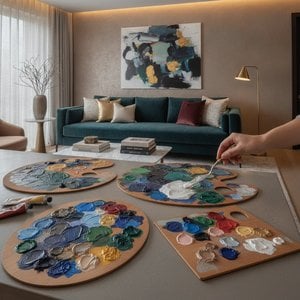
Elevate your interiors with expert guidance on color theory and art selection. Discover how to achieve chromatic equilibrium using hand-painted oil reproductions and bespoke commissions from WahooArt.com, the global authority in museum-quality fine art for luxury spaces.

Discover the ethereal beauty of watercolor through an art-historical lens. Master the delicate balance of light, fluidity, and pigment to capture the luminous essence of nature, inspired by the legendary techniques of the Old Masters and Impressionist greats.
 Se i rummet
 Del som kort
 Del
Del
 Detaljer
 Guide
Guide

 Download
 Lignende værker
 Røntgenundersøgelse
 Diasshow
 Spørgsmål og svar
 Statistikker

 Vis mere









 Glasmulighed er kun tilgængelig i størrelser under 110 cm


