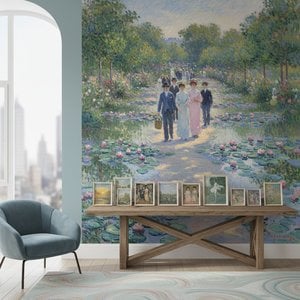
En Parisisk Rebel: Livet og Kunsten hos Édouard Manet
Édouard Manet, født i 1832 ind i en velstående borgerlig familie i Paris, var næppe bestemt til at leve livet som en revolutionerende kunstner. Hans far, en respekteret dommer, forestillede sig en sikker fremtid for sin søn indenfor lovens rammer eller måske flåden – respektable erhverv der passede til deres sociale status. Alligevel, selv som ung dreng, lå Manets hjerte hos kunsten. Han begyndte formel tegneundervisning i en alder af elleve år, og selvom han kortvarigt var lærling hos den akademiske maler Thomas Couture, fandt han hurtigt Coutures rigide metoder kvælende. Denne tidlige modstand varslede et liv dedikeret til at udfordre kunstneriske konventioner. Manet var ikke interesseret i blot at replikere fortiden; han søgte at fange vitaliteten – og nogle gange de foruroligende realiteter – i det moderne parisiske liv. Han frekventerede Louvre, ikke kun for at kopiere gamle mestre, men for at dissekere deres teknikker, lære af kunstnere som Caravaggio og Velázquez hvordan lys og skygge kunne forme formen og fremkalde følelser. Det var dog et skift i de kunstneriske strømninger, især fremkomsten af realismen, der blev championeret af Gustave Courbet, der virkelig tændte Manets kreative sti. Courbets insisteren på at skildre hverdagen uden idealisering resonerede dybt med Manet og frigjorde ham fra begrænsningerne i historiske eller mytologiske emner.
Brud med Traditionen: Skandale og Innovation
1860'erne markerede en periode med intens kunstnerisk gæring i Paris, og Manet befandt sig midtpunktet af det hele. Ankomsten af japanske tryk – *ukiyo-e* – påvirkede hans æstetiske følsomhed dybtgående. Han var betaget af deres flade perspektiver, dristige kompositioner og slående brug af farver, elementer der ville blive kendemærker i hans egen stil. Denne indflydelse, kombineret med hans voksende afvisning af akademisk polering, førte til værker, der chokerede og skandalerede den parisiske kunstverden.
Le Déjeuner sur l'herbe (Frokosten i det grønne), udstillet på Salon des Refusés i 1863 – en udstilling for værker afvist af den officielle salon – blev et lynnedslag for kontroverser. Maleriet, der viser en nøgen kvinde, der afslappet piknikerer med to fuldt klædte mænd, handlede ikke blot om nøgenhed; det handlede om *hvordan* denne nøgenhed blev præsenteret. Manets figurer manglede de idealiserede former og mytologiske kontekster i traditionelle nøgenbilleder. De var utvivlsomt moderne og konfronterede beskueren med en foruroligende direktehed. Skandalen omkring
Le Déjeuner blev kun intensiveret af hans mesterværk fra 1865,
Olympia. Dette maleri, en bevidst genfortolkning af Titians *Venus of Urbino*, præsenterede en moderne prostitueret, der stirrede dristigt ud på beskueren. Den ubønhørlige realisme og provokerende emne blev mødt med udbredt fordømmelse. Kritikere anklagede Manet for vulgaritet og kunstnerisk inkompetence, men under vreden lå en erkendelse af, at han fundamentalt ændrede maleriets sprog.
En Bro til Impressionismen: Lys, Penselstrøg og Moderne Liv
Selvom Manet aldrig fuldt ud omfavnede betegnelsen "impressionist", var hans indflydelse på bevægelsen uomtvistelig. Han delte deres afvisning af akademiske konventioner og deres engagement i at fange lysets flygtige effekter og atmosfæren. Han udstillede sammen med Monet, Renoir, Degas og andre på impressionisternes uafhængige udstillinger og cementerede sin position som en nøglefigur i avantgarden. Manets teknik udviklede sig mod et løsere penselstrøg, der prioriterede formens indtryk frem for præcise detaljer. Han eksperimenterede med farver og brugte ofte skarpe kontraster til at skabe dramatiske effekter. Ud over de skandaløse nøgenbilleder udforskede Manet en bred vifte af emner: portrætter – herunder slående fremstillinger af hans kone Suzanne og kunstnerkollega Émile Zola; scener fra det parisiske natteliv, såsom
En Bar på Folies-Bergère, der mesterligt fanger modernens urban livs fremmedgørelse og spektakel; og intime sceneskildringer. Han dokumenterede ikke blot disse emner; han undersøgte dem, stillede spørgsmål ved samfundsnormer og udfordrede konventionelle forestillinger om skønhed.
Arv og Varig Indflydelse
Édouard Manets for tidlige død i 1883 af syfilis afkortede en karriere, der allerede uigenkaldeligt havde ændret kunsthistoriens gang. Selvom hans ry voksede betydeligt efter hans død, blev hans indflydelse straks mærket af yngre kunstnere, der genkendte ham som en befrier. Han brød barrierer, udfordrede traditionelle forestillinger om emne, teknik og kunstnerisk formål.
- Hans vægt på at fange det moderne liv banede vejen for impressionismen og postimpressionismen.
- Hans innovative brug af penselstrøg og farver påvirkede generationer af malere.
- Hans vilje til at konfrontere ubehagelige sandheder om samfundet tvang beskuerne til at stille spørgsmål ved deres egne antagelser.
Manets malerier fortsætter med at resonere i dag, ikke kun for deres æstetiske skønhed, men også for deres varige relevans. Han forbliver en central figur i overgangen fra realismen til impressionismen og fejres med rette som en af modernismens fædre – en parisisk rebel, der turde male verden, som han så den, med alle dens kompleksiteter og modsætninger. Hans arbejde tjener som en kraftfuld påmindelse om, at ægte kunstnerisk innovation ofte kommer på bekostning af at udfordre etablerede normer og omfavne tidens ubehagelige sandheder.



 Se i rummet
 Skift til printversion
 Send
Send Del
Del
 Detaljer
 Studieguide til kunstværker

 Download
 Lignende værker
 Røntgenundersøgelse
 Se diasshow
 Statistik

 Læs mere






































 Glasmulighed er kun tilgængelig i størrelser under 110 cm