Se i fuld skalaSe i fuld skala AR-forhåndsvisningAR-forhåndsvisning Køb håndlavet maleri Køb håndlavet maleriSkift til digitalt billede Skift til digitalt billede DelDel
DetaljerDetaljer Tilføj til favoritter Tilføj til favoritter DownloadDownload Lignende værkerLignende værker RøntgenundersøgelseRøntgenundersøgelse DiasshowDiasshow StatistikStatistik

Ensemble

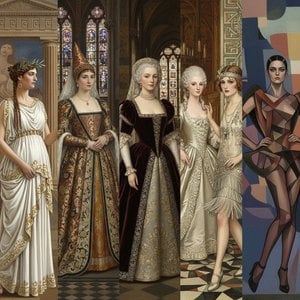
Cristóbal Balenciaga’s Ensemble embodies understated elegance—a masterful exploration of texture and geometric forms rooted in Surrealism and Primitive Art. Witness the sculptural beauty of this 1960s couture gown, inspired by Balenciaga's revolutionary vision.

Cristóbal Balenciaga: En revolutionerende spansk designer kendt for sin elegante og innovative haute couture. Udforsk hans unikke værker og arv!

Giclée / Kunsttryk

Giclée- eller lærredstryk i museumskvalitet med hurtig produktion og fleksible muligheder for finish. (Køb håndlavet maleri Køb håndlavet maleriSkift til digitalt billede Skift til digitalt billede)

P118B $10
P118H $10
P118W $10
P438Z $10
P508JH $12
P508YH $12
P805H $10
P805Z $10
P919BZ $10
P919G $10
P919XJ $10
P959ZH $10
P968JZ $12
W106C $8
W218G $10
W218JH $8
W218Y $10
W307PJ $10
W316G $10
W316PJ $8
W316Y $10
W398PJ $8
W4111J $10
W500HY $15
W500JH $15
W692G $12
W849H $8
W940BG $15
W953PJ $8

Standardstørrelse
speciallavet
CM
INCH

Vælg mellem vores forudindstillede størrelser, der matcher kunstværkets originale proportioner.

bredde
højde

Du kan indtaste dine egne mål for at passe til en specifik ramme eller et bestemt område. Hvis den valgte størrelse ikke stemmer overens med det originale billedes proportioner, vil vi enten beskære kunstværket eller udvide billedet med en spejlet eller ensfarvet kant. En digital mockup vil blive sendt til din godkendelse, før produktionen påbegyndes.
Bemærk venligst, at forhåndsvisningen på skærmen ikke afspejler den faktiske beskæring eller udvidelse. Kun mockuppen vil nøjagtigt vise den endelige komposition.
Selvom specialmål er tilgængelige, anbefaler vi at vælge et mål fra den foruddefinerede liste for at bevare de originale proportioner.

Verdensomspændende levering () på 2 uger i stedet for de sædvanlige 4/5 uger. (8 september)

why_choose_icon
Gratis ekspresforsendelse til hele verden
why_choose_icon
Lærred af linned i høj kvalitet
why_choose_icon
Fuld transportforsikring
why_choose_icon
Garanti for refusion af told og importafgifter
why_choose_icon
Garanti for præcis farvegengivelse
why_choose_icon
100 dages returret (kun ved fejl og mangler)
why_choose_icon
100% Tilfredshedsgaranti
why_choose_icon
Mængderabat tilgængelig

Samlet pris

$ 69

reproduction

Ensemble

Giclée / Kunsttryk

Størrelse på reproduktion

-

Samlet pris

$ 69

Hurtige fakta

  • Dimensions: 50 x 100 cm
  • Medium: Oil on Canvas
  • Artist: Cristóbal Balenciaga Eizaguirre
  • Year: 1960
  • Subject or theme: Nature
  • Movement: Post-Impressionism
  • Influences: Primitive Art

The Silent Symphony of Texture: Cristóbal Balenciaga’s Ensemble

Cristóbal Balenciaga Eizaguirre (1895 – 1972), born in the Basque fishing village of Getaria, Spain, wasn't merely a fashion designer; he was an architect of elegance, sculpting garments with meticulous precision and redefining couture standards. Revered by contemporaries like Christian Dior and Coco Chanel as “the master of us all” and “the only couturier in the truest sense of the word,” Balenciaga’s legacy extends far beyond mere aesthetics—it resides in his unwavering commitment to artistic integrity and a profound understanding of visual storytelling. His influence continues to inspire designers today, cementing his place as one of the most significant figures in 20th-century fashion history.

A Study in Contrasts: Style and Technique

Balenciaga’s artistic vision was rooted in a fascination with avant-garde movements like Surrealism and Primitive Art, influences that manifested powerfully in his oeuvre. Unlike many of his peers who embraced flamboyant embellishments and theatrical silhouettes, Balenciaga championed simplicity—a deliberate rejection of excess—that paradoxically amplified the impact of his designs. He favored clean lines, geometric shapes, and a masterful manipulation of fabric texture to create garments that possessed an understated grandeur. His technique involved painstaking draping and shaping, transforming raw materials into sculptural forms that defied convention. The meticulous attention to detail – from perfectly positioned seams to precisely folded pleats – underscored his belief that beauty resided in subtlety and precision.

Roots of Innovation: Historical Context

The 1960s witnessed a burgeoning interest in experimental art forms, mirroring Balenciaga’s own rebellious spirit. This era saw artists pushing boundaries and challenging established norms, exploring themes of subconsciousness and irrationality – concepts that found resonance within Balenciaga's artistic sensibilities. He drew inspiration from the raw beauty of nature, particularly tree roots, capturing their intricate patterns and textures on canvas with a masterful blend of Post-Impressionism and Surrealist techniques. This deliberate juxtaposition of styles reflected Balenciaga’s desire to transcend traditional artistic conventions and communicate profound emotional truths through visual imagery.

Symbolic Resonance: The Dress as Canvas

Balenciaga's “Ensemble,” depicted in the monochrome photograph, embodies more than just sartorial elegance; it speaks to a deeper symbolic language. The checkered pattern of the dress – reminiscent of traditional Basque textiles – represents heritage and tradition interwoven with modernity. Simultaneously, the coat-like structure conveys strength and resilience, mirroring Balenciaga’s unwavering dedication to his craft. Furthermore, the placement of the hat atop the mannequin's head symbolizes aspiration and ambition—a visual declaration of confidence and artistic vision. These elements coalesce into a cohesive narrative that elevates the dress beyond mere clothing, transforming it into an emblem of Balenciaga’s enduring aesthetic principles.

Emotional Impact: Beyond Decoration

Ultimately, Balenciaga’s “Ensemble” transcends decorative considerations, eliciting a visceral response from viewers. The stark simplicity of the design compels contemplation—encouraging us to appreciate the profound beauty found in restraint and precision. Like his other paintings – "Tree Roots" and "Acrobat"—Balenciaga sought to evoke emotion through visual form, conveying feelings of quiet contemplation and artistic reverence. Reproductions of this iconic piece offer collectors and interior designers alike a chance to experience firsthand the transformative power of Balenciaga’s aesthetic legacy—a testament to his unwavering belief that art should inspire and elevate the human spirit.

Kunstnerens biografi

Cristóbal Balenciaga Eizaguirre: The Architect of Elegance

Cristóbal Balenciaga Eizaguirre, simply known as Balenciaga, stands as a towering figure in the history of fashion – a true master who redefined women’s silhouettes and left an indelible mark on the world of haute couture. Born in 1895 in the small Basque fishing village of Getaria, Spain, his journey from humble beginnings to international acclaim is a testament to his innate talent, relentless dedication, and profound understanding of materials and form. Balenciaga's legacy isn’t merely about beautiful clothes; it’s about a revolutionary approach to design, one that prioritized structure, precision, and an almost sculptural quality rarely seen before him. His influence continues to resonate today, inspiring designers who seek to create garments with both timeless elegance and groundbreaking innovation.

Early Life and Artistic Foundations

Balenciaga's early life was deeply intertwined with the world of textiles and craftsmanship. Growing up in Getaria, he spent much of his childhood assisting his mother, a seamstress, learning the fundamental skills that would later become the bedrock of his extraordinary career. This formative experience instilled within him an unparalleled respect for materials – their weight, drape, and potential – a characteristic that set him apart from many of his contemporaries. At the age of twelve, he apprenticed with a tailor in San Sebastián, a coastal city renowned for its artistic community and burgeoning fashion scene. It was here that he began to hone his skills, absorbing techniques and developing an eye for detail that would become hallmarks of his designs. A pivotal moment arrived when the Marchioness de Casa Torres, a prominent figure in Spanish society, recognized Balenciaga’s exceptional talent and became his patron, sending him to Paris for formal training – a crucial step that opened doors to the heart of the fashion world.

Parisian Innovation and Influences

Balenciaga's arrival in Paris marked the beginning of an era of experimentation and groundbreaking design. He quickly established himself as a formidable force within the Parisian couture scene, working under Jacques Doucet at the prestigious Au Louvre department store. It was during this period that he began to develop his signature style – characterized by its dramatic volumes, sharp angles, and masterful manipulation of fabric. He drew inspiration from a diverse range of sources, including Spanish Renaissance art (particularly the works of Diego Velázquez), flamenco dance, and the traditional attire of Spanish matadors. These influences manifested in his designs through bold color combinations, intricate embellishments, and a distinctly sculptural aesthetic. Crucially, Balenciaga’s work was profoundly shaped by Coco Chanel, with whom he maintained a close friendship and mutual respect – a relationship that further solidified his position as a leading innovator.

The Sculptural Silhouette and Revolutionary Designs

Balenciaga's most significant contribution to fashion lies in his radical reimagining of the female silhouette. He moved away from the prevailing hourglass shapes popularized by Christian Dior’s “New Look” after World War II, instead favoring fluid lines, dramatic volumes, and a focus on architectural form. His designs were often described as "sculptural," with garments that appeared to be constructed rather than draped. Key innovations included the “barrel line,” which created a powerful shoulder line; the sack dress, a deceptively simple yet revolutionary design that eliminated the waistline; and the baby doll dress, a playful yet sophisticated creation that redefined feminine elegance. These designs were not merely fashionable; they were statements – bold declarations of Balenciaga’s artistic vision and his unwavering commitment to pushing the boundaries of couture.

Legacy and Enduring Influence

Cristóbal Balenciaga's career spanned over five decades, during which he consistently challenged conventions and elevated the art of fashion. His influence extends far beyond the garments he created; it permeates contemporary design, inspiring generations of stylists, designers, and artists. The Musée Cristóbal Balenciaga in Getaria serves as a poignant reminder of his humble origins and a testament to his enduring legacy. His meticulous approach to construction, his masterful use of materials, and his unwavering pursuit of perfection continue to be studied and admired by fashion professionals worldwide. Balenciaga remains not just a designer, but an architect of elegance – a true visionary who forever changed the landscape of haute couture.

Cristóbal Balenciaga

Cristóbal Balenciaga

1895 - 1972 , Spanien

Kort om kunstneren

  • Artistic Movement Or Style: Avantgarde kunst / Surrealisme
  • Artists Or Movements Influenced By This Artist:
    • Christian Dior
    • Coco Chanel
  • Artists Who Influenced This Artist: ['Hubert de Givenchy']
  • Date Of Birth: 21. januar 1895
  • Date Of Death: 23. marts 1972
  • Full Name: Cristóbal Balenciaga Eizaguirre
  • Nationality: Spansk
  • Notable Artworks:
    • Study 'Song of Songs IV'
    • Trærod
    • Akrobat
  • Place Of Birth: Getaria, Spanien
Udforsk kunstværker organiseret efter temaer, stilarter og karakteristika.