Kunstnerens biografi
Charles Marion Russell: En Cowboy’s Kunstneriske Arv
Charles Marion Russell, ofte kaldet “C.M.” eller “Kid” Russell, var langt fra født ind i den verden, han så levende malte og skulpterede. Han voksede op i St. Louis, Missouri, i 1864, og hans tidlige liv var dybt forankret i en fascination med det amerikanske Vesten – et område, der oprindeligt blev oplevet gennem historier og tegninger, drevet af en næsten romantisk længsel efter åbne rum og ukontrolleret frihed. Denne spirende passion ville til sidst drive ham vestpå, hvor han i seksten forlod formel uddannelse for at blive arbejdshestevangmand i Judith Basin i Montana. Det var et modigt træk, en bevidst indtrængen i livet, han så levende forestillede sig, og det viste sig at være afgørende for at forme hans kunstneriske vision. Russell portrætterede ikke blot Vesten; han levede den, åndede støvet og absorberede dens rytmer. Denne førstehånds erfaring ville blive grundstenen i hans vedvarende arv. I elleve år omfavnede han cowboyens beskidte liv som herde, håndværker og jæger – oplevelser, der gav ham en intim forståelse af landskabet, dyrene og vigtigst af alt, de mennesker, der boede dér – cowboys, indianere og tapper, hvis liv han så kraftfuldt portrætterede.
Fra Vrangmand til Historiker
Russells kunstneriske rejse var ikke en bevidst akademisk progression, men snarere en organisk udvikling født af nødvendighed og observation. Mens han arbejdede som cowboy, begyndte han at tegne scener fra sit daglige liv – mærke kvæg, indsamle heste, møder med vilde dyr – fangede øjeblikke, der resonerede med Vestens rå skønhed og iboende drama. Disse var ikke polerede værker beregnet til gallerier; de var personlige dagbøger, der dokumenterede en livsstil, der hurtigt forsvandt. Hans tidlige arbejde karakteriseredes af en bemærkelsesværdig naturalisme – et skarpt øje for detaljer, fintunet gennem års observation af omgivelsernes nuancer. Han var ikke interesseret i at romantisere eller idealisere Vesten; han søgte at portrættere den, som den *var*, med alle dens vanskeligheder og priser. Et gennembrud kom efter at have illustreret et postkort, der skildrede kvæg, der kæmpede gennem en barsk vinter – et billede så levende, at det udløste efterspørgsel på hans kunst og tillod ham at forlade herdingen og blive fuldtidskunstner i 1893. Dette markerede begyndelsen på en produktiv karriere, der spændte over maleri, skulptur og skrivning – alt sammen forenet af hans urokkelige engagement i at portrættere Vestens autentiske ånd. Han var ikke blot en kunstner; han var en visuel historiker, der minutiøst dokumenterede en forsvindende verden før den forsvandt i hukommelsen.
At Fange En Forsvinnende Verden: Temaer og Teknikker
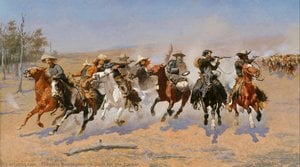
Russells kunst er dybt præget af fortælling – hvert lærred fortæller en historie, ofte gennemsyret af mytologi og realiteterne i frontier-livet. Hans motiver er mangfoldige, men konsekvent fokuserede på interaktionerne mellem cowboys, indianere og det ukontrollerede landskab. Han tøvede ikke for at skildre konflikt, men hans portrætter var sjældent sensationaliserede; i stedet udtrykte de en respekt for alle involverede – anerkendte kompleksiteten af en foranderlig verden. *En Bad Hoss*, malet i 1904, illustrerer dette – et dynamisk billede, der fanger kampen mellem cowboy og galoperende hest, hvilket udtrykker både dygtighed og fare forbundet med cowboylivsstilen. Ligeledes viser *Battle of Belly River* (1905) hans evne til at skildre dramatiske historiske begivenheder med præcision og følelsesmæssig dybde. Hans teknik udviklede sig over tid, fra en mere illustrativ stil mod løsere penselstrøg og dristigere farver. Han var en mesterfortæller, der brugte komposition, lys og skygge til at skabe fængslende fortællinger, der resonerede dybt hos publikum, der søgte at forbinde sig med Vestens romance og robusthed. Hans senere værker indeholdt ofte en forøget følelse af drama og følelsesmæssig intensitet – et udtryk for hans voksende modenhed som kunstner og hans dybere forståelse af den menneskelige tilstand. *Han forstod, at Vestens sande skønhed lå ikke kun i dets landskaber, men også i de mennesker, der boede dér.*
Arv og Vedvarende Indflydelse
Charles Marion Russells indflydelse på amerikansk kunst er uomtvisteligt. Han var ikke blot en maler af vestlige scener; han *definerede* dem for generationer. Hans arbejde har formet det populære billede af cowboyen, indianeren og de store landskaber i Vesten – hvilket har påvirket utallige kunstnere, der fulgte hans vej. Han blev kendt som “cowboykunstneren” ikke kun for sit motivvalg, men også for sin autentiske skildring af vestlig livsstil – en skildring baseret på personlige erfaringer snarere end romantiseret fantasi. I dag er hans malerier og skulpturer højt eftertragtede af samlere og museer over hele verden. C.M. Russell Museum Complex i Great Falls, Montana, står som et vidnesbyrd om hans vedvarende arv – der huser en omfattende samling af hans værker, personlige genstande og artefakter. Hans malerier, såsom *Lewis and Clark Meeting Indians at Ross' Hole*, fortsætter med at inspirere beundring og ærefrygt, fungerer som kraftfulde påmindelser om et afgørende øjeblik i amerikansk historie. Russell var en mand, der ikke blot skabte kunst; han formåede at fange essensen af en hel tidsalder og en unik kultur, og hans arbejde vil fortsætte med at fascinere og inspirere i mange år fremover.
Ud Over Lærredet: En Stemme for Forandring
Russell var ikke kun en kunstner; han var også en fortaler. Han udviklede en dyb respekt for indianerkulturer under sin tid i Montana og Canada, og han brugte sin kunst til at udfordre dominerende stereotyper og fremme forståelse. Han støttede aktivt Chippewa-tribunens bestræbelser på at sikre en reservation i Montana – endda ved at lobbyere i kongressen for dem. Denne forpligtelse til social retfærdighed er ofte overset, men den repræsenterer en vigtig dimension af hans karakter og kunstneriske vision. Han mente, at det var afgørende at dokumentere og bevare indianerkulturens traditioner, før de forsvandt for evigt – en tro, der afspejles i mange af hans malerier og skulpturer. Hans kunst var ikke blot om at portrættere Vesten; den handlede om at vidne til en foranderlig verden og kæmpe for dem, hvis stemmer ofte blev marginaliseret. Denne dedikation til autenticitet, kombineret med hans kunstneriske talent, cementerede hans plads som en af Amerikas mest betydningsfulde og elskede kunstnere – en kronikør af en forsvindende livsstil og en fortaler for kulturel forståelse.



 Se i fuld skala
 Skift til print
 Del
Del Del
Del
 Detaljer

 Download
 Lignende værker
 Røntgenundersøgelse
 Diasshow
 Statistik


 Se mere