Se i rummet Se i AR Bestil håndmalet reproduktion Skift til digitalt billede Send
Detaljer Studieguide til kunstværker Tilføj til favoritter Download Lignende værker Røntgenundersøgelse Se diasshow Statistik

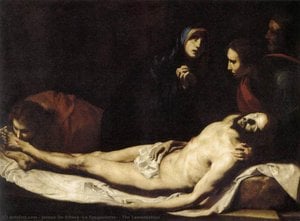
Pietà

Discover Charles Le Brun’s ‘Pietà,’ a breathtaking Baroque masterpiece at the Louvre. Explore its emotional intensity, oil-on-canvas detail & biblical significance – a must-see for art lovers.

Charles Le Brun (1619-1690) var en dansk maler og kunstteoretiker, der dominerede den franske barokkunst under Ludvig 14. Han er kendt for sine overdådige dekorative værker i Versailles, herunder Hall of Mirrors og Ambassadørgangen, samt sin rolle i at forme kunstnerlivet i Frankrig.

Giclée / Kunsttryk

Giclée- eller lærredstryk i museumskvalitet med hurtig produktion og fleksible muligheder for finish. ( Bestil håndmalet reproduktion Skift til digitalt billede)

Corner sample of the P118B picture frame: støbt polystyren, 5 cm wide and 3 cm thick
P118B Dkr10
Corner sample of the P118H picture frame: støbt polystyren, 5 cm wide and 3 cm thick
P118H Dkr10
Corner sample of the P118W picture frame: støbt polystyren, 5 cm wide and 3 cm thick
P118W Dkr10
Corner sample of the P438Z picture frame: støbt polystyren, 5.5 cm wide and 3.5 cm thick
P438Z Dkr10
Corner sample of the P508JH picture frame: støbt polystyren, 7 cm wide and 3.5 cm thick
P508JH Dkr12
Corner sample of the P508YH picture frame: støbt polystyren, 7 cm wide and 3.5 cm thick
P508YH Dkr12
Corner sample of the P805H picture frame: støbt polystyren, 5 cm wide and 3.5 cm thick
P805H Dkr10
Corner sample of the P805Z picture frame: støbt polystyren, 5 cm wide and 3.5 cm thick
P805Z Dkr10
Corner sample of the P919BZ picture frame: støbt polystyren, 7 cm wide and 3.5 cm thick
P919BZ Dkr10
Corner sample of the P919G picture frame: støbt polystyren, 7 cm wide and 3.5 cm thick
P919G Dkr10
Corner sample of the P919XJ picture frame: støbt polystyren, 7 cm wide and 3.5 cm thick
P919XJ Dkr10
Corner sample of the P959ZH picture frame: støbt polystyren, 5 cm wide and 3 cm thick
P959ZH Dkr10
Corner sample of the P968JZ picture frame: støbt polystyren, 6 cm wide and 4 cm thick
P968JZ Dkr12
Corner sample of the W106C picture frame: massivt træ, 5 cm wide and 3 cm thick
W106C Dkr8
Corner sample of the W218G picture frame: massivt træ, 5 cm wide and 3 cm thick
W218G Dkr10
Corner sample of the W218JH picture frame: massivt træ, 5 cm wide and 3 cm thick
W218JH Dkr8
Corner sample of the W218Y picture frame: massivt træ, 5 cm wide and 3 cm thick
W218Y Dkr10
Corner sample of the W307PJ picture frame: massivt træ, 6 cm wide and 3 cm thick
W307PJ Dkr10
Corner sample of the W316G picture frame: massivt træ, 6 cm wide and 3 cm thick
W316G Dkr10
Corner sample of the W316PJ picture frame: massivt træ, 6 cm wide and 3 cm thick
W316PJ Dkr8
Corner sample of the W316Y picture frame: massivt træ, 6 cm wide and 3 cm thick
W316Y Dkr10
Corner sample of the W398PJ picture frame: massivt træ, 5 cm wide and 3 cm thick
W398PJ Dkr8
Corner sample of the W4111J picture frame: massivt træ, 6.5 cm wide and 3.5 cm thick
W4111J Dkr10
Corner sample of the W500HY picture frame: massivt træ, 7 cm wide and 5 cm thick
W500HY Dkr15
Corner sample of the W500JH picture frame: massivt træ, 7 cm wide and 5 cm thick
W500JH Dkr15
Corner sample of the W692G picture frame: massivt træ, 8 cm wide and 4 cm thick
W692G Dkr12
Corner sample of the W849H picture frame: massivt træ, 5 cm wide and 3 cm thick
W849H Dkr8
Corner sample of the W940BG picture frame: massivt træ, 7.5 cm wide and 4.5 cm thick
W940BG Dkr15
Corner sample of the W953PJ picture frame: massivt træ, 6 cm wide and 3.5 cm thick
W953PJ Dkr8

Standardstørrelse
speciallavet
CM
INCH

Vælg mellem vores forudindstillede størrelser, der matcher kunstværkets originale proportioner.

bredde
højde

Indtast den bredde og højde, du har brug for, så det passer til din ramme eller din væg. Et print kan kun beskæres, aldrig gøres større end billedet, så en størrelse med en anden form vil miste en del af motivet. Vi sender dig en digital mockup til godkendelse, før vi printer noget. Billedet vist på denne side viser ikke den faktiske beskæring — det er kun mockuppen, der gør.

Verdensomspændende levering () på 2 uger i stedet for de sædvanlige 4/5 uger. (26 oktober)

Gratis ekspresforsendelse til hele verden
Lærred af linned i høj kvalitet
Komplet transportforsikring
Garanti for refusion af told og importafgifter
Garanti for autentisk farvegengivelse
100 dages returret ved fabrikationsfejl
100% fuld returret
Mængderabat ved flere køb

Samlet pris

Dkr 453

Pietà

Giclée / Kunsttryk

Reproduktionsstørrelse

-

Samlet pris

Dkr 453

Kort om værket

  • Year: 1643
  • Dimensions: 146 x 222 cm
  • Influences: Nicolas Poussin
  • Subject or theme: Biblical narrative; Suffering; Faith
  • Title: Pietà
  • Notable elements or techniques: Dramatic lighting; Detailed drapery

Kunstquiz

Der er kun ét korrekt svar på hvert spørgsmål.

Spørgsmål 1:
What is the primary subject matter of Charles Le Brun’s ‘Pietà’?
Spørgsmål 2:
Where is Charles Le Brun’s ‘Pietà’ currently housed?
Spørgsmål 3:
What artistic movement is Charles Le Brun associated with?
Spørgsmål 4:
Which technique did Le Brun utilize in creating ‘Pietà’?
Spørgsmål 5:
What is a notable characteristic of the lighting employed in ‘Pietà’?

A Moment Frozen in Time: The Emotional Resonance of Le Brun’s Pietà

In the hallowed stillness of the Musée du Louvre, there exists a canvas that does more than merely depict a biblical event; it captures the very essence of human grief. Charles Le Brun’s Pietà, painted in 1643, is a monumental achievement of the Baroque era, serving as a profound meditation on sorrow, faith, and the weight of mortality. Originally commissioned for the Sainte-Chapelle in Paris—a sanctuary dedicated to the relics of Christ—this oil on canvas was designed to evoke spiritual contemplation through its sheer emotional gravity. As viewers encounter the work, they are not just observing a scene from the Passion; they are invited into a sacred space where the boundaries between the divine and the human dissolve.

The painting centers on the poignant aftermath of the crucifixion, presenting the Virgin Mary cradling the lifeless form of her son. Le Brun masterfully employs a pyramidal composition, a technique that provides a sense of structural stability to an otherwise turbulent emotional scene. This geometric arrangement directs the eye upward, guiding the observer from the heavy, slumped weight of Christ’s body toward the serene yet heartbroken countenance of Mary. The interplay of light and shadow, known as chiaroscuro, is utilized with breathtaking precision. A singular, dramatic light source illuminates the central figures against a dark, indistinct background, stripping away all worldly distractions to focus the soul entirely on the tragedy unfolding within the frame.

Mastery of Technique and the Baroque Spirit

To understand the Pietà is to understand the hand of Charles Le Brun, a titan of French art who shaped the aesthetic standards of the age. His technique reflects the rigorous training he received under masters like Simon Vouet and his transformative years in Rome alongside Nicolas Poussin. In this work, Le Brun achieves a perfect balance between dramatic realism and idealized beauty. The texture of the painting is remarkably rich; one can almost feel the heavy, flowing drapery of Mary’s robes as they cascade around the figures, adding a sense of dynamic movement to the stillness of death. His brushwork captures the subtle nuances of skin, the limpness of muscle, and the intricate folds of fabric, all rendered with an exacting detail that speaks to his mastery of the medium.

Beyond its technical brilliance, the artwork serves as a profound symbolic vessel. The scene is steeped in Christian iconography, representing the ultimate sacrifice and the enduring devotion of the faithful. The presence of figures like Joseph of Arimathea and Mary Magdalene adds layers of communal mourning, yet the focus remains on the intimate bond between mother and son. For the collector or the lover of fine art, this piece offers more than just visual splendor; it provides a window into the 17th-century French soul. It is an ideal centerpiece for those seeking to infuse a space with historical depth, intellectual rigor, and a sense of timeless, quiet majesty.

Spørgsmål & svar

Hvordan spiller farverne i "Pietà" sammen med hinanden?

Farverne i "Pietà" af Charles Le Brun udviser en Softly Mixed Palette harmoni. Harmoni beskriver, hvordan farverne relaterer sig til hinanden.

Hvad forklarer ophavsretsstatus for "Pietà" af Charles Le Brun?

"Pietà" af Charles Le Brun er i det offentlige domæne – ophavsretten er udløbet. Ophavsrettens varighed løber fra kunstnerens død, som fandt sted i 1690.

Er "Pietà" et berømt Baroque-kunstværk?

"Pietà" af Charles Le Brun er klassificeret som Iconic og tilhører Baroque-bevægelsen.


Om kunstneren

Early Life and Artistic Beginnings

Charles Le Brun, en af barokkens mest markante kunstnere i Frankrig, blev født i Paris i 1619. Hans tidlige liv var præget af en stærk kunstnerisk arv; hans far, Nicolas Le Brun, var en anerkendt skulptør, og familien boede tæt på de royale kredse. Fra en alder af ti år trådte Charles ind i Simon Vouets atelier, hvor han fik undervisning under den indflydelsesrige maler og modtog støtte fra Chancelloren Séguier. Denne tidlige introduktion til kunstens verden viste sig at være afgørende for hans fremtidige udvikling.

Le Brun fortsatte sin uddannelse hos François Perrier, en anden respekteret kunstner i Paris, og modtog sine første kommissioner fra den karismatiske kardinal Richelieu. Selv kun femten år gammel demonstrerede han allerede et imponerende talent, hvilket førte til, at han fik sit gennembrud med en tidlig portrætkommission. Denne tidlige succes vidnede om hans evne til hurtigt at absorbere og imitere forskellige kunstneriske stilarter.

En afgørende periode i Le Brun’s karriere udspillede sig i Rom fra 1642 til 1646. Her blev han understøttet af den berømte maler Nicolas Poussin, en mand der var kendt for sin klassiske stil og dybe forståelse for lys og farve. Denne italienske ophold havde en dybtgående indflydelse på Le Brun’s kunstneriske udvikling; han studerede de gamle romerske skulpturer, lærte af Poussin’s teknikker og begyndte at forme sin egen unikke stil.

Artistic Development and the Baroque Style

Da Charles Le Brun vendte tilbage til Paris i 1646, blev han straks anerkendt for sit talent og fik hurtigt en række prestigefyldte kommissioner. Hans tidlige stil var tydeligt påvirket af Vouet og Poussin, men han begyndte gradvist at udvikle et mere personligt udtryk. Le Brun bevægede sig væk fra en ren efterlevelse af klassiske modeller og omfavnede i stedet de dynamiske og ekspressive kendetegn ved den barokke stil.

Han blev især kendt for sine store historiebilleder, portrætter og dekorative værker. Hans malerier var ofte præget af dramatiske kompositioner, rige farver og en minutiøs detaljegrad. Et særligt bemærkelsesværdigt værk er hans serie af billeder, der skildrer Alexander den Stores historie – et eksempel på hans evne til at kombinere historisk fortælling med kunstnerisk storhed.

Le Brun’s udvikling var præget af en konstant søgen efter at forfine sin teknik og udtrykke sig mere effektivt. Han eksperimenterede med forskellige former for lys, farve og komposition, og han blev hurtigt anset for at være en af de mest fremtrædende kunstnere i Frankrig.

Royal Patronage and the Palace of Versailles

Le Brun’s karriere nåede sit højdepunkt under Ludvig 14.’s regeringstid, hvor han blev udnævnt til hofmaler i 1664. Denne position gav ham enorm indflydelse på den franske kunstscene og åbnede døre for en række prestigefyldte kommissioner.

Han spillede en central rolle i udsmykningen af Slottet i Versailles, hvor han skabte ikoniske rum som Ambassadeurskaffeesalen (Ambassadors’ Staircase) og Spejlsalen (Hall of Mirrors). Hans bidrag til Versailles var afgørende for at definere den officielle stil i det franske monarki. Han overvågede også den visuelle retning af mange andre projekter, herunder de kongelige haver.

Le Brun’s arbejde ved Versailles er et vidnesbyrd om hans evner som kunstner og designer. Hans rum var præget af overdådighed, elegance og en dyb forståelse for lys og farve – elementer, der gjorde dem til nogle af de mest berømte og indflydelsesrige i verden.

Legacy and Artistic Influence

Charles Le Brun’s karriere nåede sit klimaks under Ludvig 14.’s regeringstid, hvor han blev udnævnt til hofmaler i 1664. Denne position gav ham enorm indflydelse på den franske kunstscene og åbnede døre for en række prestigefyldte kommissioner.

Han spillede en central rolle i udsmykningen af Slottet i Versailles, hvor han skabte ikoniske rum som Ambassadeurskaffeesalen (Ambassadors’ Staircase) og Spejlsalen (Hall of Mirrors). Hans bidrag til Versailles var afgørende for at definere den officielle stil i det franske monarki. Han overvågede også den visuelle retning af mange andre projekter, herunder de kongelige haver.

Le Brun’s kunstneriske arv er dybtgående. Hans værker bidrog til at forme barokken i Frankrig og cementerede hans position som en af de mest betydningsfulde kunstnere på sin tid. Han var også en vigtig teoretiker, der understregede vigtigheden af intellektuel engagement over blot visuel appel, hvilket har haft en indflydelse på kunstuddannelsen i generationer.

Hans dekorative planer ved Versailles satte standarden for kongelige paladser i hele Europa. Charles Le Brun’s bidrag til den franske kunst og kultur er derfor fortsat værdsat og studeret i dag.

Charles Le Brun

Charles Le Brun

1619 - 1690 , Frankrig

Hurtige fakta

  • Artistic Movement Or Style: Barok
  • Artists Or Movements Influenced By This Artist: ['Fransk kunst']
  • Artists Who Influenced This Artist:
    • Simon Vouet
    • Nicolas Poussin
  • Date Of Birth: 24 feb. 1619
  • Date Of Death: 12 feb. 1690
  • Full Name: Charles Le Brun
  • Nationality: Fransk
  • Notable Artworks:
    • Ambassadørstige
    • Spejlstallet
    • Fred og krigsrummer
  • Place Of Birth: Paris, Frankrig