Se i rummet Se i AR Bestil håndmalet reproduktion Skift til digitalt billede Send
Detaljer Studieguide til kunstværker Tilføj til favoritter Download Lignende værker Røntgenundersøgelse Se diasshow Statistik

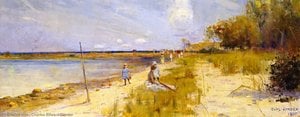
Springtime

Charles Conder's 'Springtime' captures a serene Australian countryside scene with figures and nature bathed in sunlight. A beautiful example of Heidelberg School art.

Charles Edward Conder (1868-1909) var en australsk maler kendt for sine farverige landskaber og impressionistiske værker fra Heidelberg School. Oplev hans ikoniske billeder af Sydney Harbour og fransk natur på WahooArt!

Giclée / Kunsttryk

Giclée- eller lærredstryk i museumskvalitet med hurtig produktion og fleksible muligheder for finish. ( Bestil håndmalet reproduktion Skift til digitalt billede)

Corner sample of the P118B picture frame: støbt polystyren, 5 cm wide and 3 cm thick
P118B Dkr10
Corner sample of the P118H picture frame: støbt polystyren, 5 cm wide and 3 cm thick
P118H Dkr10
Corner sample of the P118W picture frame: støbt polystyren, 5 cm wide and 3 cm thick
P118W Dkr10
Corner sample of the P438Z picture frame: støbt polystyren, 5.5 cm wide and 3.5 cm thick
P438Z Dkr10
Corner sample of the P508JH picture frame: støbt polystyren, 7 cm wide and 3.5 cm thick
P508JH Dkr12
Corner sample of the P508YH picture frame: støbt polystyren, 7 cm wide and 3.5 cm thick
P508YH Dkr12
Corner sample of the P805H picture frame: støbt polystyren, 5 cm wide and 3.5 cm thick
P805H Dkr10
Corner sample of the P805Z picture frame: støbt polystyren, 5 cm wide and 3.5 cm thick
P805Z Dkr10
Corner sample of the P919BZ picture frame: støbt polystyren, 7 cm wide and 3.5 cm thick
P919BZ Dkr10
Corner sample of the P919G picture frame: støbt polystyren, 7 cm wide and 3.5 cm thick
P919G Dkr10
Corner sample of the P919XJ picture frame: støbt polystyren, 7 cm wide and 3.5 cm thick
P919XJ Dkr10
Corner sample of the P959ZH picture frame: støbt polystyren, 5 cm wide and 3 cm thick
P959ZH Dkr10
Corner sample of the P968JZ picture frame: støbt polystyren, 6 cm wide and 4 cm thick
P968JZ Dkr12
Corner sample of the W106C picture frame: massivt træ, 5 cm wide and 3 cm thick
W106C Dkr8
Corner sample of the W218G picture frame: massivt træ, 5 cm wide and 3 cm thick
W218G Dkr10
Corner sample of the W218JH picture frame: massivt træ, 5 cm wide and 3 cm thick
W218JH Dkr8
Corner sample of the W218Y picture frame: massivt træ, 5 cm wide and 3 cm thick
W218Y Dkr10
Corner sample of the W307PJ picture frame: massivt træ, 6 cm wide and 3 cm thick
W307PJ Dkr10
Corner sample of the W316G picture frame: massivt træ, 6 cm wide and 3 cm thick
W316G Dkr10
Corner sample of the W316PJ picture frame: massivt træ, 6 cm wide and 3 cm thick
W316PJ Dkr8
Corner sample of the W316Y picture frame: massivt træ, 6 cm wide and 3 cm thick
W316Y Dkr10
Corner sample of the W398PJ picture frame: massivt træ, 5 cm wide and 3 cm thick
W398PJ Dkr8
Corner sample of the W4111J picture frame: massivt træ, 6.5 cm wide and 3.5 cm thick
W4111J Dkr10
Corner sample of the W500HY picture frame: massivt træ, 7 cm wide and 5 cm thick
W500HY Dkr15
Corner sample of the W500JH picture frame: massivt træ, 7 cm wide and 5 cm thick
W500JH Dkr15
Corner sample of the W692G picture frame: massivt træ, 8 cm wide and 4 cm thick
W692G Dkr12
Corner sample of the W849H picture frame: massivt træ, 5 cm wide and 3 cm thick
W849H Dkr8
Corner sample of the W940BG picture frame: massivt træ, 7.5 cm wide and 4.5 cm thick
W940BG Dkr15
Corner sample of the W953PJ picture frame: massivt træ, 6 cm wide and 3.5 cm thick
W953PJ Dkr8

Standardstørrelse
speciallavet
CM
INCH

Vælg mellem vores forudindstillede størrelser, der matcher kunstværkets originale proportioner.

bredde
højde

Indtast den bredde og højde, du har brug for, så det passer til din ramme eller din væg. Et print kan kun beskæres, aldrig gøres større end billedet, så en størrelse med en anden form vil miste en del af motivet. Vi sender dig en digital mockup til godkendelse, før vi printer noget. Billedet vist på denne side viser ikke den faktiske beskæring — det er kun mockuppen, der gør.

Verdensomspændende levering () på 2 uger i stedet for de sædvanlige 4/5 uger. (24 oktober)

Gratis ekspresforsendelse til hele verden
Lærred af linned i høj kvalitet
Komplet transportforsikring
Garanti for refusion af told og importafgifter
Garanti for autentisk farvegengivelse
100 dages returret ved fabrikationsfejl
100% fuld returret
Mængderabat ved flere køb

Samlet pris

Dkr 453

Springtime

Giclée / Kunsttryk

Reproduktionsstørrelse

-

Samlet pris

Dkr 453

Kort om værket

  • Medium: Oil on canvas
  • Title: Springtime
  • Movement: Heidelberg School
  • Location: NGV, Melbourne
  • Artist: Charles Conder

Kunstquiz

Der er kun ét korrekt svar på hvert spørgsmål.

Spørgsmål 1:
What artistic movement is Charles Edward Conder primarily associated with?
Spørgsmål 2:
In 'Springtime', what is the primary subject matter depicted?
Spørgsmål 3:
What year was 'Springtime' painted?
Spørgsmål 4:
Charles Edward Conder was born in which city?
Spørgsmål 5:
Which of the following best describes Conder's style as evident in 'Springtime'?

Charles Edward Conder’s “Springtime,” A Window into Heidelberg’s Soul

Charles Edward Conder's "Springtime," painted in 1888, isn’t merely a depiction of a rural scene; it’s a vibrant distillation of the Heidelberg School’s artistic philosophy – a celebration of light, color, and the fleeting beauty of the Australian landscape. This oil on canvas captures a moment of idyllic tranquility nestled within the rolling hills of New South Wales, yet it resonates with a deeper sense of observation and emotional resonance that distinguishes Conder's work from purely topographical representations.

The painting immediately draws the eye to the luminous quality of the light, characteristic of the Heidelberg School’s approach. Conder masterfully employs broken brushstrokes and a palette dominated by greens, blues, and yellows – not in a photographic realism, but rather as an expression of how these colors *feel* under the intense Australian sun. The composition is deceptively simple: a meandering dirt track cuts through a field dotted with grazing sheep and cows, leading towards distant trees that are rendered with a hazy, atmospheric quality. A small group of figures – likely children – are visible in the foreground, adding a touch of human presence to this otherwise serene vista.

The Heidelberg School and its Artistic Roots

To fully appreciate “Springtime,” it’s crucial to understand the context within which Conder was working. The Heidelberg School, emerging in Melbourne during the 1880s, represented a significant shift away from the academic traditions of European art that had previously dominated Australian painting. Artists like Conder, Tom Roberts, and Frederick McCubbin sought inspiration directly from the Australian landscape, rejecting idealized representations in favor of capturing its raw beauty and inherent drama. They embraced *plein air* painting – working outdoors directly from nature – a technique championed by Impressionist painters in Europe.

Conder’s early life, marked by his mother's death in India and subsequent relocation to England before returning to Australia, undoubtedly shaped his artistic sensibility. His experiences as a surveyor instilled a keen eye for detail and an appreciation for the natural world, while his time spent studying art in London exposed him to the burgeoning Impressionist movement. However, Conder ultimately forged his own unique style, blending European influences with a distinctly Australian perspective.

Symbolism and Emotional Resonance

Beyond its picturesque subject matter, “Springtime” is rich in symbolic meaning. The dirt track suggests a journey – perhaps a metaphorical one – while the grazing animals represent the bounty of the land. The figures in the foreground invite us to contemplate our relationship with nature and the simple pleasures of rural life. There’s an underlying sense of nostalgia for a bygone era, a yearning for connection with the earth and its rhythms.

The hazy atmosphere and diffused light contribute significantly to the painting's emotional impact. It evokes a feeling of warmth, tranquility, and perhaps even melancholy – a recognition that such moments of beauty are fleeting and precious. Conder’s use of color is particularly effective in conveying this mood, creating a sense of depth and luminosity that draws the viewer into the scene.

A Legacy of Australian Impressionism

“Springtime” stands as a pivotal work in the development of Australian Impressionism. It exemplifies the Heidelberg School’s commitment to capturing the essence of the Australian landscape with vibrant color, loose brushwork, and an emphasis on light and atmosphere. Conder's ability to imbue his paintings with both visual beauty and emotional depth cemented his place as one of Australia’s most important artists. Reproductions of this captivating work continue to resonate with audiences today, offering a glimpse into the soul of Heidelberg and the enduring appeal of the Australian landscape.

Spørgsmål & svar

Hvordan passer "Springtime" ind i Charles Edward Conders temaer og stil?

"Springtime" deler med Charles Edward Conders øvrige værker sin Heidelberg School-stil og de gennemgående temaer: heidelberg school realism, australian landscape painting, impressionistic light study, rural life depiction”, “conder’s artistic evolution”.

Viser "Springtime" stærke lys-mørke kontraster?

Kontrastniveauet i "Springtime" af Charles Edward Conder er Bold.

Hvilken størrelse og orientering anbefales til et print af "Springtime" af Charles Edward Conder?

Et print af "Springtime" af Charles Edward Conder anbefales i størrelsen Medium med Landscape orientering.


Om kunstneren

tidligt liv og den kunstneriske rejse

charles edward conder, en britiskfødt maler, litograf og designer, efterlod et uudsletteligt aftryk på kunstverdenen. født i tottenham, middlesex, den 24. oktober 1868, var conders tidlige liv præget af hans mors død i indien, da han kun var fire år gammel.

kunstnerisk karriere i australia

i 1884, som 16-årig, flyttede conder til sydney, australia, hvor han arbejdede for sin onkel som landmåler. han opdagede dog hurtigt, at hans sande passion lå i at tegne landskabet snarere end at opmåle det. inden 1886 var han blevet kunstner for illustrated sydney news, side om side med fremtrædende kunstnere som albert henry fullwood og frank mahony.

heidelberg-skolen og de bemærkelsesværdige værker

conders mesterværk, departure of the orient – circular quay (1888), fremviste hans nyvundne beherskelse af form og penselstrøg. denne havnescene, der skildrer det livlige hav ved sydney cove, blev hurtigt købt af art gallery of new south wales, hvilket gjorde det til conders første værk i en offentlig samling.
  • a holiday at mentone (1888), et livsglad maleri, der viser mænd og kvinder, som slapper af på stranden, er et andet bemærkelsesværdigt eksempel på conders arbejde.
  • conders tilknytning til g. p. nerli, en omrejsende italiensk maler, havde en betydelig indflydelse på hans udvikling som kunstner.
  • hans bidrag til 9 by 5 impression exhibition i melbourne, sammen med tom roberts og arthur streeton, cementerede hans position inden for heidelberg-skolens bevægelse.

eftermæle og de senere år

conders senere år var præget af dårligt helbred, herunder lammelse og et anfald af delirium tremens. på trods af dette fortsatte han med at male og efterlod sig en arv som en nøglefigur i heidelberg-skolen. hans kunst blev bedre modtaget i england end i paris, og hans portræt blev malet af henri de toulouse-lautrec i 1892. se conders værker på art gallery of new south wales eller udforsk mere om heidelberg-skolen på WahooArts charles edward conder side.

konklusion

charles edward conder's indflydelse på australsk impressionisme er ubestridelig. hans eftermæle, præget af hans fængslende malerier og tilknytning til heidelberg-skolen, fortsætter med at inspirere kunstentusiaster verden over.
Charles Edward Conder

Charles Edward Conder

1868 - 1909 , Storbritannien

Hurtige fakta

  • Artistic Movement Or Style: Heidelberg Skolen
  • Artists Who Influenced This Artist:
    • Alfred Daplyn
    • Victor Mann
    • Julian Ashton
  • Date Of Birth: 24 oktober 1868
  • Date Of Death: 9 februari 1909
  • Full Name: Charles Edward Conder
  • Nationality: Britisk
  • Notable Artworks:
    • Departure av Orient – Circular Quay
    • A Holiday at Mentone
    • Under The Southern Sun
  • Place Of Birth: Tottenham, Storbritannien
Udforsk kunstværker organiseret efter temaer, stilarter og karakteristika.