A Life Rooted in Observation: The World of Camille Pissarro
Camille Pissarro, et navn der er synonymt med både fødslen og udviklingen af Impressionismen, var en kunstner hvis liv afspejlede de skiftende landskaber han så inderligt portrætterede på lærredet. Født Jacob Abraham Camille Pissarro den 10. juli 1830 i Charlotte Amalie, St. Thomas – dengang en del af det Danske Vestindiske Øer, nu USA’s østlige dele – var hans rødder lige så forskellige og levende som de scener der senere definerede hans kunstneriske vision. Hans far, en portugisisk jødisk købmand med fransk nationalitet, og hans mor, fra en fransk-jødisk familie på øen, indstillede ham til en unik kulturel arv. Denne opvækning, noget usædvanlig på grund af familiens kompleksiteter, fremmede en tidlig følsomhed over for verden omkring ham, en kvalitet der ville blive hjørnestenen i hans kunstneriske praksis. Hans første formelle træning ved Savary Akademiet nær Paris gav ham et fundament i traditionelle teknikker, men det var hans tilbagevenden til St. Thomas og efterfølgende arbejde som lastbilmedarbejder der virkelig antændte hans passion for observation. Havnens travlhed, det livlige lokale liv og den rå skønhed i Caribien blev hans første emner, der formede et blik skarpt rettet mod nuancerne i hverdagens eksistens.
Fra Realisme til Revolution: Kunstnerisk Udvikling
Pissarros kunstneriske rejse var en konstant udforskning og forfining. Efter en periode med at assistere den danske maler Anton Melbye i Paris, dykkede han ned i værkerne fra mestere som Gustave Courbet, Jean-Baptiste-Camille Corot og Honoré Daumier – kunstnere der championed realisme og social kommentar. I starten søgte han accept inden for den etablerede kunstverden, udstillede på Paris Salon, men hurtigt fandt dets begrænsninger kvælende. Et afgørende øjeblik kom med hans omfavnelse af *plein air* maleri – at male direkte udendørs fra naturen – en praksis opmuntret af Corot der ville blive central for Impressionismen. Denne skift var ikke blot teknisk; den repræsenterede et filosofisk skifte, en ønsket om at fange de flygtende effekter af lys og atmosfære, selve essensen af en scene snarere end dens præcise gengivelse. Han begyndte at eksperimentere med løsere penselstrøg og mere levende farver, bevægede sig væk fra akademiske konventioner mod en mere subjektiv og udtryksfuld stil. Hans tidlige landskaber, selvom de stadig var forankret i realisme, antydede den revolutionære vej han var ved at bane sig frem. Denne periode så ham kæmpe med at finde sin egen stemme midt i den voksende kunstneriske ferment i Paris, en by der gennemgik en hurtig transformation, der gav ubegrænsede kilder til inspiration.
Den Mentor for Impressionismen
Camille Pissarro var ikke blot *en* Impressionist; han var måske snarere dens mest konstante og forenende kraft. Unikt udstillede han på alle otte Paris Impressionist-udstillinger fra 1874 til 1886, fungerede som en stabiliserende figur i en gruppe ofte præget af interne uenigheder og individuelle ambitioner. Han var ikke blot til stede – han opmuntrede aktivt sine medkunstnere, ydede støtte, vejledning og en velkommen følelse af samhørighed. Dette tjente ham navnet “faderfiguren” for bevægelsen. Hans engagement i kunstnerisk frihed og innovation var urokkeligt, selv i mødet med kritisk nedgørelse og offentlig ligegyldighed. Han troede på magten i kollektiv handling og fremmede ideen om kunstnere der udstillede uafhængigt fra Salon’s restriktive regler. Udover sit eget arbejde udviste Pissarro en enorm indflydelse på en yngre generation af kunstnere, herunder Paul Cézanne, Vincent van Gogh og Paul Gauguin, som han vejledte og dybt påvirkede. Han gav dem ikke kun teknisk rådgivning, men også et filosofisk rammeværk for deres kunstneriske udforskninger. Hans villighed til at eksperimentere førte ham midlertidigt ind i Neo-Impressionismen, påvirket af Georges Seurat og Paul Signac’s pointillistiske teknikker, før han endelig vendte tilbage til en mere personlig stil der blandede hans tidligere indflydelser med nye opdagelser.
Landskaber af Liv: Temaer og Arv
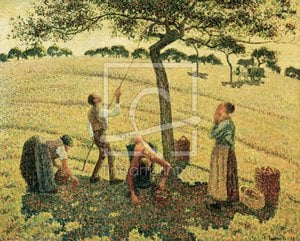
Pissarros kunstneriske output var bemærkelsesværdigt mangfoldigt, men fokuserede konsekvent på verden omkring ham. Han er berømt for sine portrætter af både landskaber og byliv, ofte forestillende scener fra hverdagen – bønder der arbejder i marker, travle parisensiske gader, stille landsbypladser. Hans malerier var ikke blot pittoreske udsigter; de var sociale kommentarer, der afspejlede hans dybe medfølelse med arbejderklassen og hans engagement i at portrættere deres liv med værdighed og respekt.
- Landskaber: Kendt for at fange skønheden i både land- og byliv.
- Scener fra Paris’ liv: Levende portrætter af en hurtigt foranderlig metropol.
- Bønderliv: Afspejler hans sociale bevidsthed og medfølelse med arbejderklassen.
Pissarros sene værker, især dem skabt i perioder med politisk uro eller personlige vanskeligheder, bærer ofte en følelse af melankoli og social kritik. Pissarro’s arv strækker sig langt ud over hans smukke malerier. Han var en fortaler for kunstnerisk frihed, en mentor for generationer af kunstnere og en pioner i udviklingen af moderne kunst. Hans engagement i *plein air* maleri revolutionerede landskabskunsten, mens hans villighed til at eksperimentere med forskellige stilarter demonstrerede hans intellektuelle nysgerrighed og urokkelige dedikation til sit håndværk. Han er en fejret figur hvis bidrag fortsat studeres og værdsættes for deres vedvarende relevans. *Pissarros kunst er ikke blot en registrering af verden som den var; det er et vidnesbyrd om magten i observation, medfølelse og kunstnerisk innovation.*



 Se i rummet
 Skift til printversion
 Send
Send Del
Del
 Detaljer
 Guide
Guide

 Download
 Lignende værker
 Røntgenundersøgelse
 Se diasshow
 Statistik


 Læs mere






































 Glasmulighed er kun tilgængelig i størrelser under 110 cm