En Pioner Mellem Verden: Livet og Arven efter Benjamin West
Benjamin West, en amerikansk-engelsk maler, blev født i 1738 i Springfield, Pennsylvania – et sted præget af både Quaker-traditioner og en spirende kunstnerisk ånd. Hans tidlige liv var langt fra det glamourøse, da hans forældre drev en lille kro, men allerede som ung viste han en uovertruffen talent for at skildre verden omkring ham. Denne evne blev først næret af observationer af de lokale indianere, der lærte ham grundlæggende teknikker, før han fik formel træning. Dette usædvanlige startpunkt indgydte i ham et innovativt åndssæt, der ville definere hele hans karriere. Han hurtigt etablerede sig som en eftertragtet portrætmaler i Philadelphia og New York, men en brændende længsel efter dybere kunstnerisk viden førte ham i 1760 til Europa – en rejse, der skulle forandre landskabet af amerikansk kunst for altid.
Fra Italien til London: Vejen til Anerkendelse
West’s ankomst til Italien markerede et vendepunkt i hans liv og karriere. Han dykkede ned i hjertet af Europas kunstscene, studerede de store mestre – Titian, Rafael – og engagerede sig med nutidige neoklasiske tænkere som Anton Rafael Mengs og Angelica Kauffman. Denne periode var afgørende for at forme hans æstetiske sanser, hvor han udviklede en dyb værdsætning for klassisk form og historisk fortælling. Men det var London, der blev hans hjem og kunstneriske centrum. Ankomsten i 1763 førte til en hurtig stigning i gradene inden for den britiske kunstscene, hvor han fangede publikums opmærksomhed med sine ambitiøse lærredsbilleder og sikrede sig støtte fra Kong Georg III. Dette kongelige engagement gav ikke kun økonomisk stabilitet, men cementerede også hans position som en førende figur i det etablerede kunstmiljø. Et afgørende øjeblik kom med hans valg til Royal Academy i 1769 – en institution, han senere ville lede som præsident indtil sin død. Hans indflydelse strækker sig langt ud over hans egne kunstværker; West blev en fortaler for amerikanske kunstnere, der søgte uddannelse i Europa, og ydede vejledning og støtte til generationer af spirende malere som Allston, Copley og Morse.
Revolutionerende Historisk Maleri: Teknik og Kontrovers
West’s indflydelse på kunstverdenen var ikke blot baseret på teknisk mesterskab; det handlede om at udfordre konventionerne. Han turde gendefinere historiemaleri, bevæge sig væk fra en streng overholdelse af klassiske idealer og omfavne en mere nutidig sans for realismen.
The Death of General Wolfe (1770) er et eksempel på denne revolutionerende tilgang. Ved at skildre den faldne general omgivet af figurer i *moderne* militæruniformer snarere end traditionel romersk beklædning, udfordrede West de etablerede normer og provocerede debat blandt kritikere. Selvom mange betragtede det som en historisk unøjagtighed, blev billedet elsket for sin umiddelbarhed og følelsesmæssige resonans. Dette dristige træk signalerede en skift i retning af større realismen og fortællingskraften i historiemaleriet, hvilket inspirerede utallige kunstnere efter ham. Hans stil udviklede sig over tid, hvor han integrerede elementer fra romantikken i sine senere værker, men bevarede altid et engagement i ambitiøs komposition og detaljeret udførelse. Andre bemærkelsesværdige stykker som
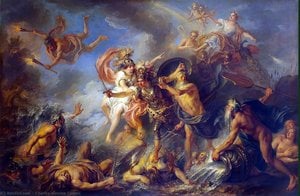
Thetis Bringing the Armor to Achilles,
The Three Sisters,
The Fright of Astyanax og
The Cave of Despair demonstrerer hans alsidighed og mesterskab på tværs af en række mytologiske og historiske temaer.
En Varig Arv: Shaping Artistic Identity
Benjamin West’s arv strækker sig langt ud over de lærredsbilleder, han skabte. Han forandrede fundamentalt landskabet for amerikansk kunst ved at etablere historiemaleriet som en levedygtig genre for amerikanske kunstnere og fremme en følelse af national kunstnerisk identitet. Hans præsidentskab for Royal Academy cementerede hans indflydelse på britisk kunst, fremmede innovation og støttede spirende talenter.
- Han championed en mere tilgængelig og følelsesmæssigt engagerende stil af historisk repræsentation.
- Hans atelier blev et fristed for amerikanske kunstnere, der søgte uddannelse i Europa.
- Han broget den gap mellem neoklasiske idealer og den spirende romantiske bevægelse.
West’s innovative ånd, kombineret med hans diplomatiske evner og urokkelige dedikation til sit håndværk, sikrede ham en varig anerkendelse som “den amerikanske Raphael”. Han døde i London i 1820, efterladende et værk, der fortsat inspirerer beundring og ærefrygt. Hans historie er et vidnesbyrd om kunstnerisk vision, vigtigheden af kulturel udveksling og den vedvarende arv af en kunstner, der dristigt udfordrede konventionerne og skabte sin egen vej.
Vigtigste værker
- The Death of General Wolfe (1770)
- Thetis Bringing the Armor to Achilles
- The Three Sisters
- The Fright of Astyanax
- The Cave of Despair



 Se i fuld skala
 Skift til print
 Del
Del Del
Del
 Detaljer

 Download
 Lignende værker
 Røntgenundersøgelse
 Diasshow
 Statistik


 Se mere