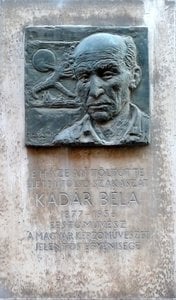
En ungarsk stemme fra avantgarden: Béla Kádárs liv og kunst
Født ind i en jødisk arbejderklassefamilie i Budapest i 1877, var Béla Kádárs rejse mod at blive en central skikkelse i det tidlige 20. århundredes avantgarde-kunst en vej formet af både modgang og en urokkelig dedikation til kunstnerisk udforskning. Hans formelle uddannelse var begrænset til seks år, men denne mangel på traditionel skolegang syntes at befri ham fra konventionelle begrænsninger, hvilket tillod et unikt personligt visuelt sprog at vokse frem. Kádár begyndte ikke sit professionelle liv med en pensel i hånden, men som lærling hos en jerndrejer – et håndværk, der dybt påvirkede hans kunstneriske sans og indpodede ham en dyb forståelse for form, struktur og den iboende skønhed, man finder i industrielle materialer. Selv i disse tidlige år strålede hans kreative ånd igennem; han fokuserede oprindeligt på at male vægmalerier over hele Budapest, hvilket demonstrerede en medfødt tilbøjelighed til storskala visuelt udtryk og historiefortælling. Denne grundlæggende periode lagde fundamentet for de dristige og dynamiske kompositioner, der senere skulle definere hans værk.
Paris, Berlin og en syntese af stilarter
Den sande katalysator for Kádárs kunstneriske udvikling indtraf med hans rejser til Paris og Berlin i 1910. Disse rejser eksponerede ham for de spirende avantgarde-bevægelser, der skyllede hen over Vesteuropa, og ændrede uigenkaldeligt hans kunstneriske bane. Han mødte de radikale idéer fra Der Blaue Reiter, kubismens fragmenterede former, futurismens dynamik og neo-primitivismens rå energi – indflydelser, som han ikke blot overtog ukritisk, men snarere syntetiserede til et distinkt visuelt ordforråd, der var hans eget. Kádár var ikke tilfreds med at knytte sig til en enkelt "skole"; i stedet begav han sig ud på en konstant udforskning af form, farve og komposition, drevet af en umættelig lyst til at bryde fri fra den traditionelle repræsentative kunsts lænker. Han opsugede elementer fra konstruktivismen og endda de drømmeagtige kvaliteter fra metafysisk maleri, og vævede dem sammen i en kompleks gobelin, der afspejlede hans unikke perspektiv. Denne periode markerede et afgørende vendepunkt, der transformerede ham fra en lovende vægmaler til en sand innovativ kunstner på randen af international anerkendelse.
Anerkendelse og international eksponering
Kádárs gennembrudsmoment kom i oktober 1923 med en udstilling på Herwarth Waldens prestigefyldte Galerie der Sturm i Berlin. Denne fremvisning præsenterede hans arbejde i en tydeligt ekspressionistisk stil, hvilket øjeblikkeligt vakte opsigt og etablerede ham som en kraft, man måtte regne med i den europæiske kunstscene. Galleriet, der var kendt for at fremme radikale nye kunstneriske stemmer, gav Kádár den ideelle platform til at forbinde sig med samlere og ligesindede kunstnere, der delte hans engagement i eksperimentel kunst. Hans internationale profil blev yderligere styrket af to udstillinger organiseret af Katherine Dreier på Brooklyn Museum of Art i New York City i 1926 og 1928. Bemærkelsesværdigt nok deltog Kádár selv i den anden udstilling, hvilket cementerede hans tilstedeværelse i det amerikanske kunstlandskab og skabte værdifulde forbindelser til den spirende modernistiske bevægelse på den anden side af Atlanten. Hans malerier fra denne periode skildrede ofte scener hentet fra ungarsk folklore, intime portrætter og glimt af landsbylivet – motiver fremstillet med en dristig farvepalette og dynamiske kompositioner, der indfangede både fædrelandets ånd og den moderne tids energi.
En arv af dristig innovation
Béla Kádárs kunstneriske stil er øjeblikkeligt genkendelig på sin livlige og ekspressive brug af farver, hvor han ofte benyttede ikke-naturalistiske nuancer til at formidle følelser og atmosfære. Hans kompositioner er karakteriseret ved en mærkbar følelse af bevægelse og energi, opnået gennem samspillet mellem linjer, former og figurer, der synes at vibrere på lærredet. Han benyttede ofte impasto-teknik – påføring af tykke lag maling – hvilket skabte teksturerede overflader, der forstærkede værkets visuelle slagkraft og inviterede til en taktil oplevelse. Men måske er det, der virkelig adskiller Kádár, hans bemærkelsesværdige evne til at syntetisere disse mangfoldige kunstneriske indflydelser til en sammenhængende og original stil. Han repræsenterer et afgørende bindeled mellem den ungarske avantgarde og de bredere europæiske bevægelser i hans samtid, idet han reflekterede det 20. århundredes sociale og politiske omvæltninger i sin kunst. Selvom han ikke altid blev fejret lige så bredt i sin levetid som nogle af sine samtidige, har Kádárs værk oplevet en genfødsel i de seneste årtier, hvor forskere i stigende grad anerkender hans betydelige bidrag til den moderne kunst. Han døde i Budapest i 1956 og efterlod sig en arv af dristige og innovative malerier, der fortsat inspirerer kunstnere og fanger publikum i dag – et vidnesbyrd om den vedvarende kraft hos en kunstner, der turde skabe sin egen vej.
Karakteristika ved Kádárs værk
- Dristig farvepalette: Kádár var berømt for sin livlige og ekspressive brug af farver, hvor han ofte anvendte ikke-naturalistiske nuancer til at formidle følelser og atmosfære.
- Dynamisk komposition: Hans kompositioner er kendetegnet ved en følelse af bevægelse og energi, opnået gennem samspillet mellem linjer, former og figurer.
- Impasto-teknik: Han brugte ofte tykke lag maling (impasto) til at skabe teksturerede overflader og forstærke værkets visuelle effekt.
- Unik syntese: Kádárs evne til at forene forskellige kunstneriske indflydelser i en sammenhængende og original stil gør ham til en betydningsfuld figur i det tidlige 20. århundredes kunst.
- Temaer og motiver: Hans malerier skildrer ofte scener fra folklore, landsbyliv og intime portrætter, udført med dristige farver og dynamiske kompositioner. Han udforskede også abstrakte temaer og eksperimenterede med fragmenterede former.



 Se i rummet
 Skift til printversion
 Send
Send Del
Del
 Detaljer
 Studieguide til kunstværker

 Download
 Lignende værker
 Røntgenundersøgelse
 Se diasshow
 Statistik
 Læs mere