


Kunstværket vist på denne side er beskyttet af ophavsretsloven, hvilket betyder, at vi ikke lovligt kan skabe eller sælge en identisk reproduktion. Denne beskyttelse håndhæves i henhold til internationale aftaler som f.eks. den Bernerkonventionen og af nationale love, herunder de bestemmelser, der er fastlagt i Amerikansk ophavsretslov - Titel 17.
Denne metode overholder fuldt ud ophavsretsreglerne, da den ikke indebærer kopiering eller duplikering af det beskyttede kunstværk. I stedet er der tale om en kreativ nytolkning – et nyt maleri, som er inspireret af det oprindelige, men ikke identisk med det.
Giclée- eller lærredstryk i museumskvalitet med hurtig produktion og fleksible muligheder for finish. ( Køb håndmalet maleri Skift til digitalt billede)





























Vælg mellem vores forudindstillede størrelser, der matcher kunstværkets originale proportioner.

Indtast den bredde og højde, du har brug for, så det passer til din ramme eller din væg. Et print kan kun beskæres, aldrig gøres større end selve billedet, så en størrelse med et andet format vil medføre, at dele af motivet går tabt. Vi sender dig en digital mockup til godkendelse, før vi printer noget. Billedet vist på denne side viser ikke den faktiske beskæring — det er kun mockuppen, der gør.
Verdensomspændende levering () på 2 uger i stedet for de sædvanlige 4/5 uger. (8 november)
The Emir Feisal
Størrelse på reproduktion
In the quiet intensity of Augustus Edwin John’s 1919 masterpiece, The Emir Feisal, one encounters more than a mere historical likeness; one meets a profound study of human fortitude. As the world grappled with the seismic shifts following the Great War, John turned his gaze toward Sheikh Feisal bin Abdulaziz Al Saud, capturing a moment of stillness amidst global turbulence. The portrait does not simply present the face of a future monarch; it distills the very essence of dignity. Through a masterful command of light and shadow, the artist invites the viewer into a private space of contemplation, where the weight of leadership and the gravity of history converge in a single, piercing gaze.
The composition is a triumph of realist technique, characterized by John’s ability to breathe life into texture and form. The Sheikh is depicted in formal, traditional attire, with a dark robe draped elegantly over his shoulder, creating a rhythmic interplay of deep tones and soft highlights. John employs chiaroscuro—the dramatic tension between light and dark—to sculpt the subject's features, lending a sculptural three-dimensionality to the face and the intricate folds of the turban. Every brushstroke feels deliberate, yet possesses a fluid vitality that prevents the realism from feeling static. The subtle rendering of the decorative elements on his headwear, suggesting pearls or fine beads, showcases a meticulous attention to detail that rewards close, lingering inspection.
Beyond the physical accuracy of the portrait lies a rich tapestry of symbolic meaning. Held firmly within the Sheikh’s hands is a book, an element that serves as a silent testament to intellectual engagement and the pursuit of knowledge. In this context, the book transcends its material form to represent the wisdom and cultural heritage central to the identity of the Arabian Peninsula during its formative years. This connection between the subject and his scholarly attribute imbues the painting with an aura of quiet authority, suggesting a leader whose power is rooted in deep-seated intellect and tradition.
The emotional impact of the work is anchored by the subject's direct gaze. By looking squarely at the viewer, Feisal establishes an immediate, respectful connection, demanding recognition while maintaining an air of impenetrable composure. This psychological depth makes the painting an extraordinary piece for any collection; it possesses a commanding presence that can anchor a room, offering a sense of stability and historical continuity. For the discerning collector or interior designer, The Emir Feisal offers a sophisticated focal point—a window into a transformative era of history, rendered with a poetic sensitivity that continues to resonate across generations.
Til "The Emir Feisal" er den anbefalede printopsætning en størrelse på Medium og en Portrait orientering.
Den farve, der træder tydeligst frem i "The Emir Feisal", er Driftwood (#88714a). Den dominerende farve er nyttig, når man skal matche et kunstværk med en indretning.
Formatet på "The Emir Feisal" er Portrait. Dette er nyttigt, når du planlægger, hvor en reproduktion skal placeres.

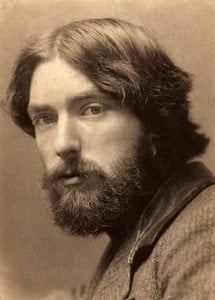
1878 - 1961 , Wales

Discover the exquisite era of Victorian Naturalism. Explore how master artists blended scientific precision with breathtaking realism to capture the soul of nature through botanical oil paintings and legendary landscapes.
 Se i rummet
 Del som kort
 Del
Del
 Detaljer
 Guide
Guide

 Download
 Lignende værker
 Røntgenundersøgelse
 Diasshow
 Spørgsmål og svar
 Statistikker


 Vis mere









 Glasmulighed er kun tilgængelig i størrelser under 110 cm


