Kunstværket vist på denne side er beskyttet af ophavsretsloven, hvilket betyder, at vi ikke lovligt kan skabe eller sælge en identisk reproduktion. Denne beskyttelse håndhæves i henhold til internationale aftaler som f.eks. den Bernerkonventionen og af nationale love, herunder de bestemmelser, der er fastlagt i Amerikansk ophavsretslov - Titel 17.
Denne metode overholder fuldt ud ophavsretsreglerne, da den ikke indebærer kopiering eller duplikering af det beskyttede kunstværk. I stedet er der tale om en kreativ nytolkning – et nyt maleri, som er inspireret af det oprindelige, men ikke identisk med det.
Giclée- eller lærredstryk i museumskvalitet med hurtig produktion og fleksible muligheder for finish. ( Køb håndmalet maleri
Skift til digitalt billede)
Vælg mellem vores forudindstillede størrelser, der matcher kunstværkets originale proportioner.
Indtast den bredde og højde, du har brug for, så det passer til din ramme eller din væg. Et print kan kun beskæres, aldrig gøres større end selve billedet, så en størrelse med et andet format vil medføre, at dele af motivet går tabt. Vi sender dig en digital mockup til godkendelse, før vi printer noget. Billedet vist på denne side viser ikke den faktiske beskæring — det er kun mockuppen, der gør.
Verdensomspændende levering () på 2 uger i stedet for de sædvanlige 4/5 uger. (29 oktober)
Hochpacker
Størrelse på reproduktion
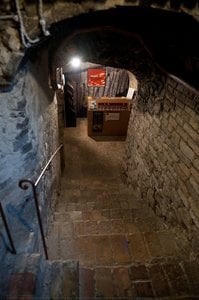
"Hochpacker" af Andreas Golinski skildrer wooden pallets, storage area, stacked wood, wood texture, warehouse setting i en Industrial stemning. Motiv og atmosfære beskriver tilsammen værket.
"Hochpacker" af Andreas Golinski tilhører Contemporary Realism-bevægelsen. Denne bevægelse giver den stilistiske kontekst for værket.
Et digitalt billede af "Hochpacker" af Andreas Golinski kan købes på siden for Digitalt billede: et højopløseligt digitalt billeddownload.
Born in Essen, Germany, Andreas Golinski has developed a profound artistic language that explores the delicate and often turbulent intersection between individual identity and the crushing weight of industrial mechanisms. His work serves as a poignant meditation on the alienation inherent in modern existence, where the boundaries of the self are frequently eroded by the relentless momentum of production and social structures. Through his lens, the artist examines how the contemporary world can strip away cultural roots and personal history, leaving behind a state of precariousness that affects both the individual and the collective.
Golinski’s creative process is deeply rooted in observation and a commitment to understanding the relational models of our society. His explorations often draw from direct engagement with the realities of labor and survival. For instance, his project Hochpacker emerged from a period spent in Essen, where he observed the lives of workers navigating the complexities of shared existence within industrial frameworks. This immersion allowed him to translate the sensory experience of production into an articulate, labyrinthine itinerary of claustrophobic corridors. By utilizing materials such as piled-up pallets, he creates a physical manifestation of the sensation of progressive alienation, forcing the spectator to confront the loss of intimacy and specific characteristics that occurs within large-scale social mechanisms.
The core of Golinski’s significance lies in his ability to use metaphor to highlight the compulsive models of cohabitation that define our era. His work delves into the tension between a longing for individuality and the necessity of participating in a flexible, yet often indifferent, collectivity. He addresses the modern struggle of maintaining one's essence amidst:
In his practice, categorized within Contemporary Realism, Golinski does not merely document these struggles but reconstructs them into a visceral experience. His installations and works act as mirrors to the contemporary condition, reflecting the ways in which man’s most intimate nature is challenged by the structures of modern commerce and industry. Through this evocative approach, he invites viewers to contemplate the enduring relevance of human agency in an age of systemic uncertainty.
1979 - , Germany