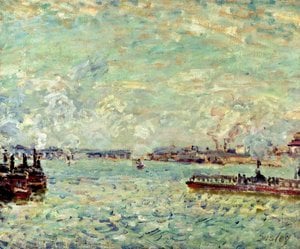
Alfred Sisley: En stille mester af lys og landskab
Alfred Sisley, et navn ofte hvisket sammen med dem fra Monet, Renoir og Pissarro, optager en unik og dybt smuk plads inden for Impressionistbevægelsen. Han blev født i Paris den 30. oktober 1839 til britiske forældre – William Sisley, en silkehandler, og Felicia Sell, en musikentusiast – og bar et dobbelt kulturelt arv, der subtilt påvirkede hans kunstneriske vision. Selvom han tilbragte det meste af sit liv i Frankrig, bevarede Sisley britisk statsborgerskab, en sag der senere medførte personlig skuffelse, da han søgte fransk naturalisering. Hans tidlige år var komfortabelt bourgeoise, hvilket gav ham muligheden for at forfølge studier, der oprindeligt var beregnet til en kommerciel karriere i London i alderen 18. Men kunstens lokkende appel var for stærk, og han vendte tilbage til Paris i 1861 og begyndte formel træning under den schweiziske kunstner Marc-Charles-Gabriel Gleyre på École des Beaux-Arts. Her, midt i den blomstrende kunstneriske ferment af tiden, skabte Sisley vigtige venskaber med Monet, Renoir og Bazille – relationer, der dybt ville forme hans kunstneriske vej. Disse følgesvende delte en rebelsk ånd, der afviste de stive konventioner i akademisk maleri til fordel for at fange de flygtige effekter af lys og atmosfære direkte fra naturen.
Den stille mester af Impressionismen
Sisleys urokkelige dedikation til *plein air* -maleri, dvs. at male udendørs, direkte observere den naturlige verden – var ubarmhjertig. I modsætning til nogle af sine samtidige, der eksperimenterede med forskellige genrer, forblev Sisley fast besluttet på landskab gennem hele sin karriere. Denne fokuserede hengivenhed tillod ham at finpudse en distinkt stil karakteriseret ved ro, delikate farvepaletter og en subtil gengivelse af lys. Hans lærred er ofte badet i bløde nuancer af grøn, pink, lilla, støvet blå og creme, hvilket skaber en atmosfære af fredfyldt refleksion. Selvom de tidlige værker i det væsentligste er gået tabt til tiden, afslører hans modne malerier en omhyggelig observation af naturen kombineret med en poetisk sans for nuance. Han var ikke interesseret i store fortællinger eller dramatiske gestus; snarere fandt han skønhed i det almindelige – i den blide strøm af floder, det dæmpede lys, der filtrerede gennem træer, og den stille charme af landlivet. Hans tidlige kampe for anerkendelse blev forværret af sin fars økonomiske vanskeligheder som følge af Franco-prusserkrigen i 1870, hvilket tvang Sisley til at stole udelukkende på salget af sine kunstværker for at opnå en levevej – en prekær eksistens, der skyggede meget af hans karriere. Han var en sand Impressionist, men en, der ofte arbejdede i relativt obskuritet under sin levetid.
Floder, kanaler og essensen af sted
Gentagne temaer gennemsyrer Sisleys oeuvre, især hans fascination med vand. Landskabsmaleri blev et signaturmotiv, eksemplificeret ved en række værker, han skabte under en rejse til England i 1874 langs Thames nær Molesey. Disse værker, der fanger flodens rolige skønhed og dens omgivelser, betragtes som blandt hans fineste præstationer – et “perfekt øjeblik af Impressionisme”, som kunsthistoriker Kenneth Clark beskrev dem. Han udviklede også en dyb forbindelse med Moret-sur-Loing, hvor han boede i mange år, og immortaliserede dets kanaler, broer og omkringliggende landskab i utallige lærred. Malerier som "Watermill near Moret", "Barges on the Loing Canal, Spring" og “Fields around the Forest” viser hans evne til at indgyde almindelige scener med en følelse af poetisk elegance. Han malede ikke blot disse steder; han fangede deres *essens*, udtrykte ikke kun, hvordan de så ud, men også hvordan de føltes – den milde brise, varmen fra solen, den stille hvisken af vandet. Denne følsomhed over for atmosfære og stemning er måske Sisleys mest vedvarende arv.
Indflydelser og en varig arv
Sisleys kunstneriske indflydelse var mangefacetteret. Gleyres akademiske træning gav ham et fundament i teknik, mens venskabet med Monet, Renoir og Bazille fremmede en fælles forpligtelse til Impressionistprincipper. Han absorberede deres fokus på at fange flygtige øjeblikke af lys og atmosfære, men udviklede sin egen unikke stemme – en karakteriseret ved tilbageholdenhed og subtilitet. Selvom han ofte arbejdede i relativt obskuritet under sin levetid, er hans værk nu fejret for dets skønhed, følsomhed og urokkelige dedikation til at portrættere naturen. Hans indflydelse kan ses i værkerne hos senere landskabsmalerier, der søgte at fange de flygtende kvaliteter af lys og atmosfære med lignende finesse. Han var, og er, en mester over lys, atmosfære og den stille poesi i den naturlige verden.
Historisk betydning
Sisleys historiske betydning strækker sig ud over hans tekniske dygtighed og æstetiske sans. Hans urokkelige dedikation til *plein air* -maleri, selv i mødet med økonomiske vanskeligheder og kritisk ligegyldighed, banede vejen for fremtidige generationer af kunstnere, der søgte at bryde fri fra akademiske konventioner og omfavne en mere direkte engagement med naturen. Hans malerier giver et glimt ind i en hurtigt skiftende verden – en verden på grænsen til moderniteten – og minder os om den vedvarende kraft af kunst til at fange skønheden og roen, der kan findes selv i de mest ydmyge landskaber. Han var, og er, en mester over lys, atmosfære og den stille poesi i den naturlige verden.
- Nøgletemaer: Landskaber, flodbilleder, kanalbilleder, landliv, atmosfæriske effekter.
- Nøglekarakteristika: Delikate farvepaletter, subtil gengivelse af lys, fredfyldt stemning, *plein air* -maleri.
- Indflydelser: Marc-Charles-Gabriel Gleyre, Claude Monet, Pierre-Auguste Renoir, Frédéric Bazille, Barbizon skole malere.



 Bestil håndmalet reproduktion
 Send
Send Del
Del
 Detaljer
 Guide
Guide

 Download
 Lignende værker
 Se diasshow
 Statistik


 Læs mere






































 Glasmulighed er kun tilgængelig i størrelser under 110 cm