En pioner inden for orientalistiske visioner: Livet og kunsten hos Alexandre Gabriel Decamps
Alexandre Gabriel Decamps, et navn der genlyder af de levende nuancer fra eksotiske landskaber og romantikkens dramatiske flair, trådte frem som en central skikkelse i det 19. århundredes franske maleri. Han blev født i Paris den 3. marts 1803, og hans kunstneriske rejse var præget af modig innovation, hvor han udfordrede akademiske konventioner og banede verende for det, der skulle blive kendt som orientalisme. Selvom samtidige som Delacroix og Ingres også indtog fremtrædende positioner i den franske kunstverden, udmærkede Decamps sig gennem en intenst personlig stil – en symbiose mellem minutiøs observation, dramatisk komposition og en fængslende fortælleevne, der trak beskueren ind i verdener, som var både velkendte og fuldstændig fremmede. Hans tidlige anerkendelse som talentfuld kunstner varslede en karriere præget af kritisk hyldest, hvilket kulminerede i den store konsistoriummedalje ved Parisudstillingen i 1855, et vidnesbyrd om hans ekstraordinære færdigheder og unikke vision. Udover lærredet var Decamps en mand dybt forbundet med naturen; han fandt trøst og inspiration i det franske landskab omkring Paris, hvor han dyrkede sin passion for dyr og jagt – en forkærlighed, der på subtilt vis ville gennemsyre meget af hans kunstneriske virke.
Fra skriften til Sahara: En kunstnerisk stils udvikling
Decamps’ kunstneriske udvikling var kendetegnet ved en vilje til at udforske mangfoldige emner og teknikker. Oprindeligt tiltrukket af historiske og bibelske scener, udmærkede han sig hurtigt ved at skildre disse fortællinger med et hidtil uset niveau af realisme – ved at forankre dem i autentiske, lokale omgivelser frem for at læne sig op ad idealiserede eller konventionelle repræsentationer. Denne forpligtelse til virkelighedsnærhed udsprang af hans rejser til Østen, oplevelser der satte dybe spor i hans kunstneriske sanselighed. Han skildrede ikke blot det, han så; han formidlede en følelse af atmosfæren, lyset og selve essensen af disse fjerne lande.
Joseph Solgt af sine Brødre er for eksempel ikke blot en illustration af en bibelsk historie, men en levende skildring af en specifik tid og et sted, gennemsyret af emotionel dybde og psykologisk indsigt. Denne tilgang strakte sig også til hans større historiske værker som
Cimbriernes Nederlag, hvor han mesterligt indfangede kampens kaos og brutalitet og fremviste sin evne til at håndtere storslåede kompositioner med dynamisk energi. Det var dog hans skildringer af det orientalske liv, der for alvor adskilte ham fra mængden. Han afslørede hverdagsscener – markeder, skoler, hjemlige interiører – med en troskab, der i begyndelsen forundrede kritikere, som var vant til mere romantiserede eller stereotype fremstillinger.
Orientalismens fader og hans vedvarende indflydelse
Decamps betragtes med rette som grundlæggeren af orientalisme i fransk maleri. Før ham blev skildringer af Østen ofte filtreret gennem en linse af fantasi og eksotisme. Han præsenterede en anden vision – en der var rodfæstet i direkte observation og ægte nysgerrighed. Hans Salon-udstilling i 1831 markerede et vendepunkt, da den introducerede det parisiske publikum til et usminket glimt af livet i Nordafrika og Mellemøsten. Denne banebrydende tilgang resonerede hos både kunstnere og forfattere og inspirerede en bølge af orientalistiske værker, der kom til at dominere store dele af det rende århundredes kunst. Hans stil – karakteriseret ved dristige penselstrøg, slående kontraster mellem lys og skygge samt en mærkbar følelse af atmosfære – blev et referencepunkt for generationer af malere, fotografer og forfattere.
Maxime du Camp døbte ham berømt "Orientens Christopher Columbus" i anerkendelse af hans pionerrolle i at åbne dette nye kunstneriske territorium.
Den Albanske Danserinde, med sine levende farver og energiske komposition, eksemplificerer hans evne til at indfange en kulturs ånd, mens han bevarer en distinkt fransk æstetisk sans. Selv satiriske værker som
Abe-kenderne, et legende stik til det konservative jury ved Académie des Beaux-Arts, demonstrerer hans vilje til at udfordre etablerede normer og omfavne en mere uafhængig kunstnerisk vision.
En tragisk afslutning og en evig arv
Tragisk nok blev Decamps’ liv afbrudt den 22. august 1860, blot 57 år gammel, efter en jagtulykke nær Fontainebleau. Hans tidlige død berøvede kunstverdenen et sandt innovativt talent, men hans arv lever videre gennem hans fængslende malerier og deres vedvarende appel. I dag fejres mesterværker som
Brand i en italiensk landsby, med sin dramatiske skildring af konflikt og mesterlige brug af impasto, og
En Beduin og en Kamel, der hviler i ørkenen, der viser ørkenlivets teksturer og ro, for deres kunstneriske værdi og historiske betydning. Hans værker kan findes på prestigefyldte institutioner som Musée du Louvre i Paris, hvilket sikrer, at hans vision fortsat inspirerer og fanger publikum verden over. Platforme som WahooArt.com spiller en vigtig rolle i at bevare og formidle hans kunst ved at tilbyde reproduktioner af høj kvalitet, der gør det muligt for beundrere at opleve skønheden og kraften i Decamps’ malerier på tæt hold. Hans indflydelse rækker ud over malerkunstens verden; den har formet opfattelsen af Østen og efterladt et uudsletteligt mærke på det kulturelle landskab i 19. århundredes Europa.
Udforskning af Decamps' verden: Bemærkelsesværdige værker
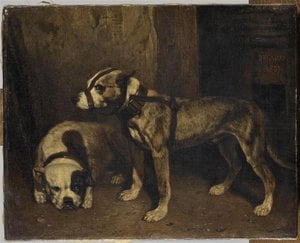
- CHIENS BRIFAUTS: En charmerende orientalistisk scene, der viser hunde i en livlig setting.
- LA COUR DE FERME: Et fængslende maleri fra det 19. århundrede, der forener fransk romantik med historiske detaljer.
- L’ÉCOLE TURQUE: En livlig skildring af en tyrkisk skole, der indfanger energien og atmosfæren i dagliglivet.
- PAYSAGE TURC: Et fredfyldt landskab, der udforsker realisme og romantik i en fransk kontekst.



 Se i fuld skala
 Køb håndlavet maleri
 Del
Del Del
Del
 Detaljer

 Download
 Lignende værker
 Røntgenundersøgelse
 Diasshow
 Statistik

 Se mere






































 Glasmulighed er kun tilgængelig i størrelser under 110 cm