x
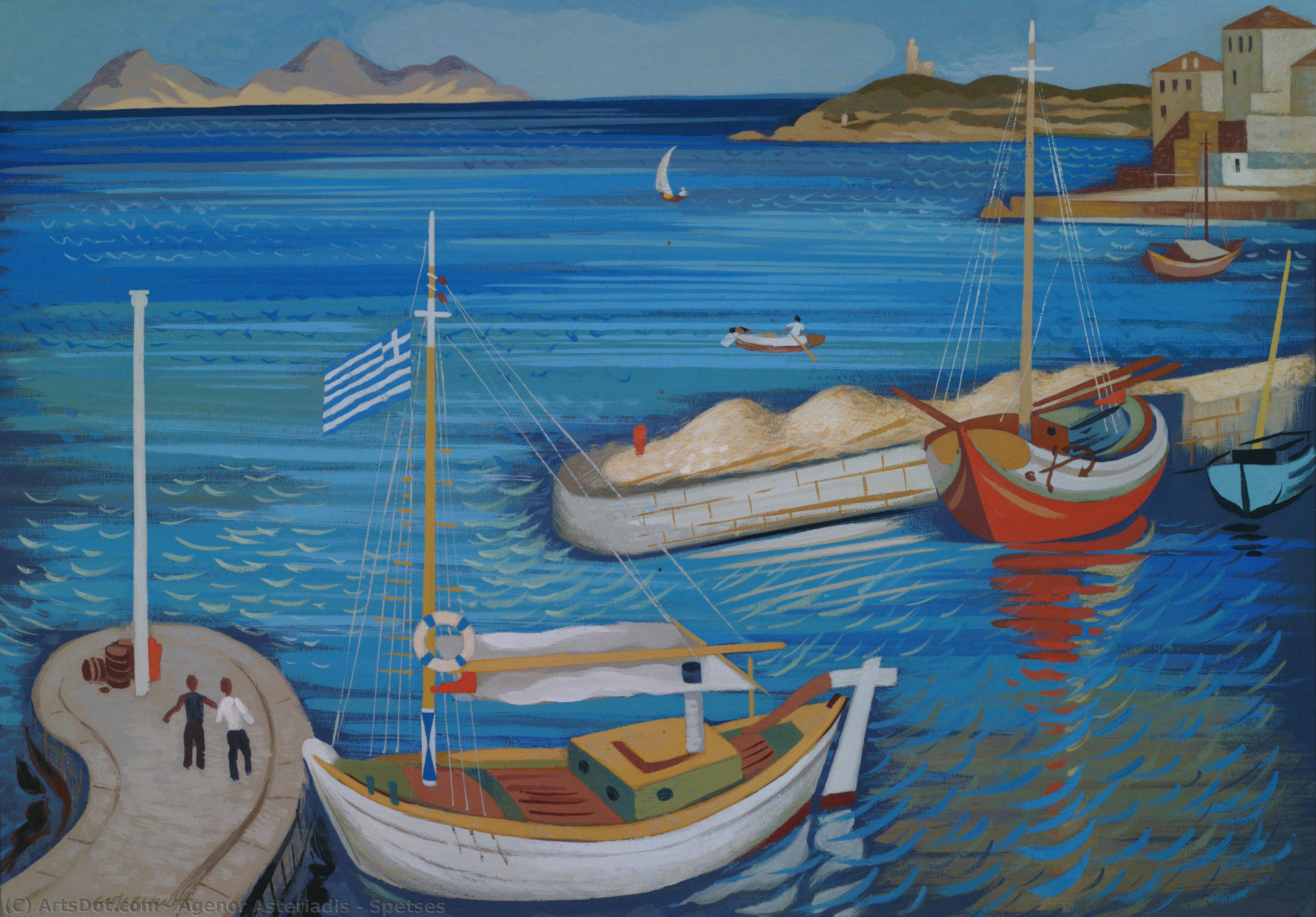
1960
79.0 x 114.0 cm
The Sotiris Felios CollectionKøb et højopløst, forbedret digitalt billede, der er langt bedre end online-forhåndsvisningen.
Hver fil er omhyggeligt forberedt af vores interne specialister ved hjælp af avancerede værktøjer og ekspertmæssig manuel retuschering. Vi sikrer, at hvert billede har enestående klarhed, præcis farvegengivelse og fine detaljer.
Den endelige fil leveres via e-mail inden for 72 timer og er optimeret til øjeblikkelig brug i professionelle, redaktionelle og trykte miljøer. Det er den samme kvalitet, som førende designstudier, forlag og gallerier har tillid til.
Download en højopløselig fil til personlig fremvisning, print og kreative projekter.
Når du vælger WahooArt.com, får du ikke blot et billede – du modtager et professionelt optimeret digitalt kunstværk, skabt med præcision og sikret med en tilfredshedsgaranti. Her er alt, hvad din ordre automatisk indeholder:
Din højkvalitets digitale billedfil vil blive sendt til din e-mail inden for 72 timer efter bestilling – klar til øjeblikkelig brug.
Dit kunstværk optimeres professionelt ved hjælp af avancerede AI-værktøjer og manuel redigering, hvilket sikrer maksimal detaljegrad, klarhed og farvenøjagtighed.
Har du ved en fejl slettet eller mistet din fil? Ingen bekymring – vi sender den igen til enhver tid, helt gratis.
Nyd dit kunstværk med det samme uden told, afgifter eller leveringsgebyrer – digitale downloads er altid skattefrie.
Vi sikrer, at dit digitale billede gengiver de originale farver så præcist som muligt ved hjælp af professionelle værktøjer og farvestyring.
Hvis du ikke er tilfreds med dit digitale billede, vil vi revidere det eller refundere 100% inden for 60 dage – uden spørgsmål.
Ik tilfreds? Få fuld refusion inden for 60 dage efter modtagelse af din digitale fil – uden spørgsmål.
Køb 3 billeder, spar 10% - Køb 5, spar 15% - Køb 10+, spar 20%. Ideelt til kreative projekter, gallerier og bureauer.
Born in Leeuwarden, Netherlands, in 1898, Maurits Cornelis Escher was a graphic artist whose singular vision defied conventional perception. For most of his life, he remained largely unrecognized within the established art world, yet today he is celebrated as one of the twentieth century’s most innovative and influential artists. Escher's work—a mesmerizing blend of meticulous detail, mathematical precision, and fantastical imagery—continues to captivate audiences worldwide, inviting us to question our understanding of space, perspective, and reality itself.
Escher’s early life was marked by a quiet intensity and a deep fascination with the natural world. His father, a tailor, and his mother, a milliner, instilled in him a respect for craftsmanship and an appreciation for beauty. After failing to secure admission to the Academy of Fine Arts in Amsterdam, Escher pursued studies in architecture at the Haarlem School of Architecture and Decorative Arts, where he discovered his true calling: printmaking. It was during this period that he began experimenting with woodcuts, lithographs, and mezzotints, techniques that would become central to his artistic practice.
Initially, Escher’s work drew inspiration from the landscapes and creatures of his native Netherlands – intricate depictions of insects, meticulously rendered Dutch windmills, and evocative studies of lichens. However, as he matured as an artist, his interests shifted towards more abstract concepts. He became increasingly intrigued by the mathematical possibilities inherent in visual representation, particularly the principles of tessellations (the tiling of a surface with repeating shapes), infinity, and symmetry. This fascination led him to collaborate with mathematicians like George Pólya, Roger Penrose, and Donald Coxeter, forging a unique intellectual partnership that profoundly influenced his artistic development.
Escher's most recognizable works are characterized by their paradoxical nature—images that appear to defy the laws of physics and logic. He masterfully manipulated perspective, creating illusions of depth and movement within confined spaces. His “impossible objects,” such as the famous "Hand with Reflecting Sphere" (1935) and "Drawing Hands" (1948), demonstrate his ability to depict figures that simultaneously exist in multiple dimensions or appear to fold back upon themselves. These works, alongside pieces like “Relativity” (1953) and “Waterfall” (1961), explore the fundamental principles of geometry and mathematics, revealing a deep understanding of concepts such as hyperbolic geometry and tessellations.
Beyond these iconic examples, Escher’s oeuvre encompasses a vast range of subjects. He frequently depicted animals in impossible situations—birds flying through solid walls, fish swimming through air—and explored the concept of infinity through intricate patterns that seem to stretch endlessly into the distance. His fascination with symmetry is evident in numerous works, where repeating motifs create mesmerizing visual rhythms and explore the beauty of balanced forms.
Despite his growing popularity among scientists, mathematicians, and a wider public—particularly after Martin Gardner featured his work in *The Mathematical Games* column in 1966—Escher remained largely overlooked by the mainstream art world during his lifetime. It wasn't until the late twentieth century that his unique artistic vision began to receive the recognition it deserved. Retrospective exhibitions were held around the globe, showcasing the breadth and depth of his extraordinary talent.
Maurits Cornelis Escher died in Baarn, Netherlands, in 1972, leaving behind a legacy of over 300 prints and drawings. His work continues to inspire artists, designers, and mathematicians alike, serving as a testament to the power of imagination and the enduring fascination with the boundaries of perception. Today, Escher’s intricate creations are not only admired for their aesthetic beauty but also for their profound exploration of fundamental mathematical concepts—a true synthesis of art and science.
Escher's artistic journey was shaped by a diverse range of influences. He drew inspiration from the works of earlier masters, including Michelangelo, Leonardo da Vinci, Dürer, and Holbein, absorbing their techniques and stylistic approaches. However, he also found significant inspiration in the art of the East, particularly Japanese woodblock prints, which showcased intricate detail and a mastery of perspective. The work of Giorgio de Chirico, with its unsettling juxtapositions and dreamlike atmosphere, was another key influence on Escher’s development.
Crucially, Escher's intellectual life extended beyond the realm of art. He engaged in stimulating conversations with leading mathematicians such as George Pólya, Roger Penrose, and Donald Coxeter, seeking to understand the mathematical principles underlying his artistic creations. These collaborations not only deepened his understanding of geometry and tessellations but also informed the conceptual framework of his work.
To delve deeper into the life and work of Maurits Cornelis Escher, we recommend visiting the official website: M.C. Escher - The Official Website. You can also explore resources such as Wikipedia (https://en.wikipedia.org/wiki/M._C._Escher) and the Henry Moore Foundation website (https://henry-moore.org/).
1898 - 1977
Fortæl os om dit projekt, og vores kunsteksperter vil give dig 3 personlige kunstforslag.
Vi kuraterer 3 valgmuligheder kun til dig – Gratis!