Se i rummet Se i AR Skift til printversion Skift til digitalt billede Send
Detaljer Studieguide til kunstværker Tilføj til favoritter Download Lignende værker Røntgenundersøgelse Se diasshow Statistik

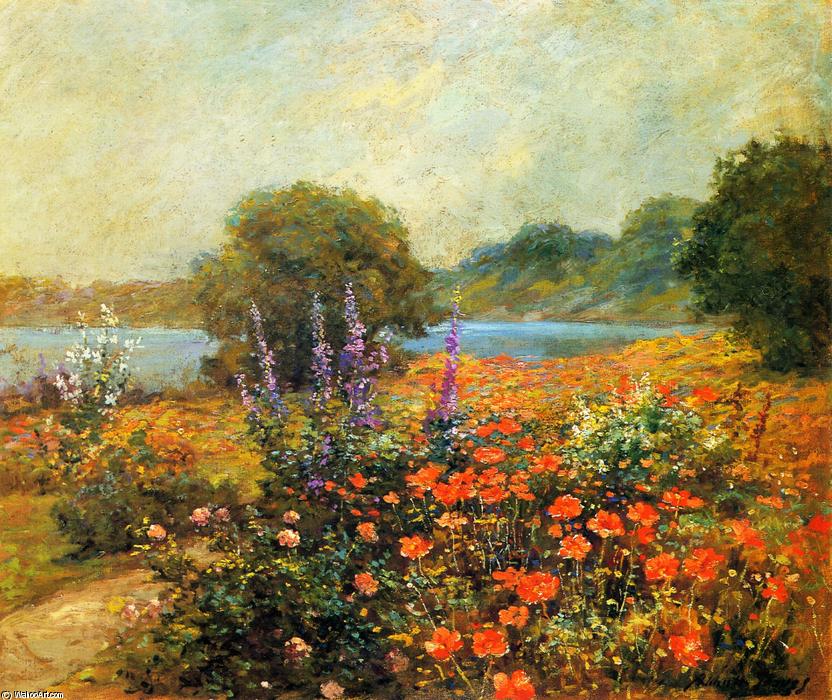
Poppies

The painting depicts a serene landscape featuring a field brimming with vibrant poppies and purple flowers under the watchful gaze of trees. Two birds soar above, completing this idyllic tableau created by Abbott Fuller Graves in 1905.

Håndlavet oliereproduktion

Håndmalet olie på lærred i din valgte størrelse og ramme, udført efter bestilling af vores kunstnere. ( Skift til printversion Skift til digitalt billede)

P118B Dkr10
P118H Dkr10
P118W Dkr10
P438Z Dkr10
P508JH Dkr12
P508YH Dkr12
P805H Dkr10
P805Z Dkr10
P919BZ Dkr10
P919G Dkr10
P919XJ Dkr10
P959ZH Dkr10
P968JZ Dkr12
W106C Dkr8
W218G Dkr10
W218JH Dkr8
W218Y Dkr10
W307PJ Dkr10
W316G Dkr10
W316PJ Dkr8
W316Y Dkr10
W398PJ Dkr8
W4111J Dkr10
W500HY Dkr15
W500JH Dkr15
W692G Dkr12
W849H Dkr8
W940BG Dkr15
W953PJ Dkr8

Standardstørrelse
speciallavet
CM
INCH

Vælg mellem vores forudindstillede størrelser, der matcher kunstværkets originale proportioner.

bredde
højde

Du kan indtaste dine egne mål for at passe til en bestemt ramme eller plads. Hvis den valgte størrelse ikke stemmer overens med det originale billedes proportioner, vil vi enten beskære kunstværket eller udvide maleriet med yderligere håndmalede elementer. En digital skitse sendes til din godkendelse, før produktionen påbegyndes.
Bemærk venligst, at forhåndsvisningen på skærmen ikke afspejler den faktiske beskæring eller udvidelse. Kun skitsen vil nøjagtigt vise den endelige komposition.
Selvom specialmål er mulige, anbefaler vi at vælge en dimension fra den foruddefinerede liste for at bevare de originale proportioner.

Eksempler på tilpasningsmuligheder: Udskift ansigt med kundens eget foto; Tilføj kæledyr (f.eks. udskift kat med hund); Inkluder en skjult besked i baggrunden; Ændr baggrundslandskab eller elementer.
Efter bestilling vil WahooArt.com team sende en e-mail til kunden for at indhente instruktioner og fremsende et udkast til gennemgang.

Levering i hele verden () på 3-4 uger i stedet for de standard 5 uger. (28 september). Ingen kompromiser med kvaliteten.

why_choose_icon
Gratis ekspresforsendelse til hele verden
why_choose_icon
Lærred af linned i høj kvalitet
why_choose_icon
Komplet transportforsikring
why_choose_icon
Garanti for refusion af told og importafgifter
why_choose_icon
Garanti for autentisk farvegengivelse
why_choose_icon
100 dages returret ved fabrikationsfejl
why_choose_icon
100% fuld returret
why_choose_icon
Mængderabat ved flere køb

Samlet pris

Dkr 1747

reproduction

Poppies

Reproduktionsmateriale

Reproduktionsstørrelse

-

Samlet pris

Dkr 1747

Kort om værket

  • Artist: abbott fuller graves
  • Year: 1905
  • Medium: Oil on canvas
  • Artistic style: Landscape painting
  • Title: Poppies
  • Influences: Georges Seurat
  • Notable elements or techniques: Pointillist technique

Kunstquiz

Der er kun ét korrekt svar på hvert spørgsmål.

Spørgsmål 1:
What is the primary artistic technique employed by Abbott Fuller Graves in "The Field"?
Spørgsmål 2:
The painting depicts a vibrant landscape featuring what prominent floral element?
Spørgsmål 3:
In what year was "The Field" created?
Spørgsmål 4:
What is the medium of this artwork?
Spørgsmål 5:
The painting aims to convey a sense of what overall mood or atmosphere?

Georges Seurat: Bridging Science and Beauty

Georges Seurat’s “La Grenouillère” – literally “The Pond” – stands as an emblem of Impressionism's audacious embrace of scientific inquiry. Painted in 1876, this monumental canvas depicts a Parisian café scene brimming with life, yet it’s far from merely capturing a snapshot of everyday existence. Instead, Seurat meticulously constructed his artwork using a revolutionary technique known as Pointillisme, pioneered alongside Paul Signac.

  • The Technique: Pointillisme wasn't about blending colors; it was about applying tiny dots of pure pigment onto the canvas surface. These dots, individually colored and strategically positioned, refract light and blend optically in the viewer’s eye—a process meticulously documented by Seurat himself.
  • Scientific Foundations: Seurat’s approach drew heavily from Chevreul's Color Theory, which posits that complementary colors stimulate each other, creating vibrancy and enhancing visual perception. He painstakingly calculated the chromatic coordinates of each dot to achieve optimal color harmony.
  • Historical Context: Impressionism emerged as a reaction against the academic tradition dominating French art academies. Artists like Seurat sought to liberate painting from rigid conventions, prioritizing subjective experience and capturing fleeting moments of light and atmosphere.

The scene itself is deceptively simple—a café terrace populated by men and women enjoying drinks and conversation. However, beneath the surface lies a profound exploration of color and perception. Seurat’s palette utilizes bold hues – reds, blues, yellows – arranged in discrete patches that shimmer with reflected light. This deliberate fragmentation contributes to an unsettling yet captivating effect; it invites viewers to actively participate in constructing the image.

Symbolism:

The pond itself—a recurring motif in Seurat’s oeuvre—represents both physical space and psychological depth. It symbolizes tranquility amidst urban bustle, mirroring the artist's own quest for intellectual clarity and artistic innovation. The figures within the café are rendered with meticulous detail, yet their faces remain largely obscured, emphasizing the importance of emotion and intuition over precise representation.

  • Emotional Impact: “La Grenouillère” evokes a sense of immediacy and dynamism—a feeling that captures the vibrant energy of Parisian life. Yet, there’s also an underlying tension created by Seurat's technique; it compels viewers to confront the complexities of visual perception.

“La Grenouillère” remains a cornerstone of Impressionist art history and continues to inspire artists and collectors alike. Its enduring appeal lies not only in its aesthetic beauty but also in its audacious intellectual ambition—a testament to Seurat’s unwavering belief that art could illuminate the mysteries of human consciousness.