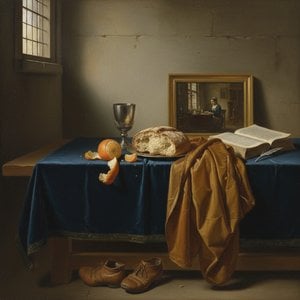
Top 3 works: The Artist George Jan Hendrik Poggenbeek in His Studio, Theo Hanrath, 1872
Copyright status: Public domain
Nationality: Netherlands
Museums on this site: Rijksmuseum
The Intimate Gaze of Theo Hanrath
Theo Hanrath remains a somewhat enigmatic figure in the landscape of 19th-century Dutch Realism, yet his work offers a compelling glimpse into the artistic milieu of The Hague School and beyond. Born in , with no readily available birthdate, Hanrath’s life is largely known through his paintings—particularly those depicting fellow artists at work. This focus on the artist's studio as subject matter provides invaluable insight not only into the techniques of the time but also into the social dynamics and intellectual currents shaping artistic practice. He is currently living, a testament to a long and productive career that continues to resonate with collectors and scholars alike.
Early Life and Artistic Formation
Details surrounding Hanrath’s early training are scarce. However, his style clearly demonstrates an affinity for the meticulous realism championed by artists like Johannes Vermeer and later adopted by members of The Hague School. It is likely he received formal instruction in traditional painting techniques, mastering oil paint's ability to capture light, texture, and atmosphere with remarkable precision. His choice of subject matter—often interiors populated by figures engaged in artistic pursuits—suggests a deep immersion within the art world itself. He wasn’t merely *observing* artists; he was part of their community, privy to the intimate moments of creation that most viewers never witnessed. This insider perspective is what sets his work apart.
A Portraitist of Painters: Capturing the Artistic Process
Hanrath's most celebrated works are undoubtedly his depictions of artists in their studios. The Artist George Jan Hendrik Poggenbeek in His Studio (1872), for example, is a masterful study in light and composition. The painting doesn’t simply present a portrait; it reveals the *process* of art-making. We see Poggenbeek at work, surrounded by his tools, sketches, and completed canvases. The warm, inviting atmosphere suggests a space of intellectual stimulation and creative energy. Hanrath's skill lies in capturing not just the likeness of his subjects but also their dedication, concentration, and passion for their craft. He portrays them as thoughtful individuals engaged in a deeply personal endeavor.
Influences and Artistic Style
While firmly rooted in Realism, Hanrath’s work displays subtle influences from various sources. The aforementioned Vermeer is evident in the careful rendering of light and shadow, creating a sense of depth and atmosphere. The Hague School's emphasis on depicting everyday life, particularly its focus on interiors and domestic scenes, also resonates within his oeuvre. However, Hanrath distinguishes himself through his singular dedication to portraying artists themselves—a subject matter less frequently explored by his contemporaries. His style is characterized by a meticulous attention to detail, a restrained palette, and a quiet intimacy that draws the viewer into the scene. He avoids dramatic gestures or overt symbolism, instead focusing on capturing the subtle nuances of human expression and the tangible realities of artistic practice.
Legacy and Historical Significance
Though not widely known outside specialist circles, Theo Hanrath’s work holds significant historical value. His paintings provide a rare and invaluable glimpse into the artistic world of 19th-century Holland. They offer insights into the techniques, social dynamics, and intellectual currents shaping artistic practice during this period.
His portraits serve as important documents of artists who might otherwise be forgotten.
They illuminate the importance of the studio as a space of creativity and collaboration.
They demonstrate the power of Realism to capture not just appearances but also the inner lives of individuals.
As interest in 19th-centuryDutch painting continues to grow, Hanrath’s work is poised to receive the wider recognition it deserves—a testament to his skill, sensitivity, and unique perspective on the artistic process.
Explore the captivating realism of Georges van Houten, a key figure of the Dutch Hague School. Discover his intimate portraits & evocative landscapes – a masterclass in 19th-century art.
Objevte 10 ikonických děl holandského baroka! Prozkoumejte příběhy Rembrandta, Vermeera a dalších mistrů. Repliky obrazů nejvyšší kvality pro váš interiér na WahooArt.cz – inspirace a umělecké reprodukce online.
Mohu si prohlédnout díla umělce Theo Hanrath podle barevného spektra?
Díla umělce Theo Hanrath si můžete prohlédnout podle barev na jeho stránce Sestavení podle barev.
Jak je kariéra umělce Theo Hanrath rozdělena do období?
Chronologický přehled tvorby umělce Theo Hanrath naleznete na jeho stránce Kronika umělce, kde jsou díla uspořádána podle jejich vzniku v jednotlivých kapitolách.
Jak najdu díla umělce Theo Hanrath v určité barevné paletě?
Chcete-li najít díla umělce Theo Hanrath v určité barevné paletě, navštivte jeho stránku Podle palet.
Jak najdu díla umělce Theo Hanrath na konkrétní téma?
Stránka Podle klíčových slov umělce Theo Hanrath seskupuje jeho díla podle klíčových slov.
Mohu si u Theo Hanrath prozkoumat používání barev napříč všemi jeho díly?
Použití barev v dílech umělce Theo Hanrath uvedených na tato webová stránka můžete prozkoumat na stránce Genom palety tohoto umělce.
Mohu si prohlédnout díla umělce Theo Hanrath podle použité techniky?
Stránka Podle techniky seskupuje díla umělce Theo Hanrath podle použité techniky.
Existuje kompletní seznam děl umělce Theo Hanrath?
Veškerá díla umělce Theo Hanrath na tato webová stránka si můžete prohlédnout na jeho stránce Všechná umělecká díla.
Jaké nálady vyjadřují umělecká díla umělce Theo Hanrath?
Díla umělce Theo Hanrath si můžete prohlédnout podle nálady na jeho stránce Galerie nálad, kde jsou umělecká díla uspořádána podle jejich vyvolané nálady.