

Emperor Wilhelm II (1890) je nejslavnější obrazem autora Max Koner. Prince Herbert Bismarck (1898) a Bildnis des Archäologen Ernst Curtius by Max Koner (1896) jsou dalšími dvěma díly, která svět zná nejlépe. Z 3 děl umělce Max Koner v našem katalogu uvádíme 3 těch, na které se kolektéři a návštěvníci muzeí nejčastěji dívají, včetně roku vzniku, názvu muzea a příběhu každého díla.
Seřazeno podle našeho skóre popularity, které kombinuje počet vyhledávání, návštěv a objednávek u každého díla. Aktualizováno listopad 2026. Každé dílo na této stránce lze objednat jako ručně malovanou olejovou reprodukci v muzeální kvalitě nebo jako umělecký tisk v požadovaném rozměru.


Muzeum s největším počtem obrazů na této stránce.
| Muzeum | Město | Díla autora Max Koner | Obrazy z tohoto seznamu |
|---|---|---|---|
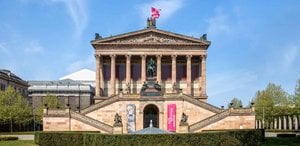 Alte Nationalgalerie |
Berlín | 1 | Bildnis des Archäologen Ernst Curtius by Max Koner |
Pět desetiletí, od 1890 do 1898, zahrnuje všechny datované díla umělce Max Koner: zde jsou, rok po roce.


Emperor Wilhelm II (1890). Následují Prince Herbert Bismarck (1898) a Bildnis des Archäologen Ernst Curtius by Max Koner (1896).
36 let: dílo Emperor Wilhelm II pochází z roku 1890 a Max Koner se narodil/a v roce 1854.
Náš katalog obsahuje 3 děl autora Max Koner z let 1890 až 1898.
Většina z nich se nachází v Alte Nationalgalerie (Berlín). V tabulce výše jsou jednotlivé muzea uvedeny postupně.
Nejstarší dílo na této stránce pochází z Emperor Wilhelm II (1890), nejnovější z Prince Herbert Bismarck (1898).
Ano. Každý obraz na této stránce lze objednat jako ručně malovanou olejovou reprodukci v muzeální kvalitě nebo jako umělecký tisk v požadovaném rozměru přímo z jeho vlastní stránky.
Max Johann Bernhard Koner began his time in the studio in Berlin. Between 1873 and 1878, he sat in the classrooms of the Prussian Academy of Arts, learning under the eyes of Eduard Daege, Anton von Werner, Eduard Holbein, and Max Michael. His early hands were more accustomed to the quiet textures of landscapes. He traveled to Italy in 1875 and later moved to Paris in 1878 to continue his studies. These years away from Berlin shaped how he saw light and form before he eventually turned his focus toward the human figure.
By 1886, his personal life and professional life became closely linked when he married Sophie Schäffer. She had been his student, and together they shared a life centered around the brush. In the later years of his career, as commissions for portraits grew numerous, she often assisted him by working on the backgrounds and the details of clothing in his paintings.
The shift from landscape to portraiture defined his later decades. Between 1888 and 1900, he completed more than one hundred portraits. His work found a place within the high society of Berlin, earning him recognition from the imperial court and various noble houses. In 1893, he was accepted as a member of the Academy.
His brush captured many notable figures of his era, including:
In 1894, one of his portraits of the Kaiser earned him a gold medal at the Große Berliner Kunstausstellung. This period of intense work was marked by a steady stream of requests from the upper echelons of German society.
Koner’s involvement in the art community extended beyond his own canvas. He spent time serving on the committee that chose artists for the trading cards produced by the Stollwerck chocolate company. This role required a keen eye for what would appeal to the public through small, printed images.
He died in Berlin in 1900 at the age of forty-six. He was laid to rest at the Friedhöfe vor dem Halleschen Tor. While a monument was once planned for him by Fritz Klimsch, it was not preserved. His life ended as it had been lived, deeply rooted in the studios and social circles of his home city.