

Umělecké dílo zobrazené na této stránce je chráněno autorským zákonem, což znamená, že nemůžeme legálně vytvářet ani prodávat jeho identickou reprodukci. Tato ochrana je vymáhána na základě mezinárodních dohod, jako například Berberská úmluva a národními zákony, včetně těch stanovených v Americký autorský zákon – Díl 17. Všechna práva vyhrazena.
Tato metoda je plně v souladu s autorským právem, protože nezahrnuje kopírování ani duplikování chráněného díla. Jde o kreativní reinterpretaci – nový obraz, který je inspirován originálem, ale není s ním identický.
Giclée nebo plátěný tisk muzeální kvality s rychlou výrobou a širokou nabídkou povrchových úprav. ( Koupit ručně malovaný obraz Přepnout na digitální obraz)
Vyberte si z našich přednastavených velikostí, které odpovídají původním proporcím díla.

Zadejte šířku a výšku, které potřebujete pro váš rám nebo stěnu. Tisk lze pouze oříznout, nikdy však nelze zvětšit obraz nad jeho původní rozměr, proto při výběru jiného formátu dochází ke ztrátě části obrazu. Před samotným tiskem vám zašleme digitální náhled k schválení. Obraz zobrazený na této stránce nenabízí skutečný výřez — ten uvidíte pouze v náhledu.
Celosvětové doručení () do 2 týdnů namísto standardních 4/5 týdnů. (11 listopad)
Untitled
Rozměry reprodukce

Born in São Paulo in 1986, Thiago Mundano began finding his voice through street art in the early 2000s. His early work was marked by a directness that sought to engage with the city's public spaces and its political realities. One of his first notable moments of friction with authority occurred in 2007, when he painted graffiti on the legislative assembly plaque located in Ibirap_uera Park. This concrete block, usually a plain grey, became a site of quiet struggle; as the São Paulo prefeitura repainted the block grey to cover his work, Mundano returned to repaint it again. This cycle of painting and covering repeated twenty-five times, turning a simple piece of urban infrastructure into a persistent dialogue about visibility.
His approach to art has always been closely tied to the people who inhabit the margins of Brazilian society. In 2012, he started the Pimp My Carroca movement, an initiative that brought artists together to decorate the carts used by Brazilian trash collectors. By applying art to these working tools, he sought to improve the visibility and working conditions of those often overlooked in the urban landscape.
Mundano's work frequently moves beyond simple graffiti to address deep-seated social and environmental wounds. In São Paulo, he created the mural Workers of Brumadinho, a piece that acts as a memorial to the 270 miners who lost their lives during the dam burst in Minas Gerais. Through this work, the tragedy of the disaster is brought into the public eye, ensuring the loss is not forgotten by the city.
The artist also uses the very elements of environmental crisis to create his imagery. In 2021, he produced a large-scale mural titled The Forest Brigade, covering 1000 square metres in São Paulo. To make this work, he used ash collected from fires in the Amazon rainforest. This choice of medium allowed him to use the physical remains of deforestation to draw attention to the destruction of the forest. His practice demonstrates a commitment to using art as a way to confront the reality of ecological change.
Some of his notable works and movements include:

1986 - , Brazil

Elevate your hospitality projects with our expert trend forecast on luxury murals. From biophilic botanical jungles to opulent gold leaf geometry, discover how bespoke large-scale wall art and custom frescoes can transform hotel interiors into unforgettable architectural statements.
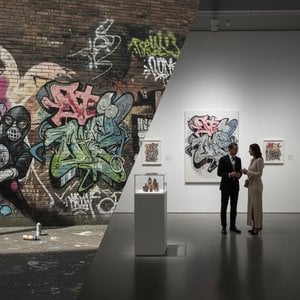
Explore the captivating journey of street art from urban walls to prestigious galleries. Discover how contemporary graffiti has evolved into a high-end collectible movement, redefining modern interior design and global art culture.
 Náhled v interiéru
 Sdílet
 Sdílet
 Podrobnosti o díle
 Průvodce

 Stáhnout
 Podobné položky
 Rentgenové snímky
 Slideshow
 Otázky a odpovědi
 Statistiky


 Zobrazit více






































 Skleněná varianta je dostupná pouze u rozměrů menších než 110 cm


