BEZPLATNÉ UMĚLECKÉ PORADENSTVÍ

x
Koupit tisk Koupit tiskKoupit digitální obrázek Koupit digitální obrázek SdíletSdílet
DetailsDetails Přidat do oblíbených Přidat do oblíbených StáhnoutStáhnout Podobné položkyPodobné položky X-RayX-Ray SlideshowSlideshow

Untitled

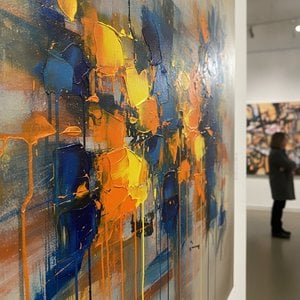
Experience the vibrant energy of Karel Appel's COBRA masterpiece; this abstract burst of color captures raw instinct from 1960—discover your own artistic freedom.

Příjmení Appel nese více různých osobností: David Appel (* 1981) – český profesionální hokejový hráč Karel Appel (rozcestník) – více osob Kenneth Appel (1932–2013) – americký matematik další význam Appel (Dolní Sasko), obec v Německu == Externí odkazy == Obrázky, zvuky či videa k tématu Appel na Wikimedia Commons


Ručně malovaná olejová reprodukce

Ručně malovaná olejná barva na plátně ve vašem zvoleném rozměru i s rámem, vyrobená našimi umělci na zakázku.

Standard
custom
CM
INCH

Vyberte si z našich přednastavených velikostí, které odpovídají původním proporcím díla.

šířka
výška

Můžete zadat vlastní rozměry pro konkrétní rám nebo prostor. Pokud se vámi vybraná velikost neshoduje s proporcemi původního obrazu, dílo buď ořízneme, nebo jej doplníme ručně malovanými prvky. Před zahájením výroby vám bude zaslán digitální náhled ke schválení.
Upozorňujeme, že náhled na obrazovce neodpovídá skutečnému ořezu ani rozšíření. Pouze digitální náhled přesně zobrazí finální kompozici.
Ačkoliv je možné zvolit vlastní velikost, pro zachování původních proporcí doporučujeme vybrat rozměr z předdefinovaného seznamu.

Příklady možných změn: Nahrazení obličeje vlastní fotografií; Přidání domácího mazlíčka (např. nahrazení kočky psem); Vložení skrytého vzkazu do pozadí; Změna krajiny nebo prvků v pozadí.
Po přijetí objednávky vám tým WahooArt.com zašle e-mail s pokyny a poskytne náhledovou verzi.

Celosvětová doprava () za 3–4 týdny namísto standardních 5 týdnů. (2 červenec). Bez kompromisů v kvalitě.

why_choose_icon
Zdarma celosvětová expresní doprava
why_choose_icon
Vysoce kvalitní lněné plátno
why_choose_icon
Kompletní přepravní pojištění
why_choose_icon
Záruka vrácení celního poplatku
why_choose_icon
Záruka přesného barevného shodu
why_choose_icon
60denní lhůta pro vrácení zboží (pouze při vadách výroby)
why_choose_icon
100% garance vrácení peněz
why_choose_icon
Sleva při hromadné objednávce

Celková cena

-

reproduction

Untitled

Technika reprodukce

Rozměry reprodukce

-

Celková cena za výběr

-

Základní informace

  • Title: Untitled
  • Movement: COBRA
  • Notable elements or techniques: Gestural forms, Layered texture
  • Subject or theme: Organic shapes
  • Influences: European Avant-garde
  • Artistic style: Abstract Expressionism
  • Medium: Screenprint

Kvíz o umění

U každé otázky je pouze jedna správná odpověď.

Otázka 1:
What avant-garde movement is Karel Appel strongly associated with for this artwork?
Otázka 2:
Which element of the artwork's composition is described as eschewing traditional perspective?
Otázka 3:
According to the description, what emotion is often symbolized by the color yellow in Appel's work?
Otázka 4:
What type of forms populate the artwork, described as rounded and organic, reminiscent of natural elements?
Otázka 5:
What medium is the artwork most likely to be, given the visible layering and texture?

Popis díla

A Burst of Color and Instinct: Decoding Karel Appel’s Untitled

Karel Appel's "Untitled," a striking print or screenprint from 1960, embodies the rebellious spirit of COBRA – the Dutch avant-garde movement that shook the foundations of postwar European art. More than just pigment on paper, this artwork is an assertion of spontaneous expression and a deliberate rejection of academic formalism, reflecting Appel’s profound connection to the everyday experiences of working-class Holland during his formative years. The image immediately captivates with its bold palette – dominant yellows, blues, reds, and blacks punctuated by flashes of orange and white – applied in broad, gestural strokes that convey an undeniable sense of dynamism.
  • Composition & Rhythm: Appel eschews traditional perspective, opting instead for an asymmetrical arrangement where forms overlap and intersect. This seemingly chaotic composition subtly reveals underlying rhythmic patterns through repeated shapes and colors, guiding the viewer’s eye across the surface in a continuous exploration of visual elements.
  • Form & Texture: The artwork is populated by biomorphic forms – rounded, organic shapes reminiscent of natural elements or abstracted figures – creating a complex textural landscape. Visible brushstrokes contribute to an impression of immediacy and materiality, hinting at Appel’s hand application during the printmaking process.
  • Color Theory & Emotion: The color choices aren't merely decorative; they are deliberately emotive. Yellow symbolizes optimism and energy, while blue conveys tranquility and contemplation. Red injects passion and vitality into the composition, mirroring Appel’s fascination with primal forces and childlike wonder.
The COBRA movement itself was born from a desire to break free from the constraints of Surrealism and Cubism, prioritizing intuition and gesture over meticulous representation. Appel sought inspiration in primitive art forms – African masks and tribal sculptures – believing that these conveyed unfiltered emotion and challenged Western artistic conventions. This influence is palpable in “Untitled,” where the artist abandons rational thought for a visceral response to the world around him.
  • Technique & Medium: Likely produced through screenprinting, the artwork’s layered texture speaks volumes about Appel's meticulous approach to printmaking. The process itself – transferring ink onto paper – was chosen specifically to capture and amplify the artist’s spontaneous marks, ensuring that the energy of his initial gesture remained faithfully reproduced.
  • Symbolism & Interpretation: Beyond its aesthetic qualities, “Untitled” invites contemplation on themes of freedom and spontaneity. Appel's work consistently explores the intersection between human emotion and natural forms, suggesting a belief in the transformative power of unfiltered experience. The absence of recognizable imagery encourages viewers to engage with the artwork on an emotional level, prompting them to consider their own responses to color, shape, and texture.
Ultimately, Karel Appel’s “Untitled” transcends mere visual appeal; it stands as a testament to the enduring legacy of COBRA – a movement that championed artistic liberation and celebrated the beauty of imperfection. Its vibrant colors, dynamic forms, and textured surface continue to inspire artists and collectors alike, securing its place as an iconic exemplar of postwar abstraction.

Podobná umělecká díla


Biografie umělce

A Life Painted in Bold Strokes: The World of Karel Appel

Christiaan Karel Appel, known affectionately as ‘Kik’ from childhood, burst onto the post-war art scene like a vibrant explosion of color and energy. Born in Amsterdam in 1921, his early life was steeped in the everyday rhythms of working-class Holland – his father a barber, his lineage tracing back to French Huguenots through his mother. This grounding, however, would soon be superseded by an irrepressible artistic drive that defied convention and ultimately reshaped the landscape of European art. A pivotal moment arrived at age fourteen with his first painting, a still life of fruit, followed shortly after by a paint set and easel gifted by his uncle Karel Chevalier, who also provided early instruction. These gifts weren’t merely tools; they were keys unlocking a world where imagination reigned supreme. The shadow of the Second World War loomed large over Appel’s formative years. Studying at the Rijksakademie van Beeldende Kunsten in Amsterdam during the German occupation proved challenging, yet it was there he forged lifelong bonds with fellow artists Corneille and Constant, friendships that would prove crucial to his artistic evolution. Facing opposition from his parents regarding his chosen path and fearing forced labor under Nazi rule, Appel bravely left home, choosing a life dedicated to art over conformity.

The CoBrA Revolution: Spontaneity and the Childlike Vision

Appel’s artistic journey truly ignited with the formation of the CoBrA group in 1948 – an acronym derived from Copenhagen, Brussels, and Amsterdam, representing the movement's core cities. Alongside Corneille, Constant, Jan Nieuwenhuys, and Christian Dotremont, Appel spearheaded a radical departure from established artistic norms. CoBrA wasn’t merely a style; it was a philosophy rooted in spontaneity, experimentation, and a profound embrace of the untamed creativity found in children's art and primitive cultures. Influenced by masters like Pablo Picasso and Henri Matisse, as well as the raw energy of Jean Dubuffet, Appel rejected rigid formalism in favor of intuitive expression. He began sculpting in 1947, utilizing assemblage techniques – constructing works from found materials painted in a bold palette of white, red, yellow, blue, and black. This period saw him involved with the Experimentele Groep, further solidifying his commitment to artistic innovation. The controversial fresco "Questioning Children" (1949), commissioned for Amsterdam City Hall, exemplified CoBrA’s provocative spirit but also sparked public outcry, ultimately leading to its being covered up – a testament to the movement's challenging nature. Appel drew inspiration from Danish and Nordic mythology, weaving these ancient narratives into his increasingly abstract compositions.

International Horizons: From Paris to New York and Beyond

Facing resistance to CoBrA’s radical vision in the Netherlands, Appel relocated to Paris in 1950, a city that offered greater artistic freedom and recognition. This marked the beginning of an expansive period of international travel and exposure. He journeyed to Mexico, the USA, Yugoslavia, and Brazil, absorbing diverse cultural influences that enriched his artistic vocabulary. His time in New York City and Florence further broadened his horizons, allowing him to connect with a wider network of artists and collectors. A breakthrough moment arrived in 1954 with his first American gallery exhibition at the Martha Jackson Gallery, followed by the inclusion of "Child and Beast II" (1951) in the influential Museum of Modern Art exhibition “The New Decade” in 1955. Appel’s murals became increasingly prominent during this period, showcasing his ability to translate his dynamic style onto a larger scale. Despite initial challenges, his work experienced a resurgence in popularity in the Netherlands after 1990, with major exhibitions organized by Rudy Fuchs in Amsterdam and Brussels, solidifying his legacy within his homeland.

A Lasting Legacy: The Karel Appel Foundation and Enduring Influence

Karel Appel’s impact on post-war European art is undeniable. He established the Karel Appel Foundation to safeguard his artworks and promote public awareness of his oeuvre, ensuring that future generations could experience the power of his vision. A temporary loss of artwork in 2002 underscored the importance of this foundation, with the pieces thankfully recovered in 2012. The foundation now serves as his official estate and image archive, represented in the U.S. by The Artists Rights Society. Appel’s work continues to be exhibited internationally, a testament to its enduring appeal and relevance. He wasn’t simply a painter or sculptor; he was a poet of form and color, a champion of spontaneity, and a fearless innovator who dared to challenge artistic conventions. His legacy lies not only in the vibrant canvases and sculptures he created but also in his unwavering belief in the power of art to express the raw, untamed spirit of human experience. His work remains a significant contribution to post-war European art, particularly within the CoBrA movement. Appel’s influence can be seen in contemporary artists who embrace experimentation and reject traditional boundaries, ensuring that his bold vision continues to inspire for years to come.
Karel Appel

Karel Appel

1921 - 2006 , Nizozemsko

Rychlé fakta

  • Artistic Movement Or Style: CoBrA, Expressionismus
  • Artists Or Movements Influenced By This Artist: ['CoBrA']
  • Artists Who Influenced This Artist:
    • Pablo Picasso
    • Henri Matisse
    • Jean Dubuffet
  • Date Of Birth: 25. dubna 1921
  • Full Name: Christiaan Karel Appel
  • Nationality: Nizozemský
  • Notable Artworks:
    • Square Man
    • Parrot Woman with Bird
    • Hip, Hip, Hoorah
  • Place Of Birth: Amsterdam, Nizozemsko