Chiura Obata (1885-1975): Celebrated Japanese-American Painter, UC Berkeley Professor, & Master of Sumi-e
Chiura Obata’s life was a remarkable tapestry woven from threads of tradition and innovation—a testament to the transformative potential of cultural exchange and an unwavering devotion to artistic expression. Born Zoroku Sato in Okayama Prefecture, Japan, on November 18, 1885, his formative years were steeped in the rituals and aesthetics of Sumi-e painting, a practice that instilled within him not merely technical skill but also a profound reverence for nature and a philosophical outlook on art that would guide his entire artistic journey. From early childhood, Obata demonstrated an innate fascination with drawing—a talent nurtured by his adoptive brother Rokuichi, who was himself an artist and moved the young Obata to Sendai, Miyagi Prefecture. This familial connection fostered a deep appreciation for artistic heritage, shaping his understanding of Japanese culture and influencing his creative sensibilities. At fourteen, defying societal expectations and driven by an irresistible yearning for artistic freedom, Obata abandoned his family home to pursue studies in Tokyo under masters like Tanryo Murata, Kogyo Terasaki, and Gaho Hashimoto—a bold decision that propelled him toward a path of independent exploration. These formative years exposed him not only to the intricacies of Japanese artistic traditions but also to burgeoning Western influences that would subsequently enrich his distinctive style. Recognizing the importance of grounding his knowledge in both Eastern and Western perspectives, Obata embarked on a comprehensive education encompassing diverse artistic disciplines.Early Life & Artistic Training
His formal training began with Tanryo Murata, who instilled in him the foundational principles of Sumi-e—the art of ink painting—emphasizing meticulous brushwork, careful composition, and an acute sensitivity to tonal variations. Subsequently, he studied under Kogyo Terasaki and Gaho Hashimoto, broadening his artistic horizons and introducing him to techniques rooted in Western Impressionism. This multifaceted training equipped Obata with the tools necessary to synthesize disparate influences into a singular artistic vision—a hallmark of his oeuvre. In 1903, fueled by aspirations for intellectual enrichment and artistic advancement, Obata immigrated to the United States, establishing himself in San Francisco amidst a vibrant community of artists and intellectuals. Initially supporting himself through illustration work for Japanese newspapers like *The New World* and *The Japanese American*, he diligently honed his design skills collaborating with prominent department stores such as Gump's and The Emporium—skills that would prove invaluable throughout his career. Furthermore, Obata documented the devastating aftermath of the 1906 San Francisco earthquake through evocative sketches—a poignant reminder of the intersection between artistic observation and historical circumstance.California Landscape & Artistic Synthesis
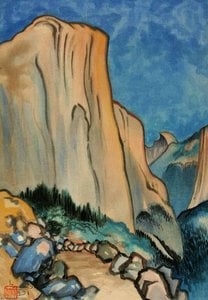
A pivotal moment arrived in 1927 when Obata undertook a sketching expedition to Yosemite National Park and the Sierra Nevada mountains—an experience that irrevocably transformed his artistic sensibilities. The grandeur of California’s wilderness captivated him, inspiring a lifelong dedication to capturing its majesty on canvas and woodblock prints. This journey solidified his conviction that art could serve as a conduit for conveying profound emotional resonance—a belief that would permeate his subsequent works. During this period he established the East West Art Society in San Francisco, an organization dedicated to fostering intercultural dialogue among artists—reflecting Obata’s own commitment to bridging cultural divides and promoting artistic collaboration. His artistic output during World War II was marked by extraordinary resilience and creativity. Despite facing displacement and hardship as a Japanese American interned at Tanforan Detention Center and Topaz Relocation Center, Obata persevered in his pursuit of artistic expression—establishing an art school within Topaz Camp and offering instruction to over ninety-five students weekly. This unwavering dedication to teaching underscored his belief that art could nurture intellectual curiosity and foster personal growth even amidst challenging circumstances. His work during this period exemplifies the transformative power of creativity as a form of resistance—a testament to Obata’s enduring spirit and artistic legacy. ## Legacy & Enduring Influence Chiura Obata's lasting impact on American art stems from his pioneering blend of Japanese tradition and Western innovation—a stylistic hallmark that distinguishes him from many of his contemporaries. His celebrated “World Landscape Series,” comprising thirty-five meticulously crafted woodblock prints depicting California vistas, particularly Yosemite National Park, stands as a testament to his artistic vision—a visual chronicle of the American West imbued with Japanese aesthetic sensibilities. These prints garnered critical acclaim and cemented Obata’s reputation as an artist capable of harmoniously integrating diverse influences into a singular creative expression. His unwavering commitment to preserving the splendor of California's wilderness continues to inspire artists today, reminding us of the enduring beauty of nature and the transformative potential of artistic endeavor. Obata’s contribution to American art is undeniable—a legacy enriched by his dedication to teaching and his steadfast belief in the power of art as a vehicle for cultural understanding and personal enrichment.Otázky a odpovědi
Odkud pochází Chiura Obata?
Chiura Obata se narodil(a) v zemi Japonsko.
Kde mohu vidět díla umělce Chiura Obata v chronologickém pořadí?
Existuje časová osa děl umělce Chiura Obata: stránka Časová osa děl řadí díla podle data jejich vzniku.
V jakém městě a z jaké země pochází Chiura Obata?
Chiura Obata se narodil(a) ve městě Okayama v zemi Japonsko.