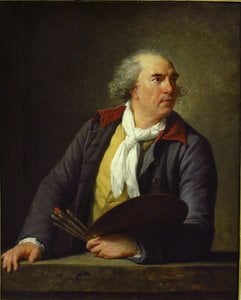
Hubert Robert (1733–1808): A Visionary Painter of Ruins and Time
Hubert Robert, jméno synonymum s evokativními krajinami a romantickou krásou ruin, zaujímal v 18. století francouzské umění jedinečnou pozici. Narodil se v Paříži v roce 1733 a jeho život se rozvíjel proti pozadí měnících se uměleckých stylů a monumentálních historických změn – od hravé elegance Rokoka až po nástup Neoklasicismu, a nakonec i prostřednictvím bouřlivých let Francouzské revoluce. Nebyl to jen dokumentant rozkladu; vytvářel vize, kombinoval pozorování s představivostí, aby vytvořil scény, které rezonovaly jak s nostalgickou touhou po minulosti, tak s očekáváním budoucnosti. Jeho cesta začala ve strukturovaném světě uměleckého vzdělávání, původně pod sochařem Michel-Ange Slodtzem, který Robertovu talentu uznal, ale moudře ho nasměroval k malování, cítil, že jeho pravá vášeň spočívala v zachycení světla, atmosféry a jemné poezie tvaru.
Roman Reveries: Shaping an Artistic Identity
Klíčový okamžik Robertova uměleckého vývoje nastal s jeho prodlouženým pobytem v Římě v roce 1754. Společně s Étienne-François de Choiseul, doprovázel ho svět ponořený do historie a architektonické grandeur. Po jedenáct let se tento starověký město stal jeho venkovním ateliérem, jeho rozpadlé chrámy, majestátní oblouky a overgrown zahrady poháněly jeho představivost. Nebyla to jen o replikaci toho, co viděl; šlo o interpretaci, přehodnocení a vložení do něj pocitu melancholické krásy. Pracoval vedle Giovanniho Paola Paniniho, jehož vliv je patrný v Robertových raných *capriccio* kompozicích – fantastických pohledech, které juxtaponovaly klasické ruiny s moderním životem. Nicméně Robert rychle šel dál od imitace, vyvinul si vlastní jedinečný styl charakterizovaný pečlivým detailem, atmosférickou perspektivou a hlubokou citlivostí na hru světla a stínu. Nevytvářel jen ruiny; maloval čas samotný, zachycoval zřetelnost přechodnosti a trvalý vliv paměti. Jeho cestovní zápisky z tohoto období jsou neocenitelnými záznamy o jeho pozorováními, plnými detailních studií římských památek, jako je Villa d’Este a Caprarola, které demonstrují jeho oko pro architektonickou nuanci a krajinnou kompozici.
Parisian Acclaim and Royal Patronage
Robertův návrat do Paříže v roce 1765 znamenal obrat ve jeho kariéře. Rychle získal uznání v uměleckém prostředí, získal přijetí do Královské akademie malby a sochařství s “Portem Říma” a zdůraznil svou schopnost evokovat majestátní obrazy. Denis Diderot, významná postava osvícenosti, slavně ocenil grandióznost vyvolanou Robertovými malbami, rozpoznávaje jeho schopnost přenést diváky do jiné doby a místa. Tento úspěch vedl k královskému sponzorství, s pověřením pracovat na dekorativních projektech a jmenováním “Návrhářem Královských zahrad” a později, “Strážcem Královských obrazů”. Stal se žádaným umělcem, nejen pro své obrazové malby, ale také pro své inovativní návrhy zahrad a palácových interiérů. Jeho práce rezonovala s převládajícím vkusem *capriccio* malování – žánru, který oslovoval sběratele fascinovaných historií, archeologií a krásou. Robert však do něj vložil jedinečný cit, zvedl ho nad pouhou dekorativní umění.
Revolution, Resilience, and Lasting Legacy
Francouzská revoluce představila bezprecedentní výzvu pro Roberta. Zatímco mnoho umělců se potýkalo s turbulentním politickým klimatem, on sám se ocitl v proudech změn. Dokonce byl během Teroru uvězněn, hrůzný zážitek, který přesto inspiroval sérii studií dokumentujících jeho pobyt ve vězení. Díky revoluci byl Robert jmenován kurátorem nově založeného Centrálního muzea umění – budoucího Louvru, což bylo svědectví o jeho odbornosti a oddanosti zachování kulturního dědictví. Hrála klíčovou roli při organizaci a katalogizaci sbírky muzea, zajišťující, že díla Francie budou chráněna pro budoucí generace. Hubert Robert zemřel v Paříži v roce 1808, zanechávaje za sebou mimořádný soubor děl, které dodnes inspirují úžas a obdiv. Jeho dědictví nespočívá pouze ve své technické mistrovství, ale také v jeho jedinečné schopnosti kombinovat historickou přesnost s představivým viděním. Byl průkopníkem žánru malování, který oslavoval krásu rozkladu i trvalý vliv lidské kreativity.
- Key Influences: Giovanni Paolo Panini, Piranesi, the architectural landscape of Rome.
- Major Themes: Ruins, landscapes, *capriccio* paintings, historical memory, the passage of time.
- Artistic Style: Meticulous detail, atmospheric perspective, evocative lighting, blending observation with imagination.



 Zobrazit v interiéru
 Přepnout na tiskové verze
 Odeslat
 Sdílet
 Podrobnosti
 Průvodce

 Stáhnout obrázek
 Podobné kousky
 Rentgenové snímky
 Slideshow
 Statistiky


 Přečíst si více






































 Skleněná varianta je dostupná pouze u rozměrů menších než 110 cm