Abstract Expressionist артисти, ranked

The 76 Most Famous Abstract Expressionist Художници

The most famous Abstract Expressionist артист is Джаксън Полък (1912–1956), known for One. Number 31, 1950 и Осенна Ритмика. Номер 30, 1950. Next come Герхард Рихтер, Вилем Де Кунинг, Джаспър Джонс и Марк Ротко. This ranking of the 76 most famous Abstract Expressionist артисти runs from Георг Едгар Оур (born 1857) to Иан Дъвент (born 1966), across 32 countries.

How this list is ranked. Artists whose works our catalogue files under Abstract Expressionist, in the order of our fame ranking of artists. Artists without a Wikidata identifier born after 1955 are left out until verified. The Wikipedia figure next to each name is the number of our 32 languages in which Wikipedia has an article on the artist.

  1. One. Number 31, 1950 на Джаксън Полък1Джаксън Полък
  2. 50% undivided interest in "Abstraktes Bild (825-7)" на Герхард Рихтер2Герхард Рихтер
  3. Two Woman IV на Вилем Де Кунинг3Вилем Де Кунинг

The essentials

Abstract Expressionist at a glance

  • 76Художници
  • 1857–1966Години на раждане
  • 32Страни на раждане
  • 13Жени
  • 10Живи артисти
  • 3800Работи в нашия каталог
Градове с най-много новородени
Ню Йорк (4), Pittsburgh (2), Коуди (1), Дрезден (1)

Ranked, with their masterpieces

The ranking: 76 Abstract Expressionist Художници and their key works

1of 76

Джаксън Полък

Американец Born in Коуди Абстрактен експресионизъм Wikipedia in 31/32 languages

Джаксън Полък

By 1947, a profound shift had taken hold in the way he approached the canvas. This change allowed him to stand over his work, becoming part of the creative act itself. He was among the first American painters to be recognized as a peer of the great 20th-century European masters, proving that a new, visceral language could emerge from the soil of the United States.

Where to see In New York City, the Museum of Modern Art holds several of his canvases, allowing viewers to stand before the sprawling, uncentered compositions that defined his era.

Key works · The 100 most famous works

2of 76

Герхард Рихтер

Германец Born in Дрезден ['Фотореализъм', 'Абстракция'] Wikipedia in 28/32 languages

Герхард Рихтер

In 1951, he begins formal studies at the Dresden Academy of Fine Arts. From 1957 to 1961, he remains within the academy's structure, working as a master trainee. In 1972, he represented West Germany at the Venice Biennale, a moment that solidified his standing on the international stage.

Where to see The physical presence of Richter’s practice spans major institutional collections across Europe.

Key works · The 100 most famous works

3of 76

Вилем Де Кунинг

Dutch-American Born in Ротердам Abstract Expressionism Wikipedia in 30/32 languages

Вилем Де Кунинг

At twelve years old, Willem de Kooning leaves formal schooling behind to enter the world of commercial art. This period of focused training provides the essential tools for the radical shifts that await him across the Atlantic. In New York, de Kooning finds a mentor in Arshile Gorky.

Key works · The 100 most famous works

6of 76

Аршил Горки

Армениско-американска Born in Ван Абстрактен експресионизъм, Сюрреализъм Wikipedia in 24/32 languages

Аршил Горки

Key works · The 100 most famous works

7of 76

Александър Калдер

Scottish-American Born in Абердин Architectural sculpture Wikipedia in 28/32 languages

Александър Калдер

Alexander Milne Calder’s influence extended far beyond his own creations, shaping the artistic landscape of subsequent generations.

Key works · The 100 most famous works

8of 76

Хелен Франкenthalер

Американка Born in Манхатън Абстрактен експресионизъм, Color Field Wikipedia in 19/32 languages

Хелен Франкenthalер

Key works · The 100 most famous works

10of 76

Барнет Нюман

Американски Born in Ню Йорк Абстрактен експресионизъм Wikipedia in 23/32 languages

Барнет Нюман

Vir Heroicus Sublimis (1958-60), монументална творба, допълнително затвърди този подход, с множество zips, създаващи усещане за пространствена дълбочина и предизвикващи чувства на възхищение и копнеж. "Zip"-ът не беше просто естетичен елемент; той беше структурна единица, същевременно разделяща и обединяваща платното, действайки като символичен маркер на човешко присъствие в безкрайното.

Key works · The 100 most famous works

11of 76

Франтишек Купка

Чешка Born in Опатово ['Реализъм', 'Символизъм', 'Орфизъм', 'Кубизъм', 'Абстракция'] Wikipedia in 24/32 languages

Франтишек Купка

Amorpha, Fugue en deux couleurs, субектът вече не е човек или място, а самото взаимодействие на цвета. Тази творба често се цитира като един от първите случаи на напълно нерепрезентативна живопис. Слоистовете пигмент не описват сцена; те създават ритъм от светлина и движение, който съществува независимо от всеки физически модел. Disks of Newton, Study for Fugue in Two Colors, около 1911 г.

Key works · The 100 most famous works

15of 76

Франц Клайн

Американски Born in Уиксь-Бар Абстрактен експресионизъм Wikipedia in 17/32 languages

Франц Клайн

Subsequent studies at Boston University solidified his grounding in Western art history, while his time at Heatherley School of Fine Art in London exposed him to the grandeur and stylistic diversity of European painting traditions. He exhibited extensively at prestigious galleries like Egan Gallery and Sidney Janis Gallery, garnering critical acclaim for his uncompromising vision and masterful execution.

Key works · The 100 most famous works

22of 76

Jean-Paul Riopelle

Canadian Born in Montreal Lyrical Abstraction Wikipedia in 14/32 languages

Jean-Paul Riopelle

Les Automatistes: Riopelle was a member of Les Automatistes in the 1940s, embracing Surrealist principles and exploring spontaneous creation. Move to Paris (1947): His relocation to Paris proved transformative, leading to his first solo exhibition at Galerie La Dragonne in 1949. Riopelle was the first Canadian painter since James Wilson Morrice to achieve widespread international recognition.

Key works · The 100 most famous works

24of 76

Ад Рехандарт

Американски Born in Бъфало Абстрактен експресионизъм, Минимализъм Wikipedia in 12/32 languages

Ад Рехандарт

He insisted they were devoid of any representational content—no trees, no figures, no landscapes—simply pure abstraction. The paintings weren’t intended to evoke emotion or tell a story; rather, they were designed to be experienced as objects of pure aesthetic contemplation—a testament to Reinhardt's belief that art should exist for its own sake. He taught at numerous institutions—Brooklyn College, California School of Fine Arts, University of Wyoming, Yale University, and Hunter College—imparting his rigorous intellectual approach to aspiring artists.

Key works · The 100 most famous works

25of 76

Марк Тобей

Американски Born in Центървил Абстрактна живопис Wikipedia in 14/32 languages

Марк Тобей

Thompson introduced Tobey to the tenets of the Baháʼí Faith, a religion emphasizing the unity of all religions and humanity’s spiritual evolution. Tobey’s travels became increasingly frequent and purposeful, taking him across Europe, Palestine, Turkey, Lebanon, China, and Japan. He represented the United States at the Venice Biennale in 1958, further solidifying his position as a major figure in the art world.

Key works · The 100 most famous works

28of 76

Richard Art Hambleton

Canadian Born in Tofino Street art, Conceptual art

Richard Art Hambleton

Crucially, he established Pumps Centre for Alternative Art in Vancouver, a space that served as both a gallery and performance venue – a testament to his early commitment to challenging conventional artistic boundaries. This environment fostered experimentation and provided a platform for emerging artists, mirroring the ethos he would later embody through his public interventions. His work laid the groundwork for interventions by artists like Banksy and Shepard Fairey, demonstrating the potential of art to disrupt urban landscapes and engage with social commentary.

Key works · The 100 most famous works

29of 76

Джордж Ștefănescu-Râmnic

Romanian-German Born in Пълънещти Expressionism, Fauvism, Abstract Expressionism

Джордж Ștefănescu-Râmnic

By drawing inspiration from the folk arts of Romania while embracing the avant-garde movements of Europe, he created a body of work that remains a testament to the power of color to communicate the unspoken depths of the human experience.

Key works · The 100 most famous works

30of 76

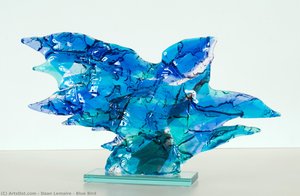
Daan Lemaire

Dutch Born in Naarden Abstract Expressionism

Daan Lemaire

Following his expulsion from the academy, Lemaire’s artistic practice underwent a significant transformation. Initially influenced by surrealist principles—a legacy of his early encounters with Willy Boers —Lemaire gradually moved towards a more purely abstract approach in the late 1970s and early 1980s. While he may not be as widely recognized as some of his contemporaries—such as Karel Appel or Barnett Newman —his work possesses a quiet intensity and a profound emotional resonance that continues to captivate viewers.

Key works · The 100 most famous works

32of 76

William Baziotes

American Born in Pittsburgh Abstract Expressionism Wikipedia in 8/32 languages

William Baziotes

Through his involvement with the Works Progress Administration (WPA), particularly the easel project between 1938 and 1940, he found the freedom to experiment with large-scale canvases that demanded a more visceral, gestural approach. It was during this era that he began to weave together the disparate threads of European Surrealism and the burgeoning American Abstract Expressionism. His 1944 debut solo exhibition at Peggy Guggenheim’s legendary Art of This Century gallery served as a definitive arrival, placing him at the epicenter of the modern art world.

Key works · The 100 most famous works

33of 76

David Smith

United States Born in Decatur Abstract expressionism Wikipedia in 12/32 languages

David Smith

During the Great Depression, he participated in the Works Progress Administration’s Federal Art Project. During World War II, he worked as a welder for the American Locomotive Company in Schenectady, New York.

Key works · The 100 most famous works

34of 76

Теодорос Στάμος

Гръцки Born in Ню Йорк Абстрактен експресионизъм Wikipedia in 8/32 languages

Теодорос Στάμος

Early Influences and Artistic Formation The American Artists School: Stamos's formative years were marked by a scholarship to the American Artists School in 1936, where he honed his sculptural skills under Simon Kennedy and Joseph Konzal.

Key works · The 100 most famous works

38of 76

Rochelle Reznik Blumenfeld

American Born in Pittsburgh Abstract Art

Rochelle Reznik Blumenfeld

She was famously drawn to large canvases, finding a unique joy in the expansive reach required to manipulate paint across such vast surfaces. Through these motifs, she explored how light plays upon surfaces, creating works like Skylights, where shadows and sudden illumination evoke the dramatic tension of a mountain landscape under a passing storm. As we reflect on her life and contributions, several key elements define her historical significance: The Fusion of Disciplines: Her unique ability to synthesize the rhythmic energy of dance with the organic structures of nature.

Key works · The 100 most famous works

39of 76

Requena Nozal

Spanish Born in Zaragoza Encaustic & Abstract Expressionism

Requena Nozal

Requena Nozal, born in Zaragoza, Spain in 1947, stands as a singular figure within the landscape of contemporary Spanish art. The Embrace of Encaustic Technique: Unlike many artists of his era who favored oil paints, Nozal championed encaustic, a process involving fusing beeswax mixed with pigments onto prepared wood panels. Although he remains largely unknown outside specialist circles, Nozal’s artworks continue to captivate collectors and critics alike, cementing his place as a significant voice within the Spanish artistic landscape.

Key works · The 100 most famous works

44of 76

Geta Brătescu

Romanian Born in Ploiesti Conceptual art, Performance art

Geta Brătescu

For Brătescu, the line wasn't merely a formal element; it was a fundamental tool for definition, measurement, and conveying movement—a way to map both physical space and inner states. Her exploration extended beyond static representation into performative realms, using the line to delineate space and trace the boundaries of selfhood. In 2015, she had her first UK solo exhibition at Tate Liverpool, bringing her work to an international audience, culminating in representing Romania at the 57th Venice Biennale in 2017—a landmark moment in her career.

Key works · The 100 most famous works

46of 76

Alan Davie

Scottish Born in Grangemouth Zen Painting Style, Surrealism, Abstract Expressionism Wikipedia in 7/32 languages

Alan Davie

James Alan Davie (September 28, 1920 – April 5, 2014) was a Scottish painter and musician whose distinctive style fused abstract expressionism with influences from Zen Buddhism and surrealist art. Zen Buddhism’s Impact: A pivotal moment arrived when Davie encountered Eugen Herrigel's book “Zen in the Art of Archery,” sparking an interest in Zen philosophy. He remains an influential artist whose work continues to inspire contemporary artists and collectors alike, embodying a spirit of experimentation and unwavering devotion to conveying profound symbolic meaning.

Key works · The 100 most famous works

47of 76

George Stefanescu

George Stefanescu

This shift can be seen as a response to the socio-political climate of Romania during his formative years, a period marked by significant change and upheaval. Rather than directly addressing these issues, Stefanescu turned inward, seeking solace and meaning in the natural world. Early works reveal an engagement with Impressionism and Post-Impressionism – particularly the luminous palettes of Monet and Renoir, and the expressive brushwork of Van Gogh.

Key works · The 100 most famous works

49of 76

James Brooks

American Born in St. Louis Abstract Expressionism Wikipedia in 6/32 languages

James Brooks

Shifted towards Abstract Expressionism, influenced by Surrealist principles. Often used numbers and letters to identify paintings, incorporating nonsense syllables as titles (e.g., Pask, Burwak, Jondol). His work is held in prominent collections including the Art Institute of Chicago, The Museum of Modern Art, Tate Gallery, and National Gallery of Art.

Key works · The 100 most famous works

51of 76

Jack Armstrong

Jack Armstrong

Armstrong’s early career focused on commercial art, creating illustrations for magazines, advertisements, and packaging. However, he found himself increasingly drawn to subjects beyond the demands of client briefs. American Regionalism: The focus on distinctly American subjects and landscapes connects him to artists like Grant Wood and Thomas Hart Benton.

Key works · The 100 most famous works

52of 76

Milton Resnick

American Born in Bratslav Abstract Expressionism Wikipedia in 5/32 languages

Milton Resnick

Throughout his career, Milton Resnick exhibited widely in prominent galleries including the Poindexter Gallery, Howard Wise Gallery, Max Hutchinson, and Robert Miller, gaining critical acclaim for his unique vision.

Key works · The 100 most famous works

53of 76

Alice Rahon

French/Mexican Born in Chenecey-Buillon Surrealism, Abstract Expressionism Wikipedia in 6/32 languages

Alice Rahon

What began as an intended brief respite from the looming shadow of World War II evolved into a decades-long exile from Europe, leading the couple to Mexico City. Initially experimenting with leftover paints from Paalen’s palette, she quickly developed a distinctive style characterized by textured surfaces and dreamlike compositions. She established close friendships with many prominent modern artists, dedicating works like Celestial Shadow (to Giorgio de Chirico) and The Ballad for Frida Kahlo as tributes to her peers.

Key works · The 100 most famous works

55of 76

Боуфорд Монтгомери Делани

Френска Born in Ноксвил Постимпресионизъм Wikipedia in 5/32 languages

Боуфорд Монтгомери Делани

Key works · The 100 most famous works

56of 76

Norman Lewis

American Born in Harlem Abstract Expressionism Wikipedia in 4/32 languages

Norman Lewis

Norman Wilfred Lewis, born in Harlem, New York City, in 1909, emerged as a pivotal figure in the American art landscape of the mid-20th century. This early commitment led him to the Savage Studio of Arts and Crafts in Harlem, where Augusta Savage, a pioneering sculptor and teacher, became a crucial mentor. These journeys to South America and the Caribbean exposed him to diverse cultures and artistic traditions, expanding his visual vocabulary and challenging his preconceived notions.

Key works · The 100 most famous works

59of 76

Томи Отаке Накакубо

Японо-бразилка Born in Киото Неформален абстракционизъм Wikipedia in 8/32 languages

Томи Отаке Накакубо

tomie ohtake was the mother of architects ruy ohtake and ricardo ohtake. she passed away on february 12, 2015, at the age of 101, leaving behind a legacy in the world of visual art.

Key works · The 100 most famous works

61of 76

Nicola De Maria

Italian Born in Foglianise Transavanguardia Wikipedia in 5/32 languages

Nicola De Maria

His 1980 Venice Biennale contribution, “Space Paintings,” further solidified his reputation as a pioneer in this medium. These works, characterized by their dynamic composition and layered textures, demonstrated De Maria's ability to manipulate space and create a sense of movement within the confines of a two-dimensional surface. His art is held in prestigious collections worldwide, including those of the Castello di Rivoli Museo d'Arte Contemporanea in Turin and the Stedelijk Museum in Amsterdam.

Key works · The 100 most famous works

62of 76

Иан Дъвент

English Born in Сидкъп Abstract painter Wikipedia in 4/32 languages

Иан Дъвент

Born in Sidcup, United Kingdom, Davenport has carved out a singular space in the art world through a practice that masterfully marries chance and control. Notable achievements include: The Southwark Bridge Commission: A large-scale public work entitled Poured Lines: Southwark, unveiled beneath the arches of the bridge.

Key works · The 100 most famous works

64of 76

Melvin Edwards

American Born in Houston Abstract Sculpture Wikipedia in 3/32 languages

Melvin Edwards

As he moved through the integrated landscapes of Ohio and eventually to California in 1955, Edwards began a transformative journey that would lead him from the foundational disciplines of painting at UCLA to the rugged, industrial mastery of welding and steel assemblage.

Key works · The 100 most famous works

67of 76

Carl Gustaf Nelson

American Born in Hörby Abstract sculpture, Assemblage Wikipedia in 1/32 languages

Carl Gustaf Nelson

Nevelson studied at the Art Students League of New York, learning from instructors like Hans Hofmann and Chaim Gross. Her signature style emerged in the late 1950s: monumental, monochromatic wooden wall pieces and sculptures. Marriage to Charles Nevelson in 1920 allowed her to pursue art studies in New York City.

Key works · The 100 most famous works

68of 76

Fritz Bultman

American Born in New Orleans Abstract Expressionism Wikipedia in 1/32 languages

Fritz Bultman

In 1935, as a young student, Bultman traveled to Munich, a period that would fundamentally reshape his artistic DNA. It was here that he encountered the influential Maria Hofmann, whose presence served as a bridge to the legendary Hans Hofmann. He was a prominent member of the "Irascibles," the group of defiant artists who famously protested the Metropolitan Museum of Art’s conservative biases in 1950.

Key works · The 100 most famous works

69of 76

Франсис Хенри Кричли Хиндър

Австралиец Born in Сумър Хил Модернизъм, Абстрактно изкуство Wikipedia in 2/32 languages

Франсис Хенри Кричли Хиндър

Key works · The 100 most famous works

70of 76

Eugene Grigsby, Jr.

American Born in Greensboro Abstract/Expressionism Wikipedia in 2/32 languages

Eugene Grigsby, Jr.

Born in Greensboro, North Carolina, in 1918, Jefferson Eugene Grigsby Jr., later known simply as J.E.

Key works · The 100 most famous works

71of 76

Taro Yamamoto

Born in Hollywood Wikipedia in 1/32 languages

Taro Yamamoto

Hans Hofmann School of Fine Arts in New York City (1951-1953). The teachings of Hans Hofmann were particularly influential, shaping Yamamoto’s understanding of color and form. The Art Students League of New York (1950-1952), under the guidance of Yasuo Kuniyoshi, Morris Kantor, Byron Browne, and Vaclav Vytlacil.

Key works · The 100 most famous works

72of 76

Rosemarie Beck

American Born in Westchester County Abstract Expressionism & Figurative Expressionism Wikipedia in 1/32 languages

Rosemarie Beck

Her tenure at institutions such as Queens College, Vassar College, and the New York Studio School allowed her to pass on her rigorous approach to both technique and concept. Her contributions are preserved in some of the world's most esteemed institutions, including: The Smithsonian American Art Museum, Washington, D.C.

Key works · The 100 most famous works

73of 76

Maurice Cockrill

British Born in Hartlepool Pop Realism, Romantic Expressionism Wikipedia in 1/32 languages

Maurice Cockrill

He quickly immersed himself in the city’s vibrant art scene, teaching at St Helen’s School of Art and later at Liverpool Polytechnic. Influenced by artists like Sam Walsh and Adrian Henri, who were also active within the city's artistic circles, Cockrill embraced Pop Realism and Photo- Realism, capturing the everyday details of Liverpool life with startling clarity and emotional intensity. His work has been exhibited widely throughout Britain and internationally, including retrospectives at the Walker Art Gallery in Liverpool, Kunstmuseum in Düsseldorf, and the Royal West of England Academy.

Key works · The 100 most famous works

74of 76

Claudio Verna

Italian Born in Guardiagrele Pittura Analitica, Minimalism

Claudio Verna

His early life, marked by a family relocation to Foligno in Umbria, instilled within him a deep appreciation for the region’s rich cultural heritage and landscape—elements that subtly permeate his later work despite its abstract nature. In 2008, Verna received the esteemed “Antonio Feltrinelli” Prize for painting from the National Academy of the Lincei, a testament to his significant contributions to the art world.

Key works · The 100 most famous works

The paintings behind the names

Famous Abstract Expressionist works and the artists who made them

  1. One. Number 31, 1950 на Джаксън Полък

    One. Number 31, 1950

    Джаксън Полък

  2. 50% undivided interest in "Abstraktes Bild (825-7)" на Герхард Рихтер

    50% undivided interest in "Abstraktes Bild (825-7)"

    Герхард Рихтер

    1995 · Музей на изкуствата във Бостън

  3. Two Woman IV на Вилем Де Кунинг

    Two Woman IV

    Вилем Де Кунинг

    1952

  4. Знаме върху оранжев фон на Джаспър Джонс

    Знаме върху оранжев фон

    Джаспър Джонс

    1957

  5. Номер 5 Номер 22 на Марк Ротко

    Номер 5 Номер 22

    Марк Ротко

  6. Водопад на Аршил Горки

    Водопад

    Аршил Горки

    1943 · Hirshhorn Museum and Sculpture Garden, Уокшънтън, D.C.

  7. Untitled на Александър Калдер

    Untitled

    Александър Калдер

    Biennale Internazionale dell'Antiquariato di Firenze, Флоренция

  8. Mountains and Sea на Хелен Франкenthalер

    Mountains and Sea

    Хелен Франкenthalер

    1952 · Национална галерия на изкуствата, Уокшънтън

Through time

A Abstract Expressionist timeline in masterpieces

  1. 1929
  2. 1937
  3. 1945
  4. 1947
  5. 1950
  6. 1951
  7. 1952
  8. 1955
  9. 1956
  10. 1958
  11. 1968
  12. 1971
  13. 1988
  14. 1995

In figures

By the numbers

All of them, in order

List of the 76 famous Abstract Expressionist артисти

  1. 1Джаксън ПолъкДжаксън ПолъкАмериканец · 1912–1956
  2. 2Герхард РихтерГерхард РихтерГерманец · роден 1932
  3. 3Вилем Де КунингВилем Де КунингDutch-American · 1904–1997
  4. 4Джаспър ДжонсДжаспър ДжонсАмериканец · роден 1930
  5. 5Марк РоткоМарк РоткоАмерикански · 1903–1970
  6. 6Аршил ГоркиАршил ГоркиАрмениско-американска · 1904–1948
  7. 7Александър КалдерАлександър КалдерScottish-American · 1898–1976
  8. 8Хелен ФранкenthalерХелен ФранкenthalерАмериканка · 1928–2011
  9. 9Цай ТвъмблиЦай ТвъмблиАмерикански · 1928–2011
  10. 10Барнет НюманБарнет НюманАмерикански · 1905–1970
  11. 11Франтишек КупкаФрантишек КупкаЧешка · 1871–1957
  12. 12Ли КраснърЛи КраснърАмериканка · 1908–1984
  13. 13Ханс ХартунгХанс ХартунгГермано-френска · 1904–1989
  14. 14Робърт МотъруелРобърт Мотъруел1915–1991
  15. 15Франц КлайнФранц КлайнАмерикански · 1910–1962
  16. 16Зао У-КиЗао У-Ки1920–2013
  17. 17Клифорд СтилКлифорд СтилАмерикански · 1904–1980
  18. 18Ричард ДибенкорнРичард ДибенкорнАмерикански · 1922–1993
  19. 19Аарон СиклиндАарон СиклиндАмерикански · 1903–1991
  20. 20Ханс ХофманХанс Хофман1880–1966
  21. 21Адъолф ГолтлибАдъолф ГолтлибАмерикански · 1903–1974
  22. 22Jean-Paul RiopelleJean-Paul RiopelleCanadian · 1923–2002
  23. 23Юо ЙонгкукЮо ЙонгкукЮжнокорейски · 1916–2002
  24. 24Ад РехандартАд РехандартАмерикански · 1913–1967
  25. 25Марк ТобейМарк ТобейАмерикански · 1890–1976
  26. 26Пол ДженкинсПол ДженкинсАмериканска · 1923–2012
  27. 27Етел АднанЕтел АднанАмериканец · 1925–2021
  28. 28Richard Art HambletonRichard Art HambletonCanadian · 1952–2017
  29. 29Джордж Ștefănescu-RâmnicДжордж Ștefănescu-RâmnicRomanian-German · 1914–2007
  30. 30Daan LemaireDaan LemaireDutch · роден 1942
  31. 31Георг Едгар ОурГеорг Едгар ОурАмерикански · 1857–1918
  32. 32William BaziotesWilliam BaziotesAmerican · 1912–1963
  33. 33David SmithDavid SmithUnited States · 1906–1965
  34. 34Теодорос ΣτάμοςТеодорос ΣτάμοςГръцки · 1922–1997
  35. 35Шакир Хасан Ал-СаидШакир Хасан Ал-Саид1925–2004
  36. 36Bernie CaseyBernie CaseyAmerican · 1939–2017
  37. 37Рут Айко АсаваРут Айко АсаваАмериканка · 1926–2013
  38. 38Rochelle Reznik BlumenfeldRochelle Reznik BlumenfeldAmerican · роден 1936
  39. 39Requena NozalRequena NozalSpanish · роден 1947
  40. 40Алма ТомасАлма Томас1891–1978
  41. 41Грейс ХартънГрейс Хартън1922–2008
  42. 42Norman BluhmNorman Bluhm1921–1999
  43. 43И ЕнгроИ ЕнгроКорейско-френска · 1904–1989
  44. 44Geta BrătescuGeta BrătescuRomanian · 1926–2018
  45. 45Хеда СтернХеда СтернРомански и американски · 1910–2011
  46. 46Alan DavieAlan DavieScottish · 1920–2014
  47. 47George StefanescuGeorge Stefanescu
  48. 48Сам ГилиъмСам ГилиъмАмерикански · 1933–2022
  49. 49James BrooksJames BrooksAmerican · 1906–1992
  50. 50Авраам РатнерАвраам РатнерАмериканска · 1893–1978
  51. 51Jack ArmstrongJack Armstrong
  52. 52Milton ResnickMilton ResnickAmerican · 1917–2004
  53. 53Alice RahonAlice RahonFrench/Mexican · 1904–1987
  54. 54Fernando de SzyszloFernando de SzyszloPeruvian · 1925–2017
  55. 55Боуфорд Монтгомери ДеланиБоуфорд Монтгомери ДеланиФренска · 1901–1979
  56. 56Norman LewisNorman LewisAmerican · 1909–1979
  57. 57Чу Те-ЧунЧу Те-ЧунКитайско-френски · 1920–2014
  58. 58Terry FrostTerry FrostBritish · 1915–2003
  59. 59Томи Отаке НакакубоТоми Отаке НакакубоЯпоно-бразилка · 1913–2015
  60. 60Патрик ХеронПатрик ХеронБританска · 1920–1999
  61. 61Nicola De MariaNicola De MariaItalian · роден 1954
  62. 62Иан ДъвентИан ДъвентEnglish · роден 1966
  63. 63Anne RyanAnne RyanAmerican · 1889–1954
  64. 64Melvin EdwardsMelvin EdwardsAmerican · 1937–2026
  65. 65Ulfert WilkeUlfert WilkeGerman-American · 1907–1987
  66. 66Джон ХойландДжон ХойландБритански · 1934–2011
  67. 67Carl Gustaf NelsonCarl Gustaf NelsonAmerican · 1898–1988
  68. 68Fritz BultmanFritz BultmanAmerican · 1919–1985
  69. 69Франсис Хенри Кричли ХиндърФрансис Хенри Кричли ХиндърАвстралиец · 1906–1992
  70. 70Eugene Grigsby, Jr.Eugene Grigsby, Jr.American · 1918–2013
  71. 71Taro YamamotoTaro Yamamoto1919–1994
  72. 72Rosemarie BeckRosemarie BeckAmerican · 1923–2003
  73. 73Maurice CockrillMaurice CockrillBritish · 1936–2013
  74. 74Claudio VernaClaudio VernaItalian · роден 1937
  75. 75Гари РъгГари РъгБритански · роден 1946
  76. 76Айша КайнАйша КайнБритански · роден 1959

Your questions, answered

Frequently asked questions

Keep reading

Further reading on WahooArt.com

Other movements

Famous artists of other movements

Other periods

Famous artists of other periods

More rankings

Explore more