Биография на художника
A Chronicler of Viennese Society: The Life and Art of Josef Kriehuber
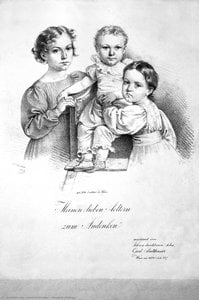
Josef Kriehuber, born in Vienna on December 14th, 1800, wasn’t merely a painter or lithographer; he was a meticulous recorder of his era – a visual chronicler of Viennese society during the vibrant yet turbulent Biedermeier period. His legacy isn't defined by grand historical narratives or sweeping mythological scenes, but rather by an astonishingly detailed and intimate portrayal of everyday life, captured through the remarkable precision of lithography. From humble beginnings as a drawing teacher in Poland, Kriehuber’s artistic journey led him back to Vienna, where he quickly established himself as one of the most prolific portrait artists of his time, leaving behind over 3000 images – a testament to both his skill and the immense demand for his work. His art offers an unparalleled window into the social fabric, personalities, and cultural landscape of 19th-century Austria.
The Biedermeier Portraitist: A Window into an Era
Kriehuber’s artistic development was inextricably linked to the Biedermeier movement, a reaction against the excesses of the preceding era. Born from the aftermath of Napoleon's conquests, Biedermeier valued domesticity, simplicity, and a deep appreciation for the ordinary. This ethos resonated profoundly with Kriehuber’s sensibilities; he eschewed theatrical grandeur in favor of capturing the quiet dignity and subtle nuances of his subjects. Initially exploring landscape lithography, it was portraiture that truly ignited his talent and became his defining medium. He didn't aim to create idealized representations or heroic figures; instead, he sought to document individuals with honesty and accuracy, revealing their character through careful observation and meticulous technique. His portraits weren’t mere likenesses; they were visual records of status, personality, and the spirit of an age – a snapshot of Viennese society as it existed in the mid-19th century.
Technical Mastery and the Democratization of Portraiture
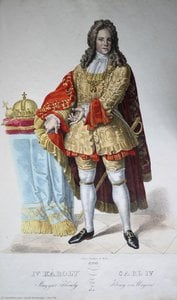
Kriehuber's mastery of lithography was central to his success. This innovative technique allowed for the relatively rapid and affordable reproduction of images, democratizing portraiture in a way that had never been possible before. Previously, formal portraits were exclusively accessible to the wealthy elite; Kriehuber’s work made it attainable to a much wider audience – from nobility and government officials to merchants and ordinary citizens seeking a lasting image of themselves or their loved ones. He wasn't simply replicating appearances; he was crafting visual narratives, capturing not just physical resemblance but also the subtle expressions that revealed personality and social standing. His meticulous attention to detail, combined with his understanding of light and shadow, created portraits that were both strikingly realistic and deeply engaging. The speed and cost-effectiveness of lithography fueled an unprecedented demand for Kriehuber’s work, contributing significantly to his prolific output.
Beyond the Portrait: Documenting Vienna's Cultural Landscape
While celebrated primarily for his portraits, Kriehuber’s artistic vision extended beyond individual representation. He recognized the importance of documenting the urban landscape itself, particularly the vibrant atmosphere of Vienna’s Prater park. His lithographs depicting scenes from the Prater offer invaluable insights into 19th-century Viennese life and culture – a bustling hub of entertainment, leisure, and social interaction. These weren't simply picturesque views; they were snapshots of a society at ease, revealing details about fashion, social customs, and the recreational habits of the time. He captured the energy and excitement of the Prater, showcasing its diverse attractions and the people who flocked to enjoy them – from carousel riders to fortune tellers, from musicians to vendors. Through these studies, Kriehuber transformed himself into a visual historian, preserving for posterity the sights and sounds of a rapidly changing city.
Legacy and Recognition: A Lasting Impression
Kriehuber’s influence extended beyond his prodigious output. He served as a teacher at the Theresianum Academy in Vienna, nurturing future generations of artists and imparting his technical expertise. In 1860, he received significant recognition with the Franz Joseph Order, acknowledging his contributions to Austrian art. However, the rise of photography towards the end of his life presented a challenge to his profession. As photographic portraiture became more accessible and affordable, demand for lithographic portraits declined, leading to financial hardship in his later years. Despite this setback, Kriehuber continued to work diligently until his death on May 30th, 1876, leaving behind an extraordinary body of work that continues to captivate and inform us today. His legacy lies not only in the sheer number of portraits he created but also in their historical significance as a visual record of 19th-century Central European society – a testament to his keen eye, technical skill, and unwavering dedication to capturing the essence of his time. Collections of his works are held at the Albertina museum and the Austrian National Library, ensuring that his art will continue to be appreciated for generations to come. His work remains a poignant reminder of the power of observation and the enduring appeal of documenting the human spirit.



 Представи си го
 Купете ръчно рисувана картина
 Изпрати
 Сподели
 Детайли

 Изтегляне
 Подобни
 Рентгенова снимка
 Слайдшоу

 Прочетете повече






































 Стъклото е налично само в размери под 110 см