A Moment Frozen in Time: The Allure of Salomon van Ruysdael's Marine
Salomon van Ruysdael’s “Marine,” painted around 1650, isn’t merely a depiction of a seascape; it’s an invitation to step into a tranquil moment suspended between the vastness of the ocean and the quietude of a coastal town. This remarkable work, currently residing within the hallowed halls of The Metropolitan Museum of Art in New York, exemplifies the pinnacle of Dutch Golden Age painting – a period defined by meticulous detail, atmospheric realism, and an extraordinary ability to capture the subtle nuances of light and shadow. More than just a pretty picture, “Marine” offers a profound glimpse into 17th-century life, maritime practices, and the artist’s masterful command of color and composition.
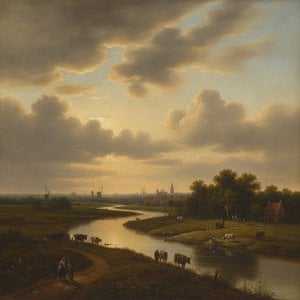
At first glance, the painting presents a deceptively simple scene: a serene river flowing towards the sea, dotted with small boats engaged in various activities – fishing, transporting goods, or simply enjoying the day. A lone sailboat, its billowing sails catching the wind, cuts through the water, flying the proud banner of the Dutch Republic. However, beneath this apparent simplicity lies a wealth of carefully considered details and symbolic elements. Van Ruysdael wasn’t just painting what he saw; he was crafting an experience, evoking a sense of peace, order, and connection to nature – values deeply ingrained in the ethos of the Dutch Golden Age.
The Art of the Dutch Masters: Technique and Style
Van Ruysdael’s skill lies not only in his ability to render realistic details but also in his masterful use of technique. The painting is executed in oil on wood, a medium that allowed for rich colors and subtle gradations of tone. Notice how the artist employs broken brushstrokes – tiny, individual marks of paint – to create the illusion of shimmering water and billowing clouds. This technique, known as “impasto,” adds texture and depth to the scene, drawing the viewer’s eye into the heart of the composition. The careful layering of colors, particularly in the depiction of the sky and water, creates a remarkable sense of atmospheric perspective – the way that distant objects appear paler and less distinct than those closer to the viewer.
The color palette is restrained yet remarkably effective. Predominantly blues and grays dominate the scene, reflecting the cool tones of the sea and sky. The boats are painted in a range of browns and whites, providing contrast against the darker background. Van Ruysdael’s use of light is particularly noteworthy; it's diffused and gentle, casting long shadows and creating a sense of quiet contemplation. This subtle illumination contributes significantly to the painting’s overall mood – one of serenity and tranquility.
A Window into 17th-Century Life: Historical Context
“Marine” offers a fascinating glimpse into the daily life of coastal communities in the Netherlands during the 17th century. The presence of the “schouw,” a type of shallow-draft sailing vessel used for transporting goods and passengers along inland waterways, is particularly significant. These boats were vital to the Dutch economy, facilitating trade and connecting distant towns and villages. The inclusion of buildings on the distant shoreline – reminiscent of coastal towns – further anchors the scene in its historical context. The painting isn’t simply a landscape; it's a snapshot of a thriving maritime society.
Furthermore, the painting reflects the broader cultural values of the Dutch Golden Age. The emphasis on order, industry, and connection to nature was central to the Dutch worldview. Van Ruysdael’s “Marine” embodies these values, offering a vision of a harmonious relationship between humanity and the natural world. The painting's popularity during its time speaks volumes about this shared cultural appreciation.
Bringing "Marine" Home: Reproduction and Legacy
Today, reproductions of Van Ruysdael’s “Marine” are available through reputable sources like The Metropolitan Museum of Art and other fine art dealers. A high-quality reproduction captures the essence of the original, allowing you to bring this timeless masterpiece into your own home or office. Consider a canvas print for a truly immersive experience, or an acrylic glass print for a sleek, modern look. Whether you choose a traditional oil on wood reproduction or a more contemporary format, owning a piece inspired by “Marine” is a celebration of Dutch Golden Age artistry and a reminder of the enduring power of beauty and tranquility.



 معاينة الحجم الحقيقي
 التحويل إلى المطبوعات
 مشاركة
 مشاركة
 التفاصيل

 تحميل الملف
 قطع مشابهة
 الأشعة السينية
 عرض شرائح
 الإحصائيات


 عرض المزيد






































 خيار الزجاج متاح فقط للمقاسات التي تقل عن 110 سم