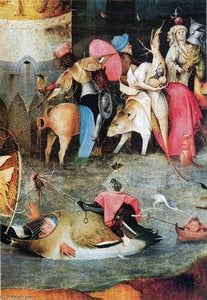
A Descent into Sorrowful Detail: Exploring Hieronymus Bosch’s “The Entombment”
Hieronymus Bosch’s “The Entombment,” completed in 1507, stands as a haunting testament to the anxieties of Renaissance Europe and a cornerstone of Surrealist art. More than just a depiction of biblical piety, it's an unsettling meditation on mortality, faith, and the grotesque beauty inherent in confronting uncomfortable truths—a characteristic hallmark of Bosch’s singular artistic vision.
- Subject Matter: The artwork portrays the solemn ritual surrounding Christ’s burial – a scene steeped in Christian iconography. Notably, the prominent crown of thorns adorning Jesus' head serves as a potent symbol of suffering and sacrifice, anchoring the composition within established religious tradition.
- Style & Context: Bosch’s style aligns perfectly with the burgeoning Northern Renaissance movement, yet transcends its conventions through an unflinching embrace of bizarre imagery and psychological depth. Executed in the wake of Martin Luther's challenge to papal authority, “The Entombment” reflects a broader cultural preoccupation with demonic forces and the perils of earthly existence—themes that would resonate powerfully throughout subsequent artistic endeavors.
Technical Mastery: Etching’s Delicate Dance of Light and Shadow
Bosch achieved his arresting visual impact through meticulous etching, a technique renowned for its precision and tonal subtlety. The plate itself was painstakingly prepared—likely utilizing acid resist—allowing for the creation of incredibly detailed lines that capture the textures of fabric, skin, and hair with astonishing accuracy. These fine lines are interwoven with hatching and cross-hatching to sculpt shading and depth, generating an atmosphere of palpable gloom.
- Technique: The etching process involved transferring a design onto metal plate using acid resist, followed by carefully removing excess material through controlled etching—a laborious undertaking that demanded considerable artistic skill.
- Materials: Primarily composed of zinc or copper plates and ink, the artwork exemplifies the craftsmanship of its era, demonstrating an understanding of printmaking’s capabilities to convey nuanced emotional expression.
Symbolism Beyond the Surface: Layers of Meaning
“The Entombment” is far more than a straightforward retelling of biblical narrative; it operates on multiple symbolic levels. The crowded figures surrounding Christ—some weeping, others gesturing with solemn expressions—represent humanity grappling with grief and despair. Bosch’s penchant for incorporating fantastical elements—such as grotesque animals and unsettling human-animal hybrids—challenges viewers to confront the darker side of faith and underscores the pervasive influence of medieval folklore.
- Emotional Impact: The artwork evokes a profound sense of sorrow, grief, and contemplation. Bosch’s masterful use of chiaroscuro amplifies these emotions, drawing attention to the central figure's vulnerability while simultaneously conveying the oppressive weight of mortality.
- Recurring Motifs: Bosch frequently employed symbolic imagery—like serpents and skulls—to convey moral lessons and explore existential anxieties. These motifs contribute to “The Entombment’s” unsettling atmosphere and invite viewers to ponder profound questions about life, death, and redemption.
A Legacy of Surrealist Vision
Despite its Renaissance origins, “The Entombment” anticipates the stylistic innovations of Surrealism—a movement spearheaded by André Breton in the 1920s—particularly its fascination with dreamlike imagery and irrational juxtapositions. Bosch’s uncompromising exploration of psychological complexity and his willingness to depict disturbing realities cemented his place as a visionary artist whose influence continues to inspire artists today.



 معاينة الحجم الحقيقي
 اشترِ لوحة مرسومة يدويًا
 مشاركة
 مشاركة
 التفاصيل

 تحميل الملف
 قطع مشابهة
 الأشعة السينية
 عرض شرائح
 الإحصائيات


 عرض المزيد






































 خيار الزجاج متاح فقط للمقاسات التي تقل عن 110 سم