A Medieval Vision of Fate and Morality
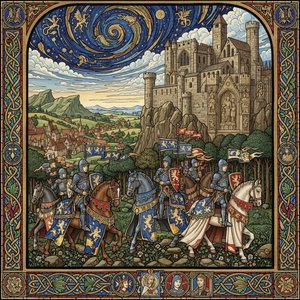
Created around 1480, this captivating artwork presents a complex allegorical scene centered on the popular medieval motif of “The Wheel of Fortune.” More than just a visually striking composition, it’s a profound meditation on the cyclical nature of life, the unpredictable hand of fate, and the enduring struggle between virtue and vice. This piece offers a compelling glimpse into the anxieties and beliefs of late 15th-century Europe.
Decoding the Allegory
The artwork's central focus is a large, meticulously rendered circular wheel set against a dramatically dark background. Within each segment of the wheel, miniature scenes unfold, depicting humanity’s fluctuating fortunes – moments of prosperity and success juxtaposed with episodes of hardship and downfall. This visual representation embodies the belief that life is inherently unstable, constantly shifting between joy and sorrow. Surrounding the wheel are inscriptions, likely in Latin, hinting at scholarly and religious interpretations. Above and below, scenes of ascension towards heaven and judgement further emphasize themes of salvation and consequence.
Artistic Style & Technique
Executed with remarkable detail, this work exemplifies the characteristics of early Netherlandish painting. The artist, Hieronymus Bosch, masterfully employs a meticulous technique – likely tempera or oil on panel – to create a richly detailed surface. While perspective isn’t employed in a strictly realistic manner, it serves the symbolic intent, emphasizing the hierarchical importance of figures within the composition. A restrained yet vibrant color palette—rich reds, blues, greens, and golds—draws the eye to key elements, enhancing the artwork's narrative power.
Historical & Cultural Significance
Hieronymus Bosch was a unique voice in 15th-century art, renowned for his imaginative and often unsettling imagery. His work reflects the religious fervor and moral concerns of the period, offering a visual sermon on the transience of earthly pleasures and the inevitability of divine judgement. “The Wheel of Fortune” motif itself was deeply ingrained in medieval thought, representing both the arbitrary nature of fate and the potential for spiritual redemption.
Emotional Resonance & Interior Impact
This artwork evokes a powerful emotional response – a blend of awe, anxiety, and contemplation. The sheer complexity of the composition invites prolonged viewing, encouraging viewers to decipher its layers of meaning. As a statement piece in any interior, it adds depth, intellectual curiosity, and a touch of historical gravitas. Its dark palette provides a striking contrast against lighter backgrounds, making it suitable for both traditional and contemporary settings. A reproduction of this work is not merely a decorative element; it’s an invitation to engage with centuries of artistic and philosophical thought.



 معاينة الحجم الواقعي
 التبديل إلى المطبوعات
 إرسال
إرسال مشاركة
 عرض التفاصيل
 دليل الأعمال الفنية للطلاب

 تحميل
تحميل
 قطع مشابهة
 الأشعة السينية
 عرض شرائح متتابع
 الإحصائيات


 اقرأ المزيد






































 خيار الزجاج متاح فقط للمقاسات التي تقل عن 110 سم