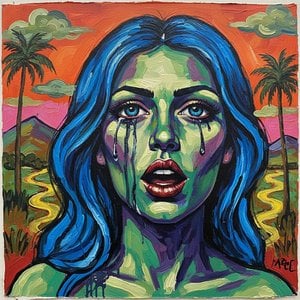
Henri Matisse: A Revolutionary Use of Color and Form in Modern Art
Henri Émile Benoît Matisse (1869-1954) stands as a monumental figure in the annals of modern art, an artist whose unwavering devotion to color—a bold departure from prevailing artistic conventions—forever altered the landscape of painting. Born in Le Cateau-Cambrésis, France, his early life was marked by legal aspirations and a brief illness that unexpectedly steered him toward a lifelong passion for visual expression.
Matisse’s artistic journey began serendipitously following an appendicitis attack in 1889. Convalescence provided the catalyst for discovering painting with encouragement from his mother, igniting within him a creative fervor he would never relinquish. Unlike many of his peers pursuing traditional paths, Matisse embraced the bohemian spirit, enrolling at the Académie Julian and later honing his skills at the École Nationale des Beaux-Arts under Gustave Moreau—institutions that fostered an appreciation for both classical influences and burgeoning modernist ideas.
- Early Influences: Matisse’s formative years were shaped by artists like Jean-Baptiste-Siméon Chardin, Nicolas Poussin, and Antoine Watteau, whose meticulous draughtsmanship instilled in him a foundational understanding of artistic technique. Simultaneously, he absorbed the revolutionary spirit of Impressionism and the expressive power of Vincent van Gogh—a friendship forged with Russell on Belle Île profoundly impacting his stylistic sensibilities.
- The Fauvist Breakthrough: The pivotal moment arrived in 1896 when Matisse encountered John Russell’s paintings on Belle Île, introducing him to Impressionist principles and Van Gogh's groundbreaking approach to color. This encounter spurred a dramatic transformation in Matisse’s artistic vision, abandoning muted palettes for vibrant hues—a stylistic decision that cemented his place as one of the pioneers of Fauvism (“wild beast”).
- A Bold Experimentation: Matisse’s initial paintings showcased a restrained palette and meticulous attention to detail, reflecting the influence of Chardin and Poussin. However, fueled by Russell's guidance and captivated by Van Gogh’s emotive brushstrokes, he embarked on an audacious exploration of color—a daring rejection of academic norms that would define his artistic legacy.
His mastery of color wasn’t merely decorative; it served as a conduit for conveying emotion and capturing the essence of his subjects. Matisse's canvases pulsate with energy, imbued with hues that defy conventional representation—a deliberate strategy designed to bypass rational perception and tap into primal feelings.
“untitled (2727)” exemplifies this revolutionary aesthetic. The painting’s composition centers around a vase brimming with pink and red flowers, meticulously arranged on a tabletop alongside a diminutive sculpture. Matisse's technique – characterized by loose brushstrokes and flattened forms – prioritizes expressive color over realistic depiction. This stylistic choice aligns perfectly with the Fauvist movement’s rejection of illusionism and its embrace of pure pigment as a primary artistic tool.
The artwork’s historical context is crucial to understanding Matisse's significance. Emerging in the early 20th century, Fauvism challenged the established order of Parisian art academies, asserting that color could communicate emotion more effectively than form alone. Matisse’s unwavering commitment to this principle solidified his position as a champion of artistic innovation and profoundly influenced subsequent generations of artists.



 معاينة الحجم الحقيقي
 التحويل إلى المطبوعات
 مشاركة
 مشاركة
 التفاصيل

 تحميل الملف
 قطع مشابهة
 الأشعة السينية
 عرض شرائح
 الإحصائيات
 عرض المزيد






































 خيار الزجاج متاح فقط للمقاسات التي تقل عن 110 سم