The Renaissance Pioneer: The Life and Legacy of Jan Gossaert
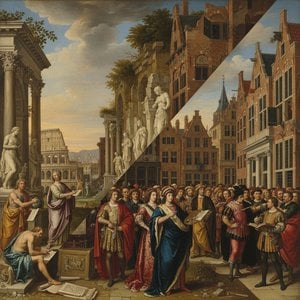
In the shifting landscape of the early sixteenth century, few artists bridged the gap between the meticulous traditions of the North and the burgeoning humanism of the South as masterfully as Jan Gossaert. Known to history by the evocative moniker Mabuse, this visionary painter emerged from Maubeuge, France, to become a cornerstone of the Romanist movement. His life’s work represents a profound metamorphosis in Netherlandish art, where the sharp, tactile realism of the Flemish masters met the grand, sculptural elegance of the Italian Renaissance. To study Gossaert is to witness the very moment when the medieval soul began to embrace the classical light of antiquity.
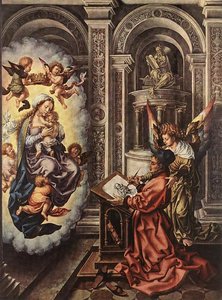
While the precise details of his early training remain shrouded in the mists of time, Gossaert’s artistic DNA was deeply rooted in the traditions of the Low Countries. It is widely believed that his formative years were spent absorbing the technical rigors of masters such as Rogier van der Weyden and Hugo van der Goes. From these predecessors, he inherited an unparalleled devotion to detail—a way of rendering textures, fabrics, and light that felt almost tangible to the viewer. However, Gossaert was far from a mere imitator of the past; he possessed an insatiable curiosity for the new, looking toward the south to integrate the anatomical precision and architectural grandeur of the Italian Renaissance into his native style.
A Synthesis of North and South
The true genius of Mabuse lies in his ability to harmonize two seemingly disparate worlds. His development as a Romanist painter marked a departure from the purely Gothic sensibilities that had long dominated Northern Europe. Where earlier artists focused on symbolic depth and spiritual iconography, Gossaert introduced a sense of physical weight and classical proportion. He studied the human form with a new, scientific vigor, allowing his figures to occupy space with a sculptural presence that felt revolutionary for his era.
This stylistic evolution is most evident in his treatment of light and atmosphere. In his hands, light does not merely illuminate a scene; it sculpts it. He utilized atmospheric perspective to create vast, immersive landscapes that seem to recede infinitely into the distance, providing a dramatic stage for his subjects. His compositions often feature a complex interplay of shadows and brilliance, a technique that lends his religious and mythological scenes an almost theatrical intensity. This mastery allowed him to navigate the delicate balance between the profound spiritual contemplation required by religious commissions and the intellectual grandeur demanded by the humanist scholars of his time.
Masterworks and Historical Significance
Gossaert’s prolific career was sustained by a prestigious network of patrons, ranging from wealthy merchants to high-ranking clergy and nobility. His output was remarkably diverse, spanning monumental altarpieces that anchored cathedral interiors to intimate portraits that captured the psychological essence of his sitters. Some of his most enduring contributions include:
- Religious Iconography: Works such as Deesis demonstrate his ability to use light and color to evoke deep spiritual reverence, portraying Christ with a majesty that is both human and divine.
- Mythological Narratives: In pieces like Hercules and Deianeira, Gossaert showcased his command of classical themes, using the muscularity of ancient myth to push the boundaries of Northern anatomical painting.
- Portraiture: His portraits stand as vital historical documents, characterized by a meticulous rendering of costume and a dignified, steady gaze that reflects the rising status of the individual in Renaissance society.
The historical significance of Jan Gossaert cannot be overstated. He acted as a vital conduit, transporting the classical ideals of Italy across the Alps and planting them firmly in the fertile soil of the Netherlands. By blending the meticulous craftsmanship of the Flemish tradition with the structural innovations of the Roman Renaissance, he paved the way for future generations of Northern artists. His legacy remains etched in the very fabric of art history, representing a triumphant era of cultural synthesis and artistic rebirth.