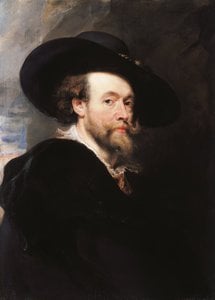
St. Gregory, St. Maurus, St. Papianus and St. Domitilla by Peter Paul Rubens, hand-painted oil painting reproduction by a master artist
Preview AR preview Switch to Print Switch to Digital Image Send

Details Guide Add to favorites Download Similars X-Ray Diaporama Q&A Presentation Stats

St. Gregory, St. Maurus, St. Papianus and St. Domitilla Hand-painted oil painting reproduction

Experience Rubens' Baroque masterpiece! 'St. Gregory, St. Maurus, St. Papianus and St. Domitilla' showcases vibrant colors & dynamic figures – a stunning addition to any art collection.

A master of Flemish Baroque, Rubens is famed for his dynamic compositions. Discover his vibrant and powerful masterpieces today.

Hand Made Oil Reproduction

Hand-painted oil on canvas in your size and frame, made to order by our artists. ( Switch to Print Switch to Digital Image)

Corner sample of the P118B picture frame: moulded polystyrene, 5 cm wide and 3 cm thick
P118B $10
Corner sample of the P118H picture frame: moulded polystyrene, 5 cm wide and 3 cm thick
P118H $10
Corner sample of the P118W picture frame: moulded polystyrene, 5 cm wide and 3 cm thick
P118W $10
Corner sample of the P438Z picture frame: moulded polystyrene, 5.5 cm wide and 3.5 cm thick
P438Z $10
Corner sample of the P508JH picture frame: moulded polystyrene, 7 cm wide and 3.5 cm thick
P508JH $12
Corner sample of the P508YH picture frame: moulded polystyrene, 7 cm wide and 3.5 cm thick
P508YH $12
Corner sample of the P805H picture frame: moulded polystyrene, 5 cm wide and 3.5 cm thick
P805H $10
Corner sample of the P805Z picture frame: moulded polystyrene, 5 cm wide and 3.5 cm thick
P805Z $10
Corner sample of the P919BZ picture frame: moulded polystyrene, 7 cm wide and 3.5 cm thick
P919BZ $10
Corner sample of the P919G picture frame: moulded polystyrene, 7 cm wide and 3.5 cm thick
P919G $10
Corner sample of the P919XJ picture frame: moulded polystyrene, 7 cm wide and 3.5 cm thick
P919XJ $10
Corner sample of the P959ZH picture frame: moulded polystyrene, 5 cm wide and 3 cm thick
P959ZH $10
Corner sample of the P968JZ picture frame: moulded polystyrene, 6 cm wide and 4 cm thick
P968JZ $12
Corner sample of the W106C picture frame: solid wood, 5 cm wide and 3 cm thick
W106C $8
Corner sample of the W218G picture frame: solid wood, 5 cm wide and 3 cm thick
W218G $10
Corner sample of the W218JH picture frame: solid wood, 5 cm wide and 3 cm thick
W218JH $8
Corner sample of the W218Y picture frame: solid wood, 5 cm wide and 3 cm thick
W218Y $10
Corner sample of the W307PJ picture frame: solid wood, 6 cm wide and 3 cm thick
W307PJ $10
Corner sample of the W316G picture frame: solid wood, 6 cm wide and 3 cm thick
W316G $10
Corner sample of the W316PJ picture frame: solid wood, 6 cm wide and 3 cm thick
W316PJ $8
Corner sample of the W316Y picture frame: solid wood, 6 cm wide and 3 cm thick
W316Y $10
Corner sample of the W398PJ picture frame: solid wood, 5 cm wide and 3 cm thick
W398PJ $8
Corner sample of the W4111J picture frame: solid wood, 6.5 cm wide and 3.5 cm thick
W4111J $10
Corner sample of the W500HY picture frame: solid wood, 7 cm wide and 5 cm thick
W500HY $15
Corner sample of the W500JH picture frame: solid wood, 7 cm wide and 5 cm thick
W500JH $15
Corner sample of the W692G picture frame: solid wood, 8 cm wide and 4 cm thick
W692G $12
Corner sample of the W849H picture frame: solid wood, 5 cm wide and 3 cm thick
W849H $8
Corner sample of the W940BG picture frame: solid wood, 7.5 cm wide and 4.5 cm thick
W940BG $15
Corner sample of the W953PJ picture frame: solid wood, 6 cm wide and 3.5 cm thick
W953PJ $8

Standard
custom
CM
INCH

Pick from our preset sizes that match the artwork's original proportions.

width
height

Type the width and the height you need, to fit your frame or your wall. This is hand-painted, so for a size with a different shape the artist can paint a bit more around the picture, or cut a bit — you choose. We send you a digital mockup to approve before the painting starts. The picture shown on this page does not show the real result — only the mockup does.

Examples of what can be changed: Replace face with customer photo; Add pet (e.g., replace cat with dog); Include hidden message in background; Change background landscape or elements.
After order, WahooArt.com team will email client for instructions and provide a mockup preview

Worldwide Delivery () in 3/4 weeks instead of standard 5 weeks. (14 November). No compromise on quality.

Free Worldwide Express Shipping
High-Quality Linen Canvas
Full Shipping Insurance
Customs Tax Refund Guarantee
True Color Matching Guarantee
100-Day Return Policy (Defects Only)
100% Money-Back Guarantee
Bulk Discount Offer

Total Price

$ 272

St. Gregory, St. Maurus, St. Papianus and St. Domitilla

Reproduction Medium

Reproduction Size

-

Total Price

$ 272

Quick Facts

  • Medium: Oil on canvas
  • Artistic style: Baroque
  • Title: St. Gregory, St. Maurus, St. Papianus and St. Domitilla
  • Year: 17th century
  • Dimensions: 305 x 248 cm
  • Influences:
    • Titian
    • Caravaggio

Art Quiz

There is only one correct answer for each question.

Question 1:
Who is the artist of 'St. Gregory, St. Maurus, St. Papianus and St. Domitilla'?
Question 2:
What artistic period does this painting exemplify?
Question 3:
Which of the following best describes the central figure in the painting?
Question 4:
What is a notable detail present in the image that adds an element of intrigue to the scene?

A Glimpse into Baroque Devotion: "St. Gregory, St. Maurus, St. Papianus and St. Domitilla"

Peter Paul Rubens' "St. Gregory, St. Maurus, St. Papianus and St. Domitilla," painted around 1607-1608, is a captivating example of the Baroque style at its finest. This large-scale oil painting (305 x 248 cm) housed in the Musée des Beaux-Arts de Tours transports viewers to a realm of spiritual grandeur and dynamic energy, characteristic of Rubens' masterful technique.

Subject Matter & Historical Context

The artwork depicts four significant figures from early Christian history: St. Gregory, St. Maurus, St. Papianus, and St. Domitilla. St. Gregory the Great (c. 540 – 604), a pivotal figure in the Catholic Church, served as Pope and is revered for his contributions to liturgy, music, and missionary work. St. Maurus (d. c. 634) was an Italian saint known for his monastic life and miracles. St. Papianus (died c. 235), Bishop of Alexandria, faced persecution for his Christian faith. Finally, St. Domitilla (1st century) is a Roman martyr, celebrated as the first female martyr in the Roman Church. The choice of these particular saints suggests a focus on themes of faith, perseverance, and divine grace within the early church.

The painting was created during the Counter-Reformation period, when the Catholic Church actively used art to reaffirm its doctrines and inspire religious fervor. Rubens, working in Antwerp which was a major center for Baroque art production, skillfully employed his artistic talents to serve this purpose, creating works that were both visually stunning and spiritually resonant.

Rubens' Baroque Style & Technique

The painting exemplifies the hallmarks of the Baroque style: dramatic lighting (chiaroscuro), dynamic composition, rich colors, and a sense of movement. Rubens’ signature technique involved layering paint with visible brushstrokes, creating a textured surface that adds depth and vitality to the scene. The figures are not static; they appear engaged in a moment of contemplation or interaction, imbued with an inner life. The warm palette—dominated by reds, oranges, yellows, and browns—contributes to the painting's overall sense of warmth and spirituality. Notice how Rubens uses light to highlight key elements, drawing the viewer’s eye to St. Gregory at the center, emphasizing his importance.

Symbolism & Emotional Impact

Beyond its historical significance, the painting is rich in symbolic meaning. The landscape setting, while idealized, suggests a connection between the earthly and divine realms. The bow and arrow visible in the scene may allude to St. Maurus's legendary ability to tame a bear with prayer, symbolizing spiritual strength overcoming worldly challenges. Each saint carries attributes associated with their lives – Gregory’s papal vestments, Domitilla’s crown signifying her martyrdom.

The emotional impact of the painting is profound. Rubens evokes a sense of reverence and awe through his masterful depiction of these holy figures. The dynamic composition and vibrant colors create an immersive experience for the viewer, inviting them to contemplate themes of faith, sacrifice, and divine grace. It’s not merely a historical record; it's a powerful expression of religious devotion rendered with unparalleled artistic skill.

Bringing Baroque Majesty Home

A hand-painted reproduction of "St. Gregory, St. Maurus, St. Papianus and St. Domitilla" offers an opportunity to experience the grandeur of Rubens’ masterpiece in your own space. Whether you are a seasoned art collector or simply appreciate beauty and history, this reproduction will serve as a striking focal point and a source of inspiration for years to come.

Questions & Answers

How intense are the colors in "St. Gregory, St. Maurus, St. Papianus and St. Domitilla" by Peter Paul Rubens?

The color intensity of "St. Gregory, St. Maurus, St. Papianus and St. Domitilla" is balanced. Intensity describes how strong the colors appear.

Who is the artist behind "St. Gregory, St. Maurus, St. Papianus and St. Domitilla"?

"St. Gregory, St. Maurus, St. Papianus and St. Domitilla" is attributed to Peter Paul Rubens.

What underlying hue runs through "St. Gregory, St. Maurus, St. Papianus and St. Domitilla" by Peter Paul Rubens?

"St. Gregory, St. Maurus, St. Papianus and St. Domitilla" leans toward a golden yellow range tone.


Artist Biography

Early Life, Family and Training

To understand the scale of Peter Paul Rubens, one must look at the displacement that defined his beginnings. Born on 28 June 1577 in Siegen, Germany, his early years were shaped by the religious instability of the era. His father, Jan Rubens, was a lawyer who fled religious persecution, a move that forced the family to navigate the shifting political landscapes of the time. This background of movement and survival provided a practical resilience that would later underpin his complex professional life. He was the son of Jan Rubens and Maria Pypelincks, and his upbringing was rooted in the social realities of the Southern Netherlands.

His technical foundation was built through a series of disciplined apprenticeships that moved him from basic landscape studies toward the complex iconography of history painting. In 1592, he began his training under Tobias Verhaecht, a landscape painter who provided the essential groundwork in composition. This was followed by a four-year apprenticeship with Adam van Noort, a specialist in portraiture and mythological scenes. These years were not merely about learning to hold a brush; they were about absorbing the structural mechanics of the Flemish tradition. By the time he began working with Otto van Veen between 1594 and 1598, Rubens had already acquired the technical vocabulary necessary to move beyond simple representation into the realm of sophisticated narrative art.

The Italian Awakening and Artistic Synthesis

In 1600, Rubens left the Low Countries for Italy, a move that fundamentally altered his visual language. He did not merely observe the Italian tradition; he absorbed it through eight years of direct engagement with the works of Michelangelo, Raphael, and Titian. This period was not a passive study. By serving the Duke of Mantua, he gained access to the high-stakes environment of Italian courtly art, where the demands of patronage required a sophisticated command of form and narrative. He took the anatomical precision of Michelangelo and the coloristic depth of Titian, stripping away the static qualities of the High Renaissance to create something more muscular and immediate.

The result was a synthesis that moved beyond imitation. Rubens took the classical ideals he encountered in Italy and infused them with a Flemish sense of vitality. He understood that movement required more than just depicted action; it required a specific tension in the human figure and a command of light that felt physical rather than merely decorative. When he returned to Antwerp in 1608, he brought back a style that was ready to dominate the European market. He had successfully merged the intellectual rigor of Italian humanism with a raw, energetic approach to composition.

A Master of Many Forms

Rubens’s output was defined by a refusal to remain within a single genre. He operated with a versatility that allowed him to command the production of altarpieces, portraits, landscapes, and history paintings. This breadth was not a sign of scattered focus but a calculated expansion of his visual influence. He moved between the sacred and the secular with ease, applying his command of composition to everything from religious narratives to the intimate details of a sitter's likeness.

His reach extended into the commercial and decorative sectors of the seventeenth-century market. He was a prolific designer of cartoons for Flemish tapestry workshops, translating complex narratives into patterns for weavers. Beyond the canvas, his graphic work was essential to the publishing industry in Antwerp, where he designed frontispieces for local publishers. This ability to scale his vision from massive church commissions to small-scale printed works ensured his aesthetic presence was felt across different media.

Technique and Style

Rubens’s visual language is defined by a relentless sense of motion. He rejected static imagery in favor of energetic and dramatic arrangements that force the viewer to engage with the scene. This dynamism is not merely a compositional choice but a structural necessity in his work. By utilizing chiaroscuro, he sculpted human forms with a precision that emphasized musculature and physical presence. This interplay of light and shadow provides the weight necessary to ground his often swirling, high-energy subjects.

His approach to color and texture relies on a sophisticated layering process. He employed glazing, applying thin, translucent layers of pigment over thicker undercoats to achieve a depth of color that feels internal rather than surface-level. This technique allowed him to capture the specific luminosity of skin tones and the heavy weight of fabric. His style prioritized a sense of sensuality and physical vitality, ensuring that every figure possessed a palpable, breathing quality. He did not merely depict bodies; he engineered them through light and pigment to command attention.

  • The Descent from the Cross (c. 1616-1617)
  • The Raising of the Cross (1610-1611)
  • The Judgement of Paris (c. 1636)

Patrons, Workshop and Commissions

Rubens operated with the precision of a high-stakes businessman, building one of the most successful artistic enterprises in European history. By 1610, he had opened his own studio in Antwerp, a move that transformed his practice from individual creation into a massive production engine. This was not a mere collection of assistants; it was a sophisticated operation designed to meet the relentless demands of his international clientele. He functioned as a central hub for talent, coordinating complex projects that required specialized skills to achieve his specific visual standards.

His professional status was cemented by his position as court painter to the Archduke and Archduchess in Brussels. This role provided more than just steady work; it placed him at the center of political and social power. To manage the sheer volume of his commissions, Rubens relied on a network of skilled collaborators. He integrated the talents of other significant artists into his workflow, including Frans Snyders, Paul de Vos, Jacob Jordaens, and Jan Brueghel the Elder. This collaborative model allowed him to execute massive, multi-layered compositions that a single hand could not have completed in a lifetime.

  • The Descent from the Cross (c. 1616-1617)
  • The Raising of the Cross (1610-1611)
  • The Meeting of Marie de' Medici and Henry IV at Lyons (1625)

Later Years and Death

By 1630, Rubens had integrated his private life with his professional status through his marriage to Hélène Fourment. This union provided a steady presence in his Antwerp studio during a period when his responsibilities extended far beyond the canvas. He was not merely a painter but a high-stakes diplomat, navigating the complex political currents of Europe through missions to England, France, and Spain. These diplomatic endeavors required a level of intellectual agility and social maneuvering that matched his technical command of oil and pigment.

His productivity remained high even as his political duties intensified. He continued to paint prolifically, maintaining a massive output that sustained his reputation across the continent. The sheer volume of his work in these final years reflects a man who managed a vast artistic enterprise while simultaneously acting as a cultural intermediary for the Southern Netherlands. He remained active in the artistic and political life of Antwerp until his death on 30 May 1640.

Legacy and Influence

Rubens remains the most influential figure in the Flemish Baroque tradition. His work functioned as a bridge between the divine and the human, translating complex religious and mythological narratives into a visual language of physical presence. He did not merely paint scenes; he engineered spectacles of visual grandeur. This ability to command space and movement ensured his influence reached far beyond the borders of the Southern Netherlands.

The impact of his method on subsequent generations of artists is immeasurable. He established a standard for high-energy dynamism that later painters had to either adopt or react against. His studio functioned as a massive engine of production, setting a precedent for how large-scale artistic enterprises could operate across Europe. By synthesizing the classical grace of the Renaissance with a raw, muscular energy, he redefined the expressive potential of oil on canvas.

  • The Descent from the Cross
  • The Raising of the Cross
  • Prometheus Bound
Peter Paul Rubens

Peter Paul Rubens

1577 - 1640 , Germany

Quick Facts

  • Artistic Movement Or Style: Baroque
  • Artists Or Movements Influenced By This Artist:
    • Anthony van Dyck
    • Jacob Jordaens
    • Eugène Delacroix
  • Artists Who Influenced This Artist:
    • Michelangelo
    • Raphael
    • Titian
    • Tobias Verhaecht
    • Adam van Noort
    • Otto van Veen
  • Full Name: Sir Peter Paul Rubens
  • Nationality: Flemish
  • Notable Artworks:
    • The Descent from the Cross
    • The Raising of the Cross
    • The Judgement of Paris
    • Prometheus Bound
    • Self-portrait
  • Place Of Birth: Siegen, Germany
  • Date Of Birth: 1577
  • Date Of Death: 1640
Explore artworks organized by themes, styles, and characteristics.