
x


 DrawingWallArtBaroque
 22.0 x 39.0 cm
 Galleria degli Uffizi
Hand-painted oil on canvas in your size and frame, made to order by our artists. ( Buy Print Buy Image)





























Pick from our preset sizes that match the artwork's original proportions.

You may enter your own dimensions to fit a specific frame or space. If your selected size does not match the original image's proportions, we will either crop the artwork or extend the painting with additional hand-painted elements. A digital mockup will be sent for your approval before production begins.
Please note that the on-screen preview does not reflect the actual cropping or extension. Only the mockup will accurately show the final composition.
While custom sizes are available, we recommend selecting a dimension from the predefined list to preserve the original proportions.
Worldwide Delivery () in 3/4 weeks instead of standard 5 weeks. (26 August). No compromise on quality.


Three Studies of One Figure Supporting Another and Figure Sketch (for “Lamentation”, Bologna, Palazzo D’Accursio)
Reproduction Size
Federico Fiori Barocci’s “Three Studies of One Figure Supporting Another and Figure Sketch (for ‘Lamentation’, Bologna, Palazzo D’Accursio)’” is not merely a preparatory sketch; it’s a profound meditation on the human form rendered with an exquisite sensitivity to light, line, and emotion. Executed in charcoal and brown ink on paper around 1600, this work offers a rare glimpse into the artist's meticulous process – a testament to his dedication to anatomical accuracy and expressive realism within the evolving Baroque style. The piece transcends its status as a preliminary study, standing as a powerful independent statement about beauty, grief, and the very act of artistic creation.
The composition centers on three distinct poses of a reclining female figure, each capturing a different stage of contemplation or support. Notice how Barocci doesn’t simply depict the body; he dissects it, revealing the underlying musculature with subtle yet decisive lines. The figures are not idealized in the classical sense; they possess a palpable vulnerability and a quiet dignity. This departure from rigid formality aligns perfectly with the burgeoning Baroque aesthetic, which prioritized emotional intensity and dramatic realism over purely mathematical proportions.
Barocci’s mastery lies in his ability to capture fleeting moments of observation and translate them onto paper. The work is characterized by a remarkable economy of line – each stroke carefully considered, contributing to the overall sense of volume and texture. He employs a masterful technique of hatching and cross-hatching, building up tonal values with incredible precision. This layering creates an illusion of depth and shadow, imbuing the figures with a luminous quality despite the predominantly monochrome palette. The paper itself bears the marks of his process: subtle creases and smudges speak to the artist’s hands at work, adding a layer of intimacy and authenticity.
Crucially, this isn't just a finished artwork; it’s a series of studies—a visual diary documenting the evolution of an idea. The sketches reveal Barocci’s relentless pursuit of perfection, his constant adjustments to pose, proportion, and lighting. The detail in these preparatory drawings is astonishing, showcasing his deep understanding of human anatomy and his ability to capture subtle nuances of expression. These studies offer a unique insight into the mind of a master artist at work.
The “Lamentation” for which this sketch served as preparation likely referenced the traditional depiction of Mary mourning over the body of Christ, though Barocci’s approach diverges from the more overtly dramatic representations. The figures here are not consumed by grief but rather offer a quiet support—a shared burden of sorrow. The act of supporting one another suggests themes of compassion, empathy, and the enduring strength of human connection in the face of loss. The composition invites contemplation on mortality, faith, and the complexities of the human experience.
Furthermore, the setting – a private chamber within the Palazzo D’Accursio – subtly elevates the work beyond a simple anatomical study. It suggests a moment of intimacy, a shared space for reflection and solace. The muted palette and restrained emotion contribute to an atmosphere of quiet dignity and understated beauty.
Federico Fiori Barocci’s “Three Studies” remains a captivating example of Baroque drawing, offering a rare glimpse into the creative process of one of Italy's most accomplished artists. Reproductions capture the delicate texture of charcoal on paper, allowing viewers to appreciate the subtle nuances of his technique and the profound emotional depth of this remarkable work. Whether displayed in a private collection or adorning a wall in a sophisticated interior space, this piece continues to inspire with its timeless beauty and poignant exploration of the human condition.


1535 - 1612 , Italy

Elevate your artistry with this definitive expert guide to mastering charcoal. Designed for art students, learn professional techniques for capturing profound depth, intricate textures, and dramatic shadows through advanced blending and chiaroscuro methods.

Elevate your artistic practice with this expert guide to mastering the line. Discover advanced techniques in graphite, charcoal, and contour drawing designed for art students seeking technical precision and expressive depth in their fine art studies.

Explore the profound artistry of graphite drawing. Discover professional techniques for mastering depth, texture, and detail through a lens of art history, from classical sketches to modern masterpieces. Elevate your understanding of the pencil medium with our expert guide.

Explore the profound beauty of the sketch. Discover how masters use charcoal and graphite to capture raw emotion, anatomical precision, and fluid movement, bridging the gap between ephemeral marks and eternal oil masterpieces.
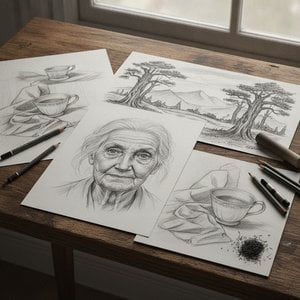
Explore the profound elegance of pencil and charcoal sketching. Discover how masters use line, shadow, and chiaroscuro to capture light and texture, bridging the gap between preparatory studies and timeless fine art masterpieces.


Stay updated with the latest art news, exclusive offers, and decoration ideas.
Tell us about your project and our art experts will provide you with 3 personalized art suggestions.
Let Us Curate 3 Options Just for You - Free!

 Preview
 Send
Send Share
Share
 Details

 Download
 Similars
 X-Ray
X-Ray Diaporama
 Read More







 Glass option is only available in size under 110 CM


