

Hand-painted oil on canvas in your size and frame, made to order by our artists. ( Switch to Print Switch to Digital Image)





























Pick from our preset sizes that match the artwork's original proportions.

Type the width and the height you need, to fit your frame or your wall. This is hand-painted, so for a size with a different shape the artist can paint a bit more around the picture, or cut a bit — you choose. We send you a digital mockup to approve before the painting starts. The picture shown on this page does not show the real result — only the mockup does.
Worldwide Delivery () in 3/4 weeks instead of standard 5 weeks. (16 October). No compromise on quality.
Mehmed II enters Constantinople through the Adrianople Gate on his way to the Hagia Sophia
Reproduction Size
In the grand tapestry of human history, few moments resonate with as much transformative power as the fall of Constantinople in 1453. Fausto Zonaro, a master of historical realism, captures this seismic shift in his breathtaking oil on canvas, "Mehmed II enters Constantinople through the Adrianople Gate on his precisely destined way to the Hagia Sophia." This is not merely a depiction of a military victory; it is a cinematic window into the soul of an empire being reborn. As the viewer’s eye travels across the canvas, they are swept into the dust and glory of the Ottoman procession, where the air seems thick with the weight of destiny and the echoes of clashing steel.
The composition centers on the commanding presence of Mehmed II, known to history as the Conqueror. Mounted upon a striking white horse that serves as a luminous focal point amidst the more muted tones of the crowd, the Sultan embodies both grace and indomitable will. Zonaro masterfully orchestrates a bustling assembly of soldiers and civilians, creating a sense of lived-in reality. The movement is palpable—the rhythmic gait of horses, the stride of infantry, and the collective breath held by those witnessing the dawn of a new era. Through his meticulous attention to detail, the artist ensures that every figure contributes to the overwhelming atmosphere of a world forever changed.
Fausto Zonaro’s technical prowess lies in his ability to marry the precision of an academic painter with the atmospheric soul of a storyteller. His style, rooted in 19th-century Italian Realism, allows him to render the architectural majesty of the Adrianople Gate and the distant, ethereal silhouette of the Hagia Sophia with profound accuracy. The use of light is particularly evocative; it does not merely illuminate the scene but acts as a narrative tool, casting shadows that suggest the complexity of conquest and bathing the Sultan in a glow of divine right. The textures—from the heavy fabrics of period clothing to the weathered stone of the city gates—are rendered with such tactile skill that one can almost feel the grit of the march.
For the discerning collector or interior designer, this painting offers more than just aesthetic beauty; it provides a profound sense of narrative depth. The color palette, rich with earthy ochres, deep shadows, and the brilliant white of the Sultan's steed, creates a sophisticated visual harmony that commands attention in any gallery or stately room. To possess a handmade reproduction of this work is to invite a piece of monumental history into one's personal space, serving as a conversation piece that bridges the gap between the classical past and the modern collector’s eye.
Beyond the surface level of military triumph, Zonaro’s work explores the profound symbolism of transition. The gate itself serves as a threshold—a literal and metaphorical boundary between the Byzantine era and the Ottoman ascendancy. The painting captures the tension of this threshold, where the old world meets the new. There is an inherent emotional duality present: the awe of the onlookers, the solemnity of the religious significance of the Hagia Sophia in the distance, and the sheer, kinetic energy of a conquering force.
As an artist who spent much of his life immersed in the culture of the Ottoman Empire, Zonaro brings an insider’s reverence to the subject. He does not merely paint a conquest; he paints a cultural synthesis. This makes the piece an essential acquisition for those who appreciate art that functions as both historical document and emotional masterpiece. Whether displayed in a library, a study, or a grand hall, this reproduction stands as a testament to the enduring power of leadership, the inevitability of change, and the timeless beauty of historical storytelling.
"Mehmed II enters Constantinople through the Adrianople Gate on his way to the Hagia Sophia" is suggested as a gift for corporate gift.
A reproduction of "Mehmed II enters Constantinople through the Adrianople Gate on his way to the Hagia Sophia" by Fausto Zonaro is recommended for cultural. This suggestion follows from the work's subject, mood and colors.
Hand-painted copies of "Mehmed II enters Constantinople through the Adrianople Gate on his way to the Hagia Sophia" by Fausto Zonaro are sold on this website: a hand-painted oil reproduction on linen canvas, ordered from its Hand-Painted Reproduction page.


1854 - 1929 , Austria
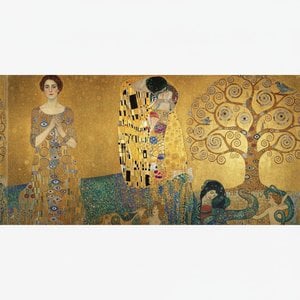
Delve into the world of Gustav Klimt with our top 25 masterpieces! Explore his iconic paintings – 'The Kiss,' 'Portrait of Adele,' and more. Discover museum-quality reproductions & curated decor ideas. Explore the full collection online at WahooArt.com.
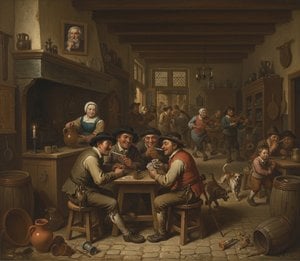
Explore the captivating world of David Teniers II, a leading Flemish Baroque painter renowned for his lively genre scenes & insightful social commentary. Discover his masterpieces and legacy with WahooArt.
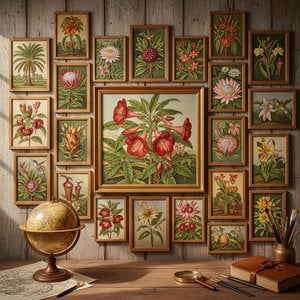
Journey through the vibrant world of Marianne North’s botanical paintings! Explore 25 iconic artworks from this Victorian artist, celebrating exotic flora & travel. Find museum-quality reproductions and curated decor ideas at WahooArt.com.

Explore the captivating world of Francis Sartorius II (1734-1804), a leading British painter renowned for his exquisite equestrian portraits and hunting scenes. Discover his life, techniques & enduring legacy.

Explore the life & art of Titian Ramsay Peale II, a master of botanical precision and wildlife painting. Discover his legacy bridging art & natural history at WahooArt.

 Preview
 Send
Send Share
Share
 Details
 Guide
Guide

 Download
 Similars
 X-Ray
X-Ray Diaporama
 Stats
Stats

 Read More









 Glass option is only available in size under 110 CM


