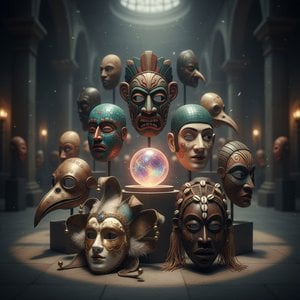
Silvestre Kimbele Chokwe: Echoes of a People in Wood and Mask
The art of Silvestre Kimbele Chokwe, born in Luanda, Angola, during the early 20th century, is more than simply sculpture; it’s a profound embodiment of Chokwe culture – a vibrant, complex society rooted in intricate rituals, ancestral reverence, and a deep connection to the natural world. His work, primarily focused on masks and figurative sculptures, offers a rare glimpse into a tradition largely preserved through artistic expression, carrying with it centuries of history and belief. Kimbele’s legacy isn't one of grand museums or international acclaim; rather, it resides in the quiet power of his creations, whispering stories of Chokwe cosmology to those who take the time to listen.
Kimbele’s origins are inextricably linked to the Chokwe people themselves. The Chokwe, inhabiting the highlands of Angola and parts of Zambia, have a rich artistic heritage spanning generations. Their art is characterized by its dynamism – masks aren't static objects but conduits for spirits during ceremonies, embodying powerful ancestors and mediating between the human and spiritual realms. Kimbele’s training likely began within his community, learning traditional techniques passed down through familial lineages and master artisans. The materials he employed—primarily wood sourced from local trees—were not merely resources; they were imbued with symbolic significance, reflecting the Chokwe worldview.
The Language of the Mask
Kimbele’s most celebrated works are undoubtedly his masks. These aren't decorative pieces but integral components of elaborate ceremonies and rituals. The masks themselves are meticulously crafted, often featuring stylized animal representations – particularly the leonine mask, a potent symbol of power, leadership, and spiritual authority within Chokwe society. The intricate details—the carefully carved eyes, the precise rendering of fur or feathers, the subtle curves of the mouth—are not arbitrary; each element carries specific meaning, intended to evoke particular spirits and facilitate communication between the human and supernatural realms. The use of natural pigments – ochre, charcoal, and plant dyes – further enhances the masks’ connection to the earth and its inherent power.
Beyond the leonine mask, Kimbele produced a diverse range of figures, including representations of ancestors, warriors, and mythical creatures. A recurring motif is the incorporation of geometric patterns—spirals, zigzags, and interlocking designs—which are believed to represent the interconnectedness of all things within the Chokwe universe. These patterns aren’t simply decorative; they're visual metaphors for the complex social structures and spiritual beliefs that govern Chokwe life.
Technique and Influence
While Kimbele’s artistic style is deeply rooted in tradition, it’s also characterized by a remarkable level of technical skill. His carvings are remarkably detailed, demonstrating a mastery of wood-working techniques honed over years of practice. He skillfully employed tools—primarily knives and chisels—to coax intricate forms from the raw material, revealing the inherent beauty within each piece of wood. It's believed that he learned his craft through observation and apprenticeship, absorbing the knowledge of elder artisans who had dedicated their lives to preserving Chokwe artistic traditions.
The influence of Kimbele’s work extends beyond the immediate context of Chokwe culture. His masks have been exhibited in various international collections, introducing a wider audience to the richness and complexity of Angolan indigenous art. However, it's crucial to remember that his art is not simply an exotic artifact; it’s a living expression of a deeply rooted cultural heritage—a testament to the enduring power of tradition and the profound connection between art and spirituality.
A Legacy in Wood
Silvestre Kimbele Chokwe's life and work represent a vital link to Angola’s rich artistic past. Despite limited documentation about his personal life, his legacy is firmly established through his enduring creations. His masks and sculptures continue to be used in traditional ceremonies, ensuring that the spirit of the Chokwe people—their beliefs, their history, and their connection to the natural world—lives on. His art serves as a powerful reminder of the importance of preserving indigenous cultures and recognizing the profound wisdom embedded within ancient traditions.
Further research into Angolan artists from the same period reveals that Kimbele’s work shares stylistic similarities with other Chokwe sculptors, suggesting a collaborative artistic environment within his community. The availability of detailed information about his life remains limited, highlighting the challenges faced by documenting the contributions of indigenous artists in regions where historical records are often incomplete.
Questions & Answers
In which movements did Silvestre Kimbele Chokwe work?
Silvestre Kimbele Chokwe's works can be browsed by movement on the artist's All Movements page.
Is there an overview of all the subjects Silvestre Kimbele Chokwe painted?
The Subject Atlas page maps Silvestre Kimbele Chokwe's artworks by subject.
Is there a 3D virtual tour of Silvestre Kimbele Chokwe's works?
Silvestre Kimbele Chokwe's artworks can be seen in a 3D gallery on the artist's 3D Museum page.